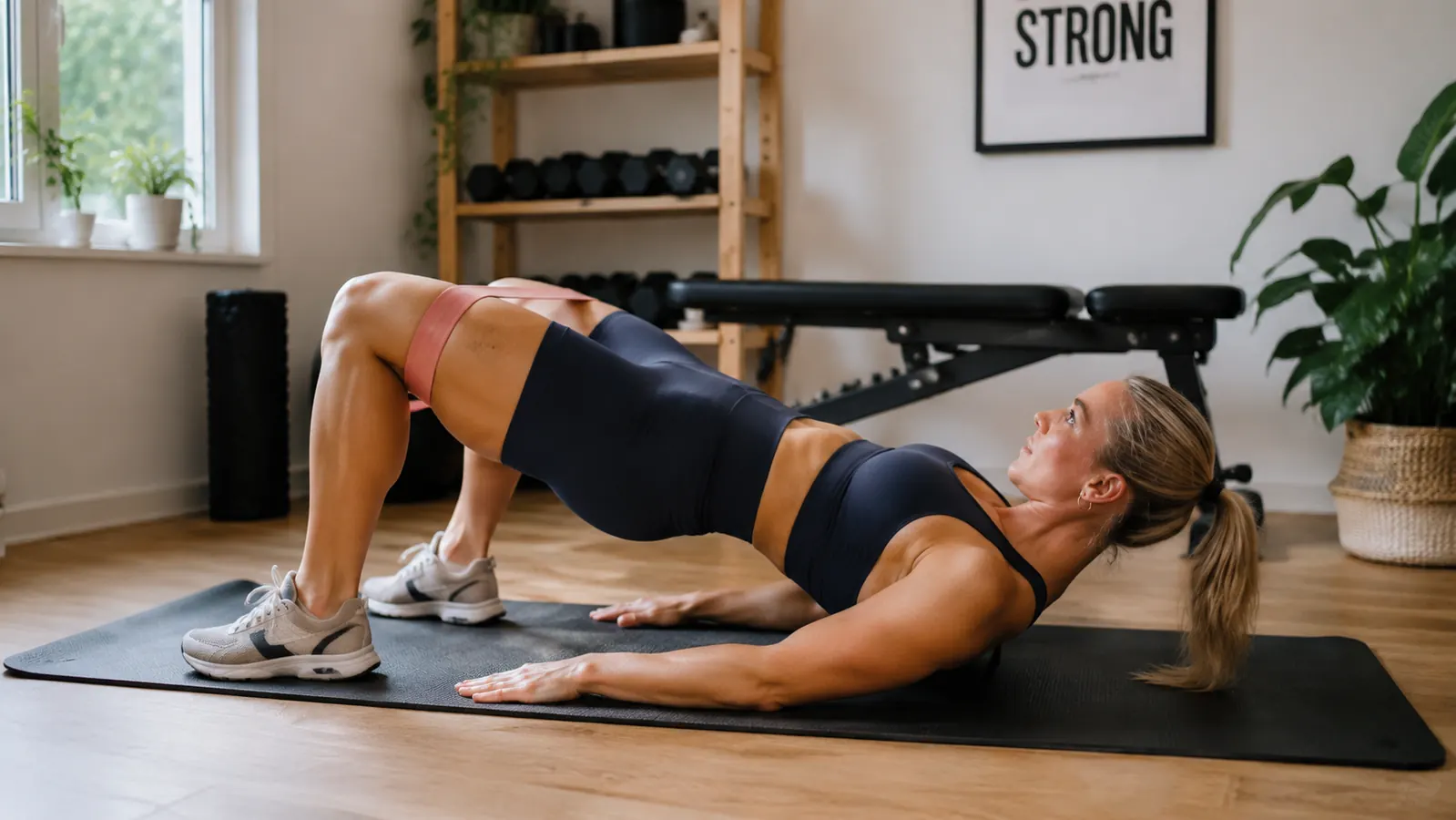
I resisted buying resistance bands for years. I told myself they were beginner gear, something you use until you can afford real equipment. Then I threw a Vergali set into my warm-up routine because my physical therapist told me my glutes were basically asleep during every squat, and within three weeks my hip thrusts felt completely different. The glutes were actually firing. My lower back stopped complaining. I stopped being a skeptic.
Bands are not beginner gear. They are a tool that most intermediate and advanced lifters underuse, especially for the glutes. Here are ten specific reasons they work better than you probably think.
If your glutes check out during squats, a band fixes that faster than any machine
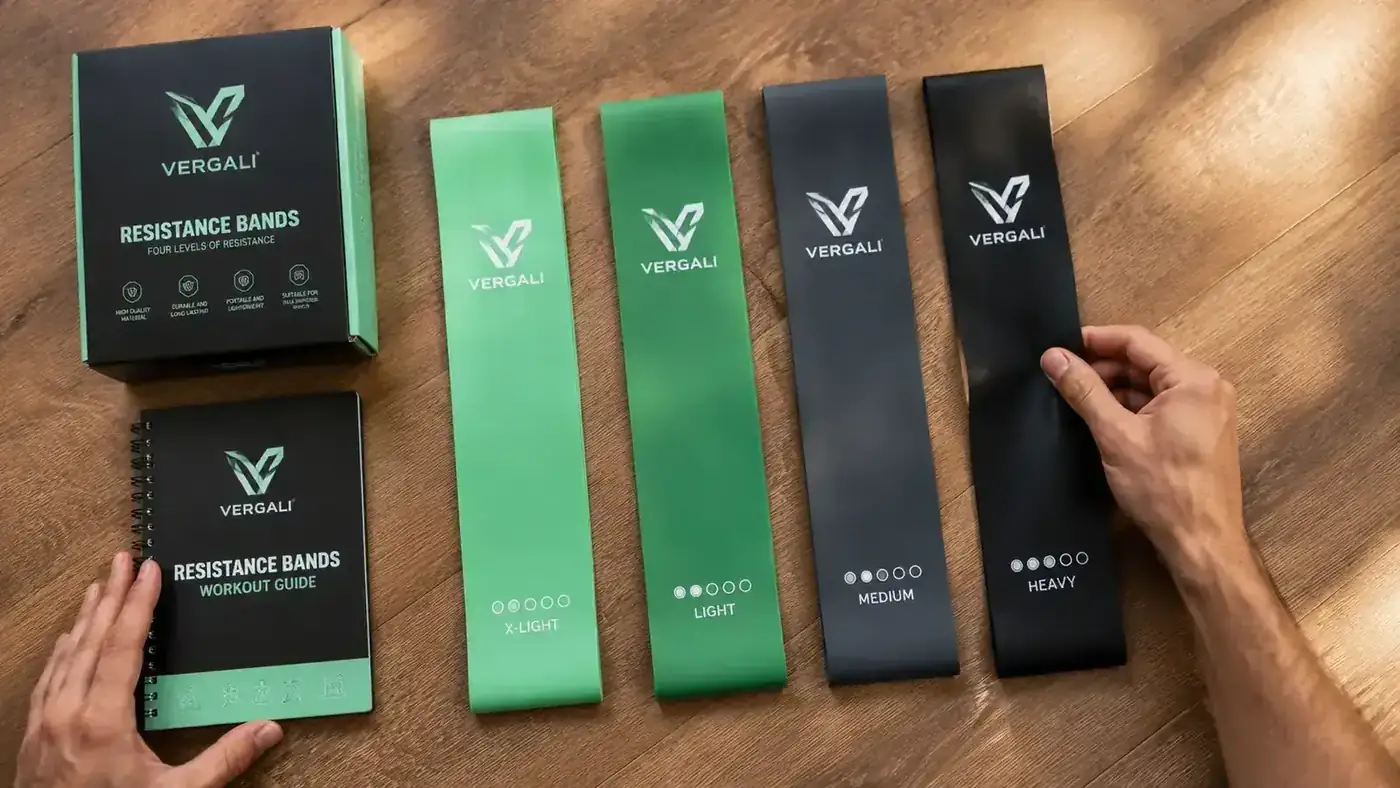
The Vergali set includes four resistance levels and a workout guide. Rated 4.8 stars across more than 21,000 reviews. Under $22.
Amazon Check Today's Price on Amazon →They Create Constant Tension Through the Full Range of Motion
A cable machine drops tension at the wrong moment. A band scales resistance as it stretches, so the hardest part of a hip thrust or squat is exactly where it should be: at the top, when your glutes should be squeezing hardest. That constant tension is not a gimmick. It forces the muscle to stay engaged the entire rep, not just through the middle.
They Force Your Knees to Track Correctly
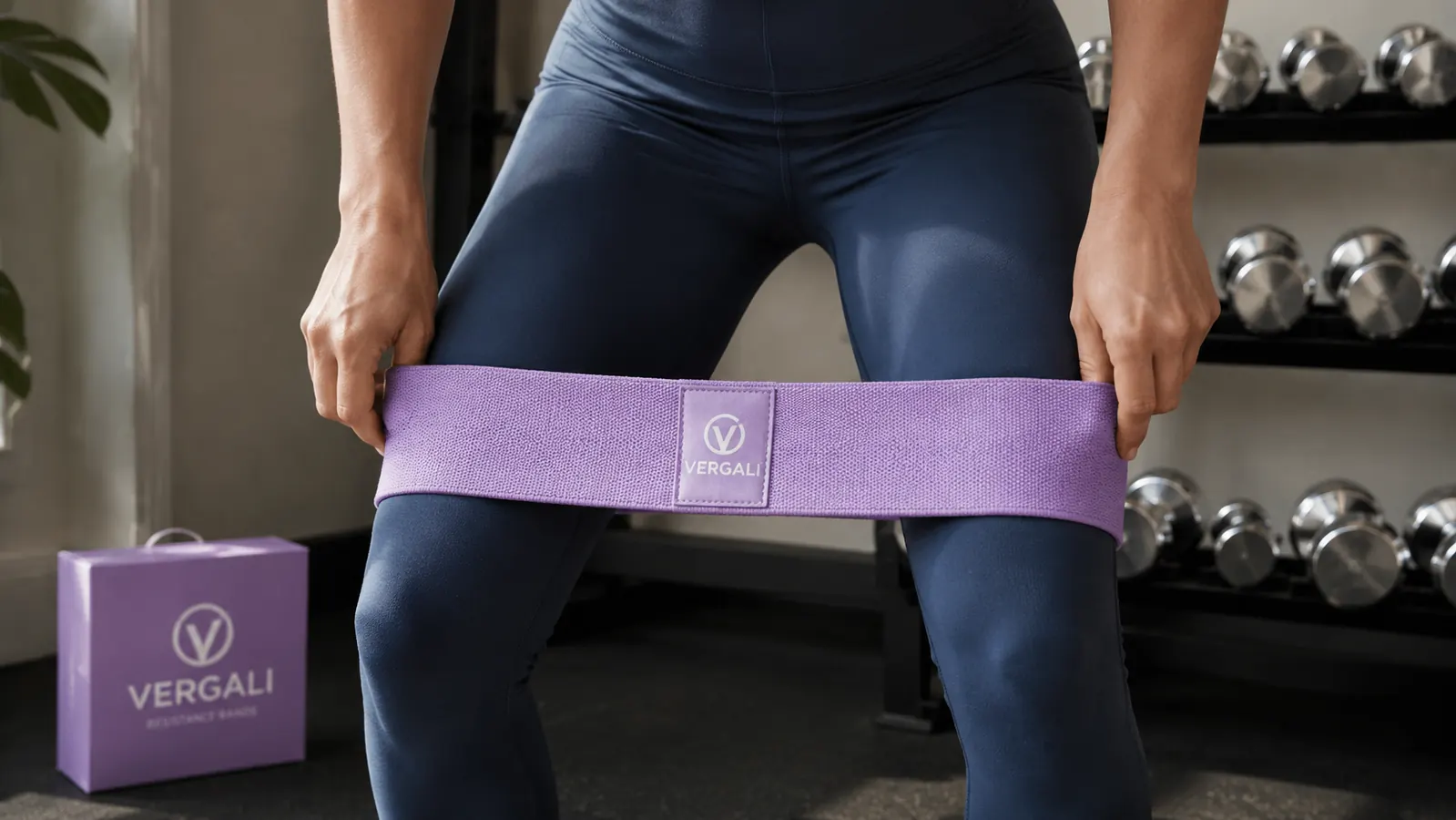
Knee cave during a squat is almost always a glute activation problem. Loop a medium-resistance band above your knees and you will immediately feel the external rotators and glute medius fire to keep your knees out. You cannot fake it. The band is instant biofeedback, and it corrects the pattern faster than ten coaching cues.
They Activate the Glute Medius That Machines Ignore
Most gym machines load the glute maximus (the big one) and completely skip the medius (the side one). The medius stabilizes your pelvis and protects your lower back. Banded clamshells, lateral walks, and side-lying abductions are among the only exercises that specifically load it. Skip that muscle long enough and your squat stalls and your hips start complaining.
They Let You Train the Glutes Without Loading the Spine
Heavy barbell squats and deadlifts are great, but they also compress the spine and fatigue the lower back before the glutes are done. Banded hip thrusts, donkey kicks, and fire hydrants load the posterior chain hard with almost no spinal load. That is why bands are popular in rehab settings, and also why competitive lifters use them for accessory volume without burning out their back.
They Fix the Glute Amnesia Problem
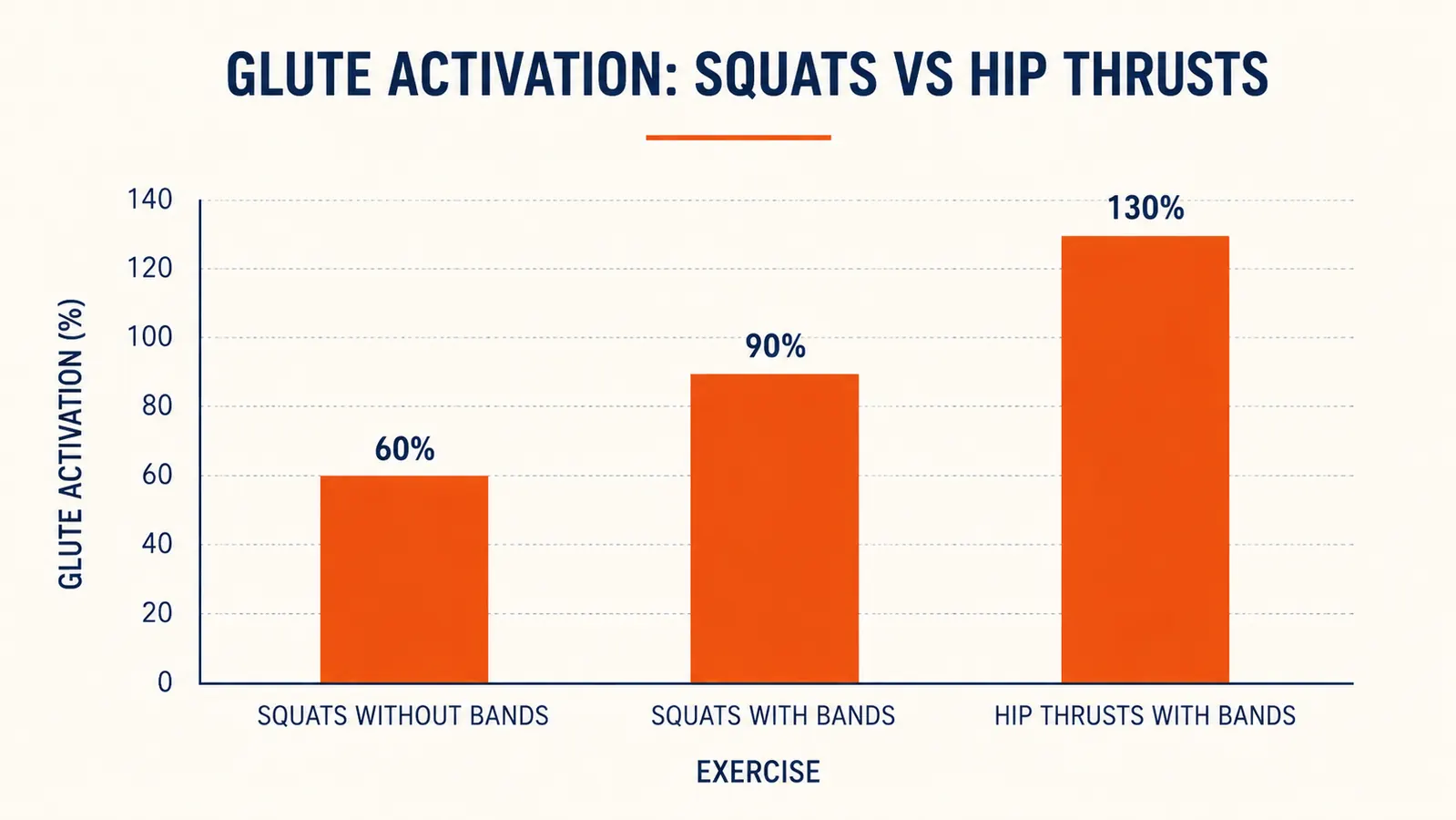
Sitting eight hours a day shuts your glutes off. Literally. The hip flexors adaptively shorten, the glutes adaptively lengthen, and they stop firing at the right moment during your workout. A five-minute banded warm-up before your lower body session re-establishes that neural connection. My physical therapist called this 'glute amnesia.' The band wakes them up. Fifteen banded bridges and two sets of lateral band walks and your glutes are actually on by the time you hit your first squat.
They Scale to Four Levels of Resistance in One Small Set
The Vergali set comes with four bands: light, medium, heavy, and extra heavy. The light band is useful for clamshells and activation drills. The extra heavy band turns a bodyweight hip thrust into something that actually challenges you. You can cycle through all four in a single session without changing equipment. That range in a single drawer-sized pouch is hard to replicate with any machine.
They Do Not Roll Down Your Thighs Mid-Set
This was the thing that kept me from buying bands for a long time. Every cheap loop band I tried in a gym setting rolled into a painful rubber wire halfway through a lateral walk. The Vergali bands are wide-cut fabric with a non-slip lining. I have done sets of 25 lateral steps without readjusting once. That matters because a band that rolls is one you stop using.
They Travel Anywhere and Cost Less Than a Single Month at the Gym
Four bands fit in a travel pouch the size of a paperback book. I have done full glute sessions in hotel rooms, at campsites, in my backyard, and in my living room during a winter I did not want to drive to the gym. The total investment for the Vergali set is less than most people spend on a single month of gym membership. The cost-to-volume ratio is not close.
They Come With a Workout Guide That Is Actually Useful
Most included workout guides are afterthoughts. The Vergali guide covers the core exercises with enough variation to run a real lower body routine without anything else. It is not a complete training program, but it gives a beginner enough structure to get started without searching YouTube for 45 minutes. For intermediate lifters it serves as a useful reference card for exercise selection by band level.
They Carry Over Directly to Bigger Lifts
This is the one that surprised me most. After four weeks of adding banded warm-ups and one band-only accessory circuit per lower body session, my barbell hip thrust went up 35 lbs without changing my programming. My squat felt more stable at the bottom. The glutes were doing more of the work they were supposed to be doing all along, which meant my quads and lower back were doing less of the work they were compensating with. The band did not replace the barbell. It made the barbell work better.
What I Would Skip
Not every banded exercise is worth your time. Banded leg press variations feel awkward and the band often slips. Standing banded kickbacks require a stable anchor point most home gyms do not have. And if you are buying bands primarily for upper body work, the Vergali set is not the right tool. The fabric loop design is built for the lower body. For pulling and pressing patterns, you want a different band type entirely. Stay in the Vergali's lane and it performs. Try to use it for everything and you will be disappointed.
Also worth noting: the extra heavy band is genuinely difficult. If you are new to resistance band training, start with the light or medium band and earn the heavier ones. Going straight to the extra heavy on hip thrusts before your technique is dialed in puts the load in the wrong places.
After four weeks of banded warm-ups and one accessory circuit per session, my barbell hip thrust went up 35 lbs without touching my programming. The band did not replace the barbell. It made the barbell work better.
If you want to go deeper on exactly how to structure a glute activation warm-up with resistance bands before your squats and deadlifts, the step-by-step protocol is in this guide: How to Use Resistance Bands to Actually Wake Up Your Glutes Before Squats and Deadlifts. And if you are deciding whether the Vergali set is the right band for your specific goals, the full four-month review covers band durability, sizing accuracy, and real workout results: Vergali Resistance Bands: A 4-Month Review.
Under $22 for all four resistance levels, a non-slip fabric design, and 21,000+ five-star reviews
The Vergali set is the one I use every lower body session. It is the first band I have not wanted to throw across the room by week three.
Amazon Check Today's Price on Amazon →