
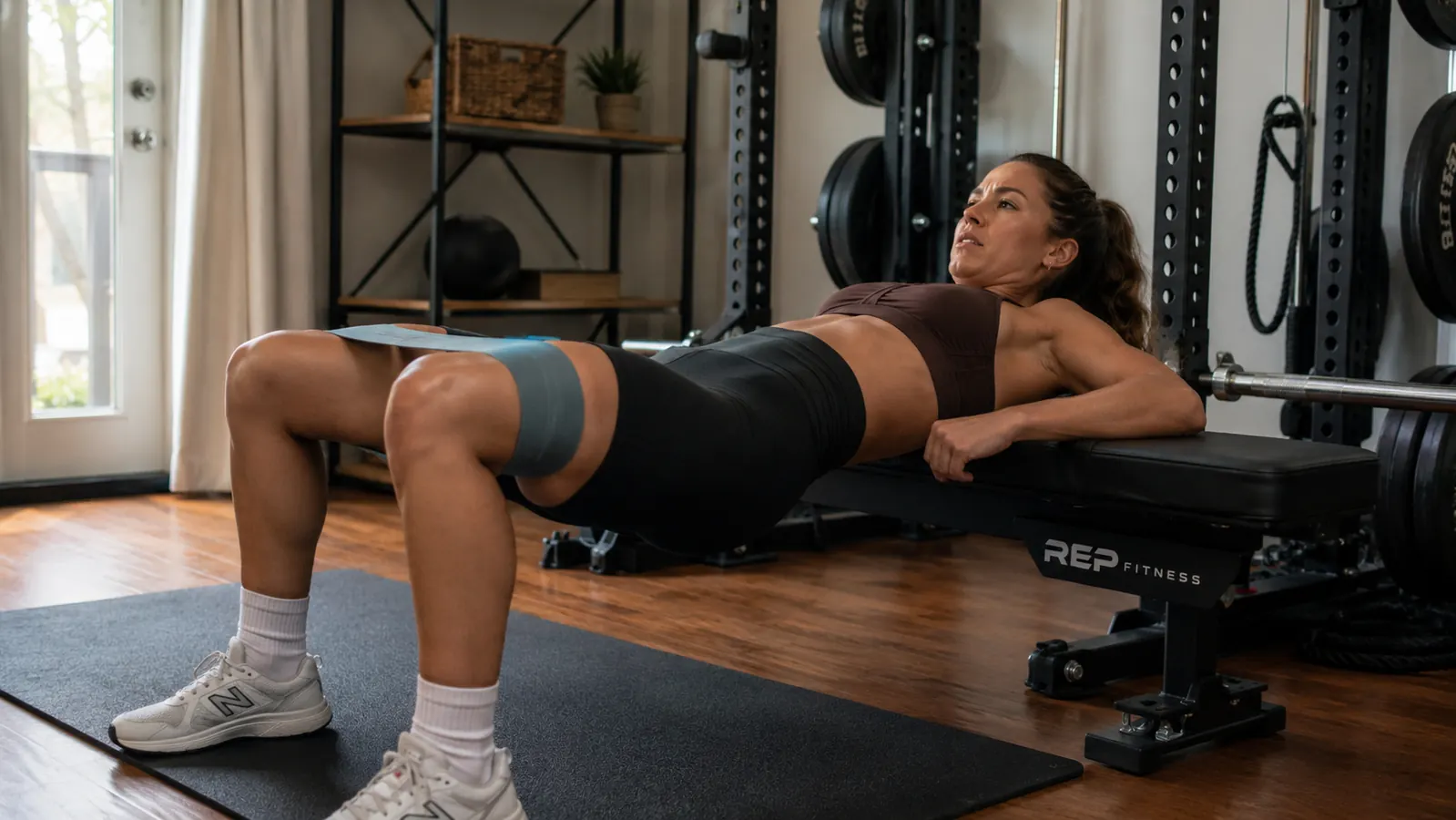
I picked up the Vergali resistance bands in January because my right glute was basically asleep during squats. My left leg was taking over on everything, my lower back was always a little angry after leg day, and my physio told me to spend six weeks doing banded activation work before I touched a barbell again. I needed something cheap, I needed it fast, and I needed four different resistance levels so I could actually progress. Vergali was everywhere in the search results, had over 21,000 reviews at a 4.8 rating, and cost $21.99. I ordered them without thinking too hard about it.
That was four months ago. I have used them three times a week every week since: twice for lower body days built around glute activation and banded squats, and once as part of a full-body circuit. Here is everything I learned, including the stuff that surprised me and the one thing I wish the product listing told me upfront.
The Quick Verdict
Solid latex construction, accurate resistance progression, and a workout guide that is actually useful. The heaviest band rolls occasionally during hip thrusts, but nothing that ruins the session. For $22 this is a hard set to beat.
Amazon Check Today's Price →Your glutes are already firing during squats. These bands make sure they keep firing.
The Vergali set comes with four resistance levels so you can actually progress week to week instead of hitting a wall on the same band forever. Over 21,000 buyers give it 4.8 stars. Check the current price on Amazon before it goes up.
Amazon Check Today's Price on Amazon →How I've Used These Bands Over Four Months
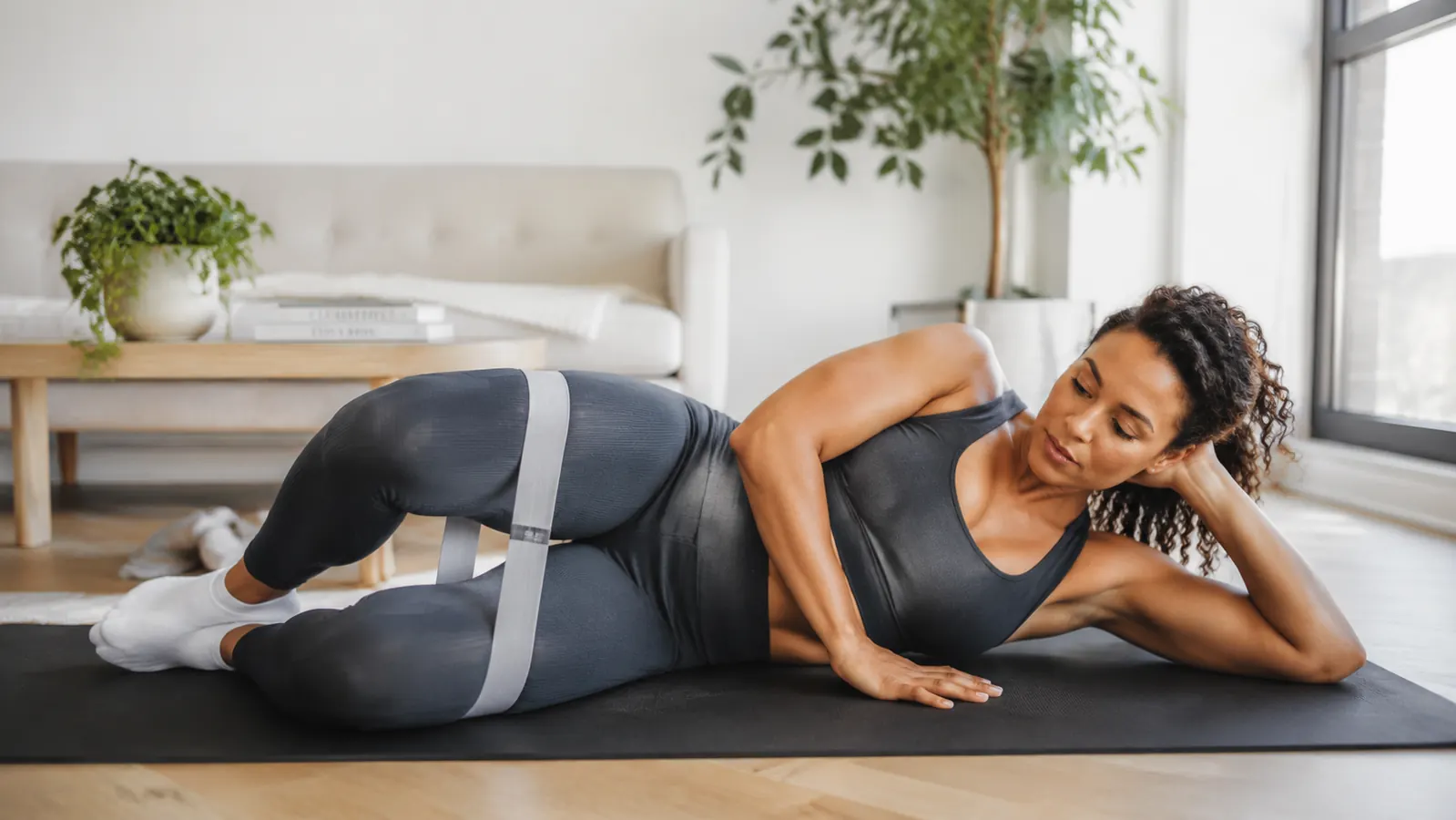
The first two weeks were almost entirely rehab work. I followed my physio's protocol: clamshells, fire hydrants, banded glute bridges, and monster walks. I used the lightest and medium bands for all of it. The light band is genuinely light, which sounds obvious but matters a lot when you are trying to feel the muscle contract rather than fight through resistance. I could hold each position at peak contraction without compensation, which is exactly what activation work needs.
By week three I started layering the bands into my actual workouts: banded squats, sumo walks, hip abduction on the cable machine with the band as a warmup primer, and hip thrusts. By week six I was on the heavy band for squats and the X-heavy for bridges. By month two I had added the heavy band to Romanian deadlifts as a glute activation cue at the top of the rep. The progression felt natural, not forced. Each band has enough gap between it and the next that you know when you are ready to move up.
The included workout guide is a folded card, not a booklet. It has twelve exercises with diagram illustrations and brief instructions. The illustrations are clear enough. I used it for maybe two weeks before I knew all the movements, but for someone brand new to banded training it is a genuinely useful starting point rather than just filler.
The Latex: Does It Hold Up Under Actual Use
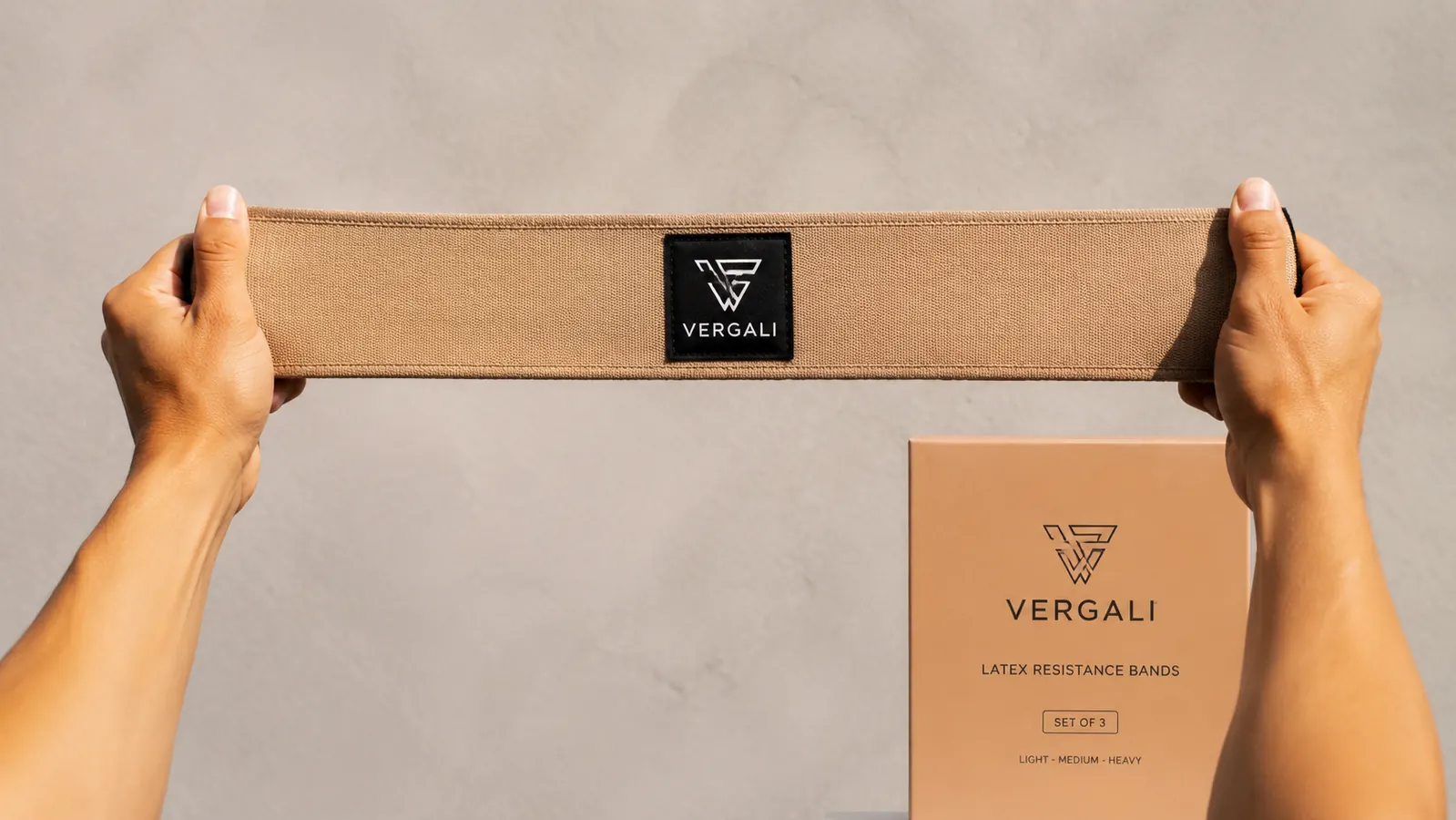
The bands are 100% natural latex. No fabric sleeve, no stitching. That matters because a lot of cheaper band sets use fabric-wrapped latex that looks premium but tends to fray at the seams or stretch unevenly after a few months. The Vergali bands are pure loop latex, so there are no seams to fail. After four months of use I have not seen a single crack, micro-tear, or sign of degradation on any of the four bands. The edges stay smooth and the bands return to their original shape after every session.
I store them at room temperature, which helps. Extreme cold makes latex brittle. But I did once leave them in my car on a cold February morning, brought them inside, and used them 20 minutes later with no issues. The latex quality is clearly above the cheapest tier of bands on Amazon.
One thing to note: latex bands can snap if they are overstretched past their limit repeatedly. I have not had this happen, but I also do not stretch any band more than about two and a half times its resting length. If you are using the light band for a movement that needs significantly more resistance, swap up rather than stretch it further. That is general latex band advice, not a Vergali-specific warning.
Resistance Levels: What the Numbers Actually Mean on Your Body
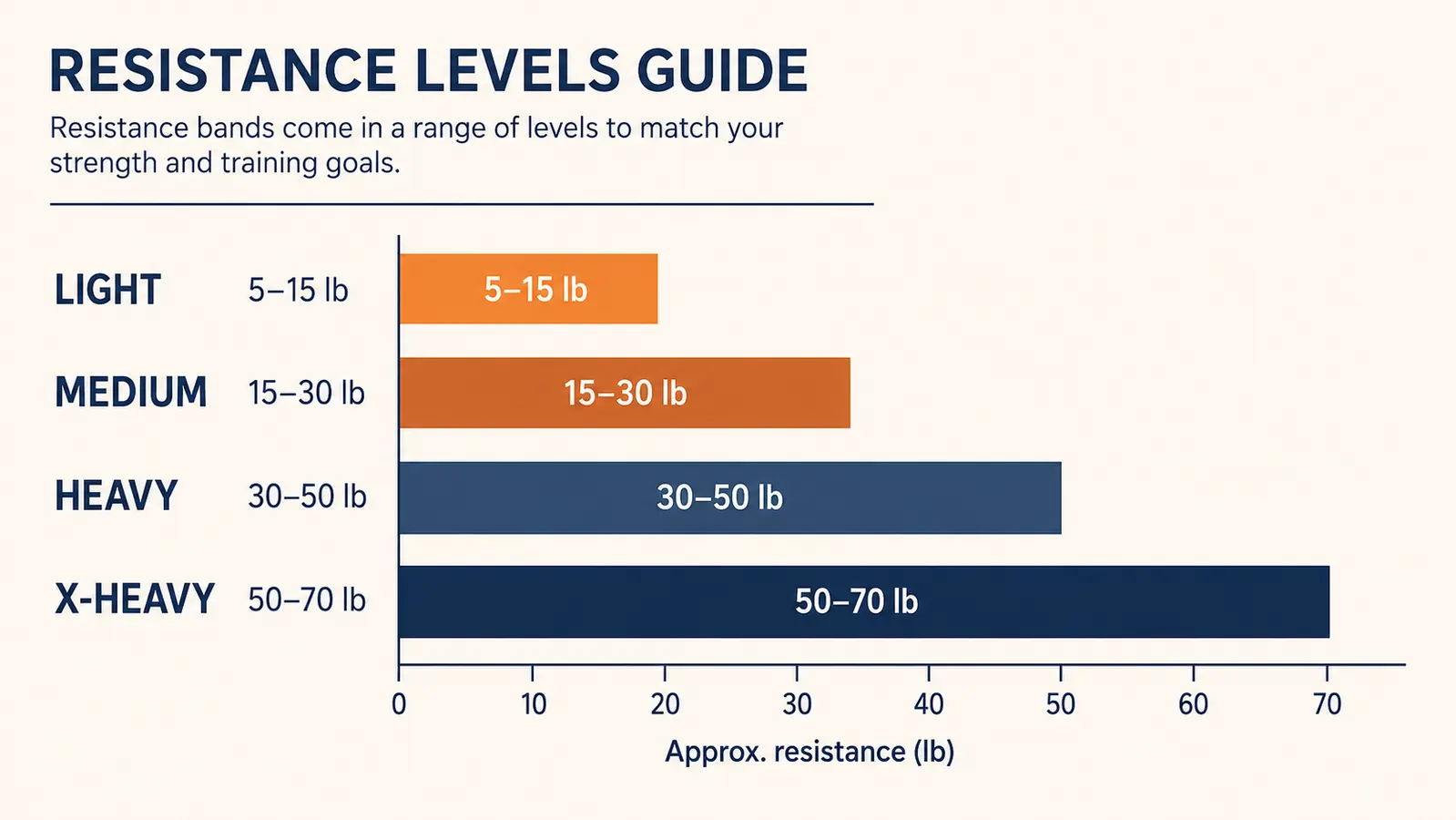
Vergali does not publish exact pound-force ratings on the listing, which is a minor frustration. Based on feel and comparison against known band sets I have used before, I would estimate the light at roughly 10-20 lbs of resistance at moderate stretch, the medium at 20-35 lbs, the heavy at 35-55 lbs, and the X-heavy at 55-75 lbs. These are approximations, not specs. What I can tell you with certainty is that the resistance curve feels smooth across all four bands, meaning there are no dead spots where tension drops off mid-movement.
For reference, I am a 34-year-old woman, 142 lbs, training four days a week for about three years. I use the medium band for warm-up clamshells, the heavy band for banded squats during working sets, and the X-heavy for hip thrusts. The X-heavy is genuinely challenging. If you are new to banded glute work, the light and medium will keep you busy for the first month easily.
By week six I was on the X-heavy band for hip thrusts and finally feeling my glutes the next day, which had not happened in years of lifting without bands.
The One Real Complaint: Band Roll on Hip Thrusts
Here is the honest part. The X-heavy band rolls up on hip thrusts roughly one out of every six or seven reps. It happens at the top of the movement when hip extension is full and the band tension is at its peak. The band folds inward slightly and you feel it bunching instead of sitting flat across your thighs. It does not hurt and it does not break the set, but you have to pause to pull it back down.
This is a known trade-off with flat latex loop bands versus fabric bands with a non-slip lining. Fabric bands grip skin better and stay put. Latex bands are more durable and have a more consistent resistance curve, but they can slip on bare skin during high-tension movements. Wearing compression shorts or leggings that are not overly slick fixes the issue almost completely. I switched from bare-skin hip thrusts to doing them in shorts and the rolling dropped to maybe one incident per session instead of several.
The lighter three bands do not roll in my experience. The rolling is specific to the X-heavy under maximum stretch. It is worth knowing before you buy, especially if hip thrusts are your primary movement.
Alternatives I Considered and Why I Kept the Vergalis
Before I reordered the Vergalis for my second set (yes, I bought a second set to keep one at my parent's house for when I visit), I seriously looked at fabric bands. The appeal is the anti-roll texture. The trade-off is that fabric bands stretch unevenly over time, the fabric edge can fray, and the resistance curve is less smooth because the band does not snap back as cleanly as latex. For pure activation work, fabric bands are fine. For heavy banded squats and hip thrusts where you want maximum muscle tension, I prefer latex.
I also looked at bands from LEEKEY, which show up next to Vergali constantly in search results. The LEEKEY set has a similar price and similar construction. Based on a few weeks using a friend's LEEKEY set, the resistance levels feel slightly different (the LEEKEY medium feels closer to a Vergali light to me, though bodies vary) and the latex has a slightly tackier texture that helps reduce rolling. Neither is clearly better. Both are in the same quality tier. I use Vergali because I started with Vergali and know the resistance levels by feel now.
What I Liked
- Four resistance levels with enough gap between each to support real progression
- Natural latex construction shows no degradation after four months of regular use
- Smooth resistance curve throughout the range of motion, no dead spots
- Included workout guide has twelve exercises with clear illustrations, useful for beginners
- Low price makes a second set for travel or a secondary location a reasonable call
- Light band is genuinely light, making it usable for activation and rehab work
Where It Falls Short
- X-heavy band rolls on hip thrusts when using bare skin; compression shorts fix it but you should know
- Resistance levels are not published in pound-force on the listing, so you are buying partly on trust
- Latex is not suitable for anyone with latex allergies, which should be obvious but is worth stating
- No mesh carry bag in the set, just the bands rolled up in packaging
Who This Is For
These bands are a good fit if you are building or maintaining a home gym and want a tool that covers both warm-up activation work and real working-set resistance. They are especially well-suited for someone who lifts consistently and wants to add glute and hip abductor work without buying a separate cable machine attachment or specialty equipment. If you are coming back from an injury or dealing with the same kind of glute amnesia I was dealing with, the light and medium bands will do exactly what a physio would prescribe. And if you are traveling or want a second set for a parent's house or a hotel workout, $22 is a real answer to that problem.
Who Should Skip It
If you have a latex allergy, this is a hard no and that is not a Vergali-specific problem. If rolling bands are a dealbreaker and you do not want to think about what you are wearing during hip thrusts, a fabric band set with a non-slip lining will remove that variable. If you are a competitive powerlifter or athlete who needs precise band tension measurements documented to the pound, you will want a set that publishes calibrated resistance specs. For everyone else, Vergali covers the bases at a price that removes any real risk from trying them.
Four months in and I would buy these again. I already did.
The Vergali set is still $21.99 as of this writing, which puts it in impulse-buy territory for something you will actually use three times a week. Four resistance levels, solid latex, and a workout guide that gives beginners a real starting point. Check current pricing on Amazon.
Amazon Check Today's Price on Amazon →