
For about two years I mixed a mid-tier whey blend into a shaker after every session and told myself it was fine. I was getting my protein. The scale was moving. But I also had a dull, low-grade stomach issue almost every afternoon, I chalked it up to eating fast, and I never connected it to the powder sitting on my shelf. When I finally switched to Dymatize ISO100 in Gourmet Chocolate specifically because a friend who trains seriously would not shut up about it, I expected marginal differences. What I got was enough of a change that I kept notes. This review covers the full 90 days, not just the first week when everything feels new.
Quick context on me: I'm 38, I weigh 183 pounds, and I train five days a week in a home gym setup. Mostly compound lifting, some conditioning work on weekends. I was taking in roughly 180 grams of protein a day across food and powder, and I wanted the powder portion to be as clean and functional as possible. That's the lens through which I evaluated ISO100.
The Quick Verdict
The cleanest-digesting whey I have used, with a macros profile that holds up to scrutiny. The price stings, but the difference from a cheaper blend is real enough that I keep buying it.
Amazon Check Today's Price →Still guessing whether a hydrolyzed isolate is worth it? Three months of daily use answered that for me.
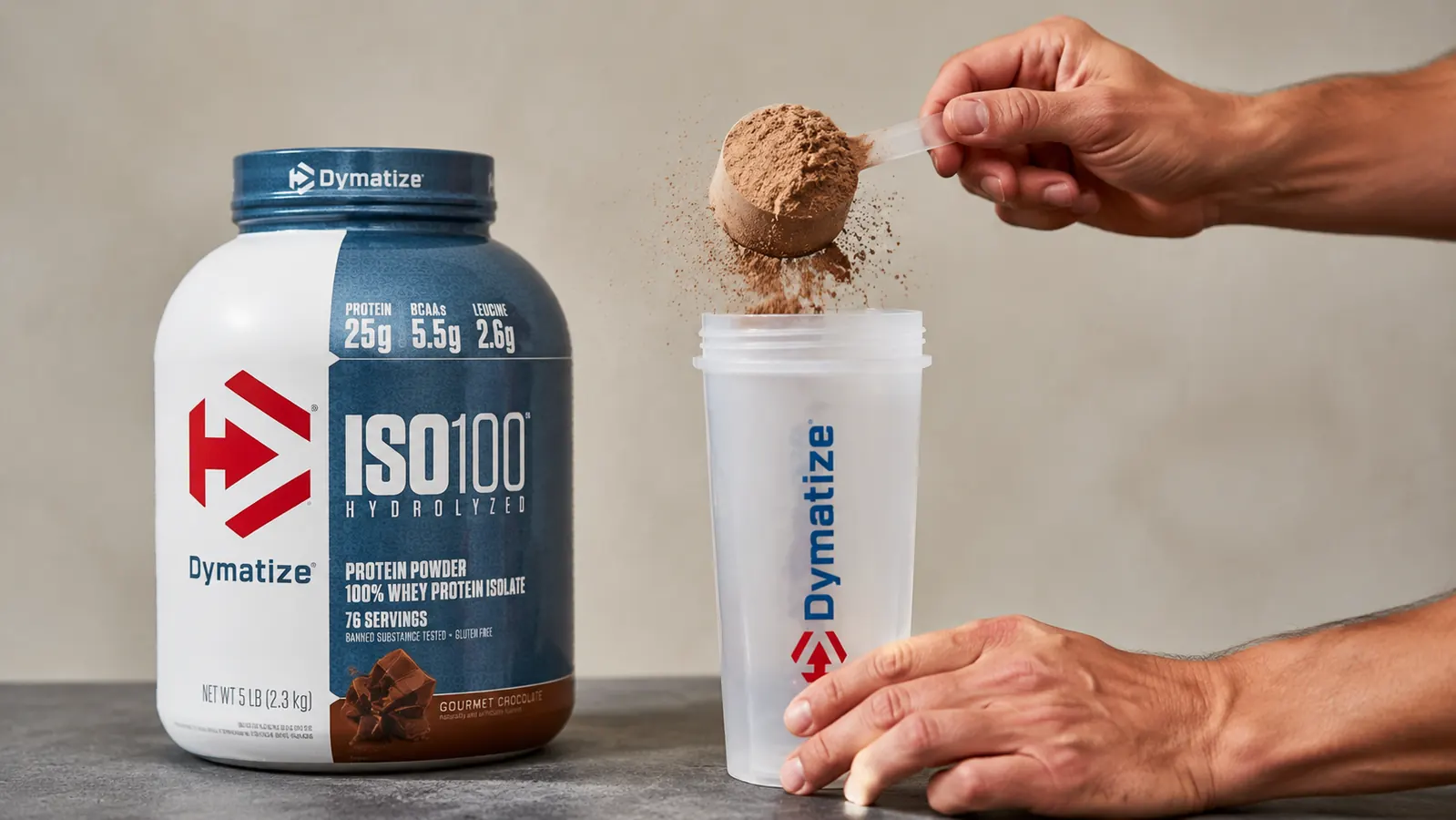
Dymatize ISO100 in Gourmet Chocolate is the 5-pound tub. It runs about 76 servings, which lands around $1.44 per shake at today's price. Check current availability and pricing below.
Amazon Check Today's Price on Amazon →How I've Used It
My protocol was straightforward: one scoop with 8 ounces of cold water immediately post-workout on training days, and one scoop with 6 ounces of water and a cup of unsweetened almond milk on rest days to help hit my daily target without adding extra food. I did not use it as a meal replacement and I did not mix in extras like peanut butter or oats, because I wanted to evaluate the powder on its own terms.
The 5-pound tub gives you 76 servings, which at my usage rate lasted about six and a half weeks. I went through two full tubs across the 90-day period and started a third. I kept a simple notes file on my phone where I logged any GI issues, how the taste held up, and whether I noticed anything about recovery pace. Not scientific, but useful enough to catch real patterns.
One thing worth mentioning: I mixed this exclusively with a BlenderBottle, no actual blender. The reason I mention it is that a lot of premium proteins mix better in a blender and mask weaknesses that way. Testing with just a shaker and a few hard shakes is a more honest test of solubility, and ISO100 passed that without clumps or a chalky film on top.
The Ingredient Profile and Why Hydrolysis Matters Here
ISO100 is built on hydrolyzed whey protein isolate as the primary source, with whey protein isolate as the secondary source. There is no concentrate in here. That distinction is not just marketing language: whey concentrate typically contains more lactose and more fat, and the proteins are larger and slower to digest. Hydrolysis pre-breaks those protein chains into smaller peptides, which move through digestion faster and with less opportunity for lactose-sensitive individuals to run into problems.
Per scoop you get 25 grams of protein, 3 grams of carbohydrates, 0.5 grams of fat, and 110 calories. Sodium sits at 160 mg, which is moderate. There is no creatine, no proprietary blends, no pre-workout stimulants. The ingredient list is short enough to read in about 20 seconds, and that kind of transparency is genuinely rare at this category's price point. For context, the whey blend I used before this had 24 grams of protein but was padded with a mix of concentrate, soy lecithin for mixing, and several additives that pushed the sugar content to 6 grams per scoop. Not catastrophic, but ISO100 is measurably cleaner.
Dymatize also carries NSF Certified for Sport status, which means third-party testing has verified the label accuracy and checked for banned substances. For most recreational lifters this does not matter. But if you are tested at any competitive level or you just want confirmation the label says what's in the tub, that certification is a real differentiator.
What Actually Changed After 90 Days
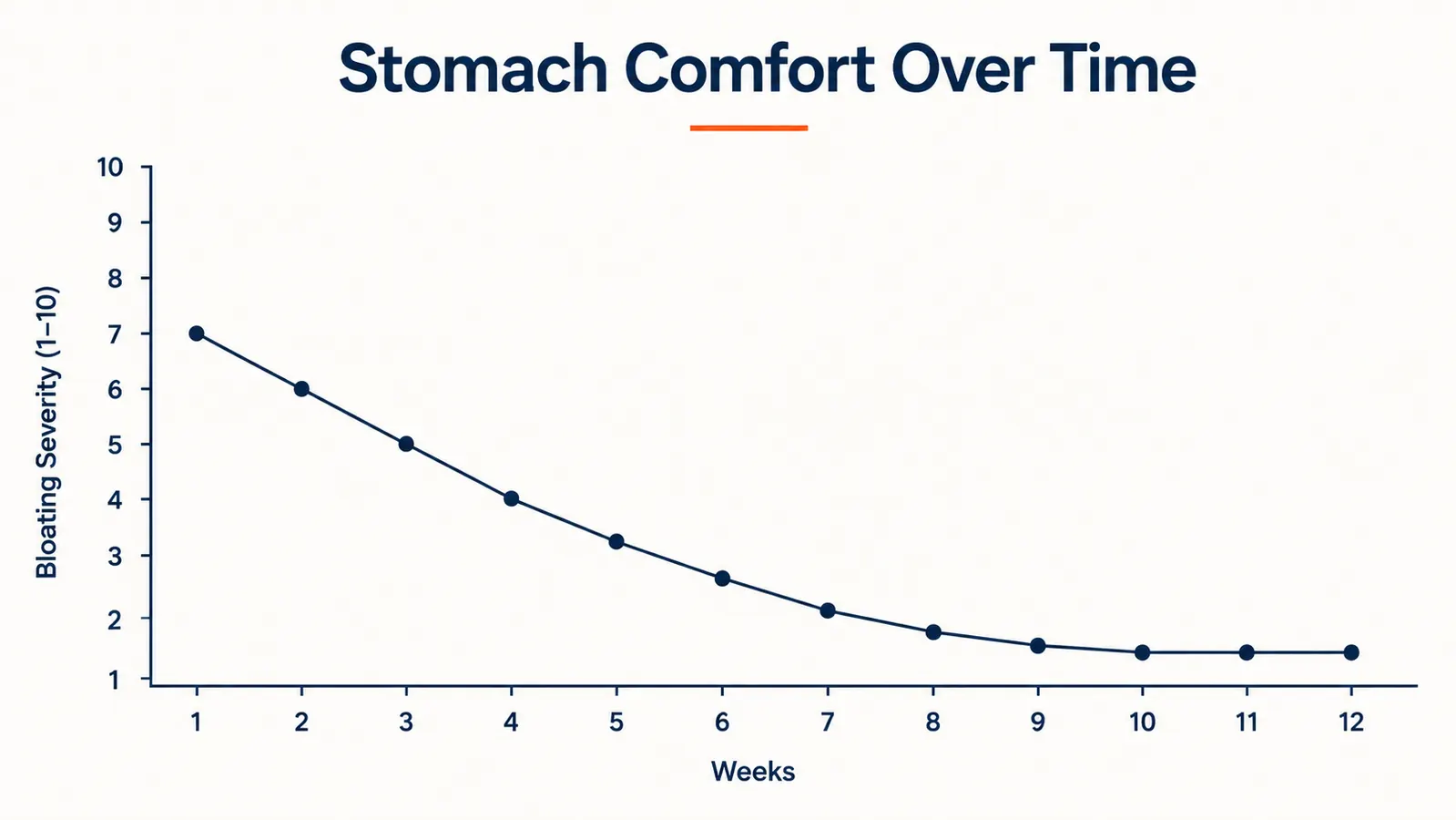
The biggest change was the one I did not expect: the afternoon GI issues mostly stopped around the end of week two. By week four they were effectively gone. I am not definitively lactose intolerant but I have always been mildly reactive to dairy in large quantities, and the hydrolyzed format apparently sits differently in my system. This alone was enough to shift my opinion from 'probably fine' to 'I am going to keep buying this.'
The afternoon bloating I had blamed on eating fast for two years cleared up within two weeks of switching. That was not the result I expected to care about most.
On the muscle-building side: I continued to progress on my main lifts at roughly the same rate I had been progressing before, which is about what I expected at my training age. Protein powder does not accelerate gains beyond what your training and total intake support. What ISO100 did was make sure I was consistently hitting my target without stomach friction, and consistency is what actually drives long-term progress. My bodyweight stayed stable at 183 to 185 pounds with slightly better body composition visible by the end of the 90-day window, though I also tightened up my food tracking during this period so I cannot fully isolate the protein powder's contribution.
Recovery pace felt slightly better around weeks six through eight, but this is honestly hard to attribute cleanly. I was also sleeping better during that stretch. What I can say is that I trained five days a week for 90 days without a significant overuse issue, which is better than my track record the prior year.
Taste and Mixability Over Time
Gourmet Chocolate is the flavor I tested, and the honest take is that it is good on day one and still good on day 90. A lot of powders have what I call a 'first week effect' where the novelty of a flavor masks any off-notes, and then around week three you start noticing an artificial sweetness or a chalky finish that eventually grates on you. I never hit that wall with ISO100. The chocolate flavor reads as cocoa-forward rather than candy-sweet, and because the fat content is so low, it does not taste heavy or coating in the way some rich chocolate flavors do.
Mixed with water it has a thin, clean texture that some people might find underwhelming if they are used to a creamier blend. That texture is a function of the low fat and low carb content, and I personally prefer it post-workout when I want something that clears my stomach quickly before eating a full meal. Mixed with almond milk on rest days it picks up more body without tasting overly indulgent.
Solubility held up across both tubs. No hard clumps at the bottom, no powder caking to the sides of the shaker. Eight to ten solid shakes with 8 ounces of liquid produced a fully dissolved shake every time. Some powders require a long mixing session or a vortex blender and you can tell because you keep finding dry pockets. ISO100 does not behave that way.
Where the Price Premium Is and Is Not Justified
This is where I have to be straight with you. At today's price, ISO100 is not cheap. You are spending meaningfully more per serving than you would on a well-reviewed whey concentrate or even a decent whey isolate without the hydrolyzed fraction. If you are a 22-year-old who has been lifting for a year, has no GI sensitivity, sleeps eight hours a night, and eats clean food most of the time, the difference between ISO100 and a solid $60 whey isolate is probably not visible in your results. Protein is protein when the quality baseline is met.
Where the premium earns its keep: if you have any degree of lactose sensitivity, if you are training hard enough that fast absorption post-workout matters to you, if you want third-party certification, or if you have ever gone through a bag of cheap powder and noticed a chalky or chemical aftertaste that killed your appetite for anything else. In my specific case, the GI improvement alone justified the cost difference because I was not actually absorbing and benefiting from the cheaper powder as consistently as I thought I was.
What I Liked
- Hydrolyzed isolate absorbs faster and digests significantly better for lactose-sensitive users
- 25g protein per scoop with only 3g carbs and 110 calories
- NSF Certified for Sport, third-party verified for label accuracy
- Gourmet Chocolate flavor holds up well over two-plus months without palate fatigue
- Excellent mixability in a shaker bottle with water alone
- No proprietary blends, short ingredient list, no hidden concentrate filler
Where It Falls Short
- Premium price point, roughly 40 to 60 percent more expensive per serving than a comparable whey blend
- The thin, watery texture with water-only mixing may disappoint users coming from creamier blends
- Container fill level is lower than the tub size suggests, which surprises first-time buyers
- Flavor selection feels smaller compared to some competitors at this tier

Who This Is For
ISO100 is the right call if you are training consistently, your diet is mostly dialed in, and you want a protein powder you do not have to think about. It is especially well-suited to anyone who has ever felt bloated or sluggish after a shake and blamed it on eating too much or not drinking enough water. The hydrolyzed format genuinely reduces that friction. It is also the right buy if you compete in any tested sport, or if you simply want to know that what is on the label is in the tub. At this price point you should get both of those things, and ISO100 delivers them.
Who Should Skip It
If you are newer to training and protein powder in general, start with a solid whey isolate that costs less and see how your body responds to that category first. The jump from concentrate to isolate produces most of the digestive benefit, and you may not need the hydrolyzed premium on top of that. Also skip ISO100 if you prefer a thick, creamy shake, because the macro profile that makes this powder clean is the same reason it mixes thin. And if budget is a genuine constraint right now, a whey isolate from a reputable brand at a lower price point will serve you well until the cost makes more sense.
One alternative I looked at seriously before committing to ISO100 long-term was Optimum Nutrition Gold Standard Whey. It is a strong product at a lower price with good mixability and a huge flavor selection. The tradeoff is that it uses a blend with concentrate as the first ingredient, which is fine for most people but was the specific thing I was trying to move away from. If you want the full side-by-side breakdown, I have written a separate comparison article: Dymatize ISO100 vs ON Gold Standard Whey. And if you are still deciding whether isolate versus concentrate actually matters for your goals, my breakdown of 10 reasons whey isolate beats whey concentrate covers the practical differences without the biochemistry lecture.
If you have been putting up with post-shake bloating, this is worth testing for 30 days.
Dymatize ISO100 Gourmet Chocolate (5 lb) is the most consistent hydrolyzed whey isolate I have used across a full 90-day test. Price fluctuates on Amazon, so check what it is running today before you decide.
Amazon Check Today's Price on Amazon →