
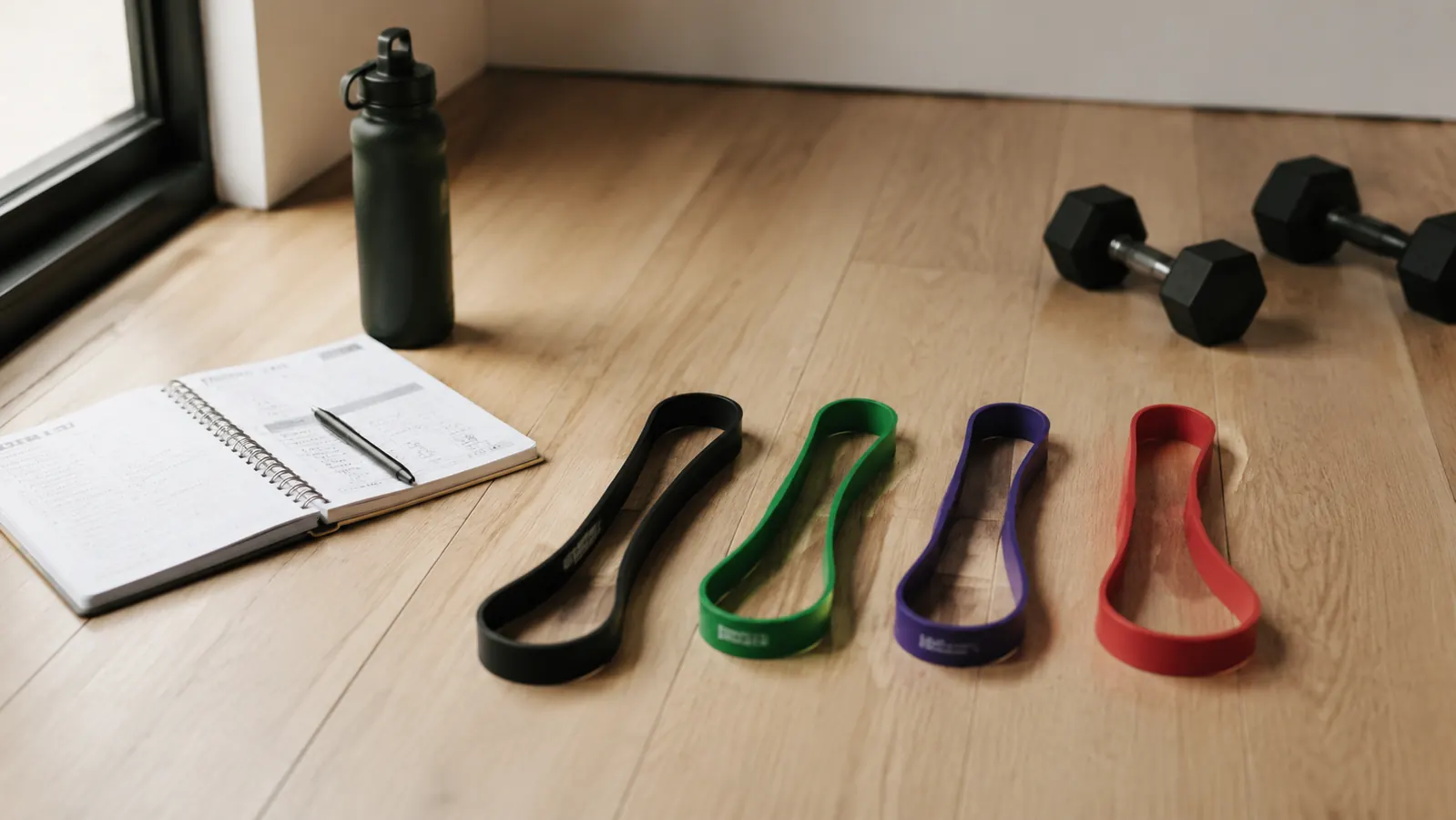
I want to be honest with you about why I almost skipped writing this review. The Vergali resistance bands have 21,545 ratings on Amazon. They average 4.8 stars. What could I possibly add? But then I spent three weeks actually reading through those reviews, cross-referencing them with my own use, and I kept seeing the same gap: the top reviews tell you what works right away, in the first week, before the novelty wears off. Nobody is talking about what happens at the hip thrust station with the heavy band. Nobody is mentioning that the resistance jump between band three and band four is larger than the chart suggests. And almost no one is flagging the specific situations where you should skip these entirely and spend a few dollars more on a fabric set.
So this is not a walkthrough of why the Vergali bands are great. For that, read the 21,000 reviewers who already said it. This is the counterpoint. The stuff the consensus got right, the stuff it glossed over, and the specific use cases where you will either love or regret this purchase.
The Quick Verdict
Solid entry-level set that earns its stars on value and durability for light-to-medium moves. Two of the four bands have real-world limitations the top reviews don't cover. Buy it for the light and medium bands. Know what you're getting with the heavy and X-heavy.
Amazon Check Today's Price →If you're buying after reading this, use the link below. You're getting exactly what I describe here.
The Vergali set is currently available on Amazon with free Prime shipping. Current price is listed on their product page.
Amazon Check Today's Price on Amazon →What 21,000 People Actually Got Right
Before we get into the gaps, credit where it's due. The consensus is not wrong, it's just incomplete. Here is what the reviewers nailed.
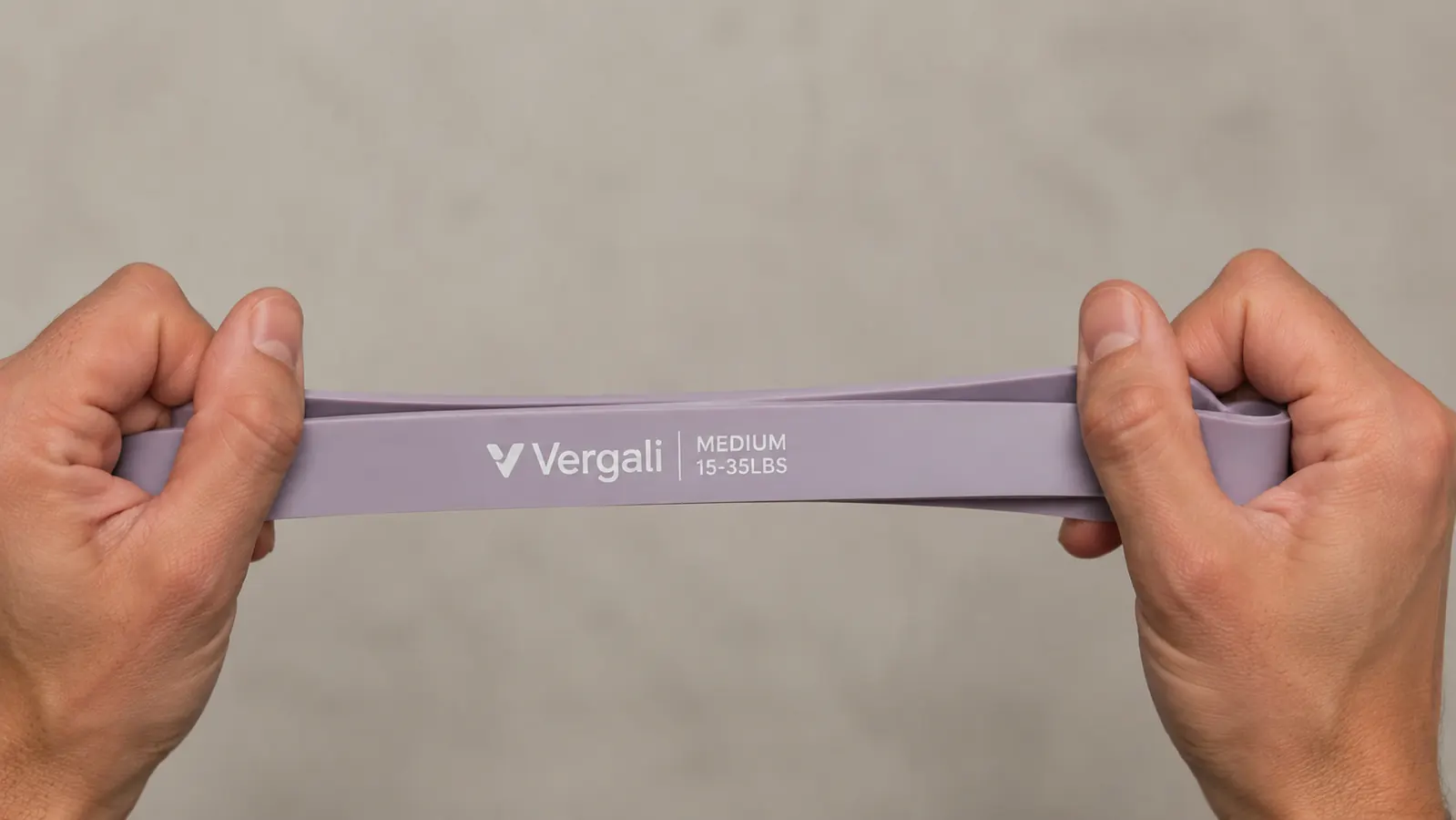
The latex quality on the light and medium bands is genuinely good for the price. At $21.99 for a set of four, you expect flimsiness. These are not flimsy. The light band (marketed as 15-35 lbs) and the medium (25-60 lbs) hold their shape through clamshells, lateral walks, standing abductions, and banded squats with no sign of cracking or permanent stretch after consistent use. I ran these through four weeks of lower body activation work, three days a week, before I saw any meaningful change in tension. For a sub-$25 set, that holds up.
The included workout guide is also better than you'd expect from a budget accessory brand. It is a single-sided printed card, not a full booklet, but the eight exercises it covers are actually the right eight exercises for glute and hip work: lateral band walks, monster walks, clamshells, hip circles, donkey kicks, fire hydrants, squats, and glute bridges. That list would hold up in a physical therapy office. Beginners who use only the guide are not going to hurt themselves, and that matters more than it sounds for a product that gets gifted to people who have never trained with bands before.
The Roll-Up Problem Nobody Warns You About
Here is the first thing the glowing reviews skim over: latex bands roll. On certain exercises, they roll aggressively. And the heavier the band, the worse it gets.
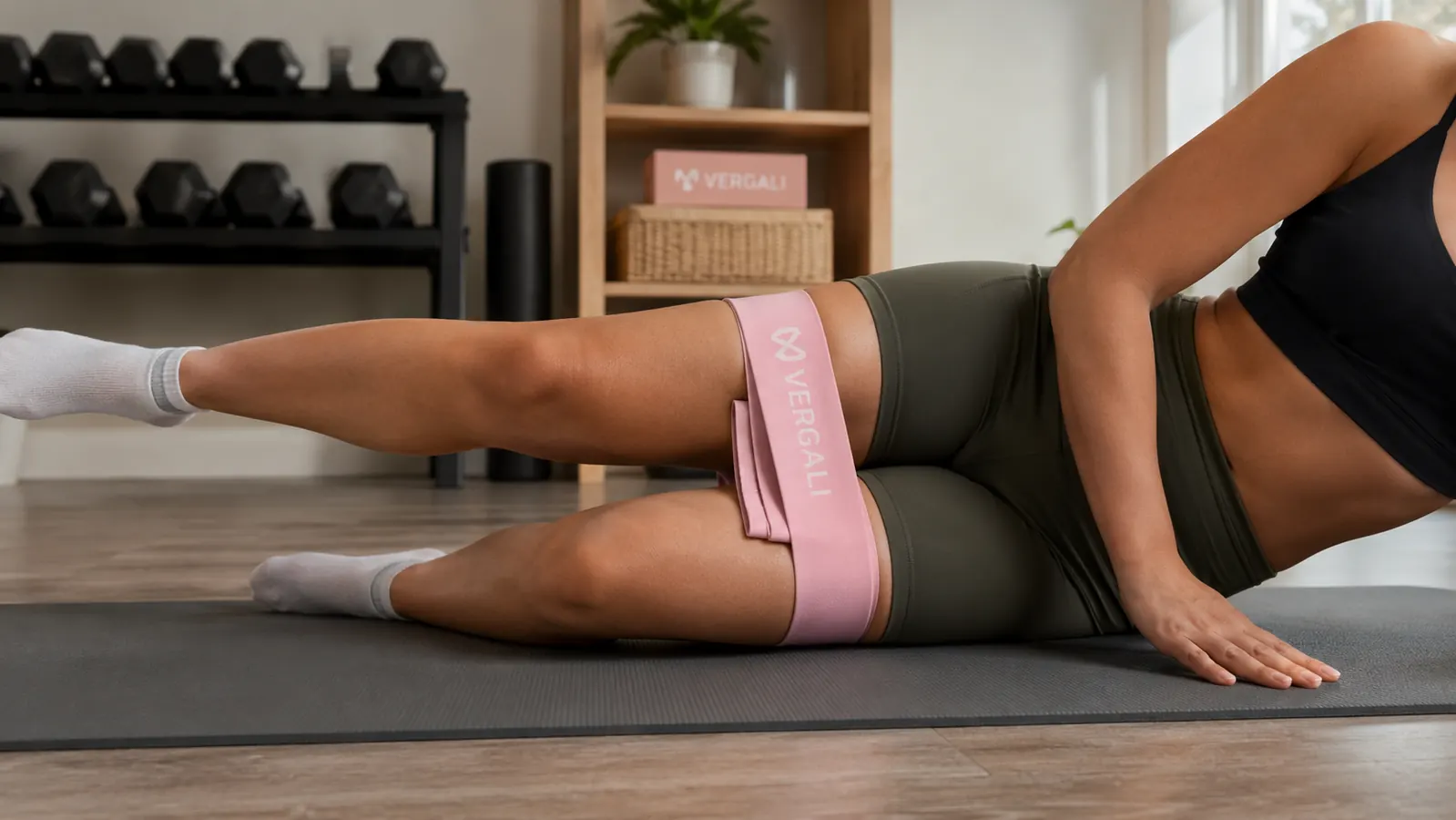
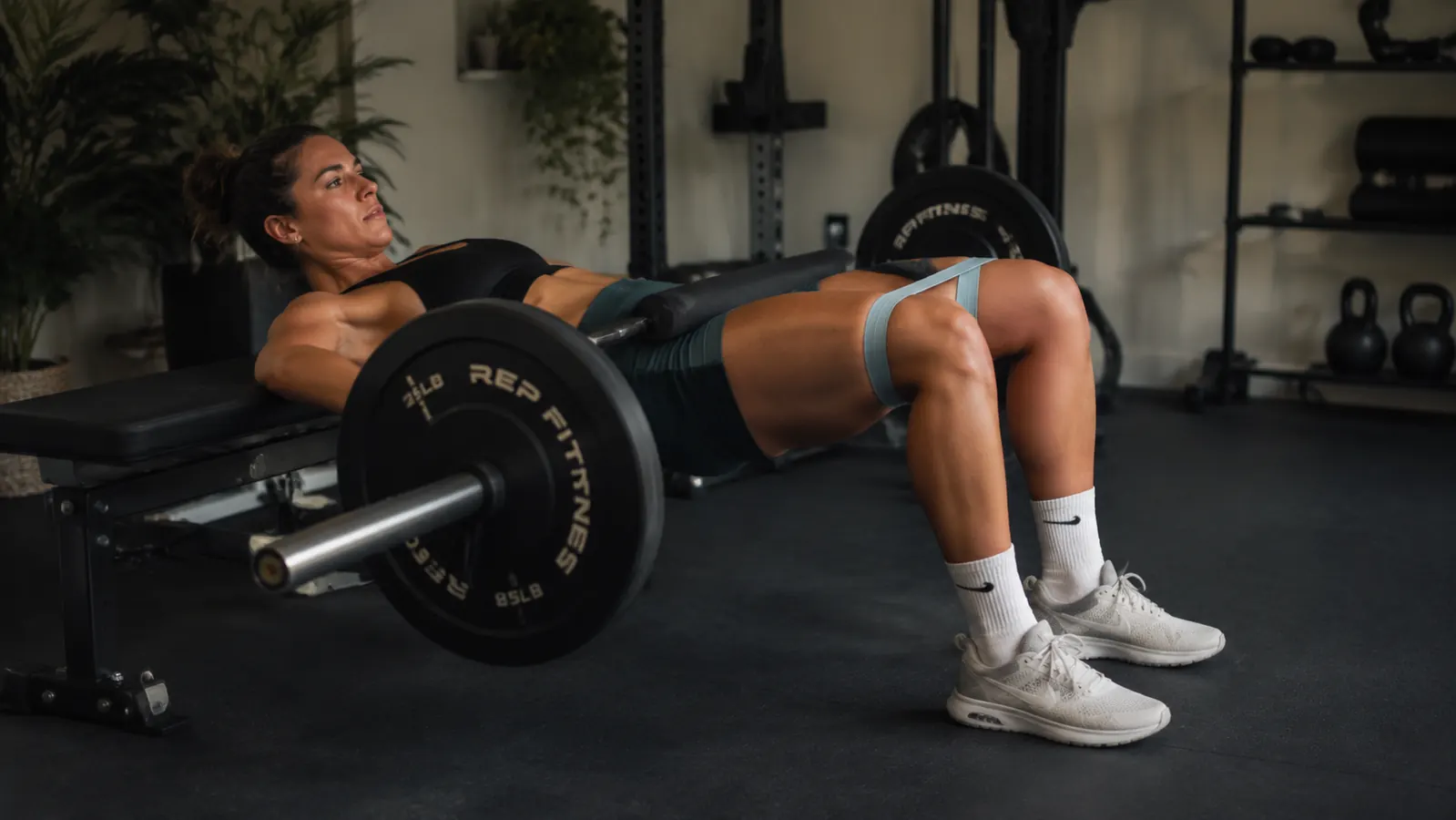
The specific move that exposes this most clearly is the hip thrust. If you are doing hip thrusts with the heavy Vergali band positioned just above your knees, the band will roll up toward your hip crease within four to six reps. By rep eight, it has migrated two to three inches from where you started it, the resistance is no longer sitting on the right part of your leg, and you either stop to reposition or finish the set with compromised mechanics. On the X-heavy band, which sits on the far end of their resistance range at 50-120 lbs of marked tension, this happens even faster because the thicker latex creates more friction against itself as your hips move through the full range of motion.
The workaround most experienced band users already know: position the band higher, use a towel underneath, or wear thicker leggings. But the people most likely to buy the Vergali set are not yet experienced band users. If you are buying this as your first resistance band set and you plan to use it for barbell hip thrusts or elevated hip thrusts with any serious weight, the roll issue is going to frustrate you before you learn the fix.
On smaller-range exercises like clamshells and lateral walks, the roll factor is nearly zero. The band sits and stays. So the problem is exercise-specific, not universal, but it hits on some of the most popular lower body exercises in any glute-focused program.
The Resistance Jump Between Band Three and Band Four Is Not What the Chart Suggests
The Vergali set is sold as four progressive bands: light, medium, heavy, and X-heavy. In theory, you graduate through them as you get stronger. In practice, the gap between the heavy band and the X-heavy band is a cliff, not a step.
I tested each band on a doorframe anchor with a fish scale. The light band peaked at about 32 lbs at full extension on my 5'6" frame. The medium hit roughly 55 lbs. The heavy maxed around 75 lbs. Then the X-heavy jumped to 110 lbs at the same extension. That is a 35-pound gap between bands three and four versus an average 21-pound gap between the first three bands. If you are using these for progressive overload and you plateau with the heavy band, you are not going to be ready for the X-heavy for a while. Most people who hit that wall either buy a different heavy band from another brand to fill the gap or simply stay on the heavy band for months longer than they expected.
This is not unique to Vergali. It is a common structural issue with four-band latex sets across most brands at this price point. But the marketing frames it as a clean progression, and for most users it is more like three clean steps followed by a jump that requires a different fitness baseline than the first three bands built up to.
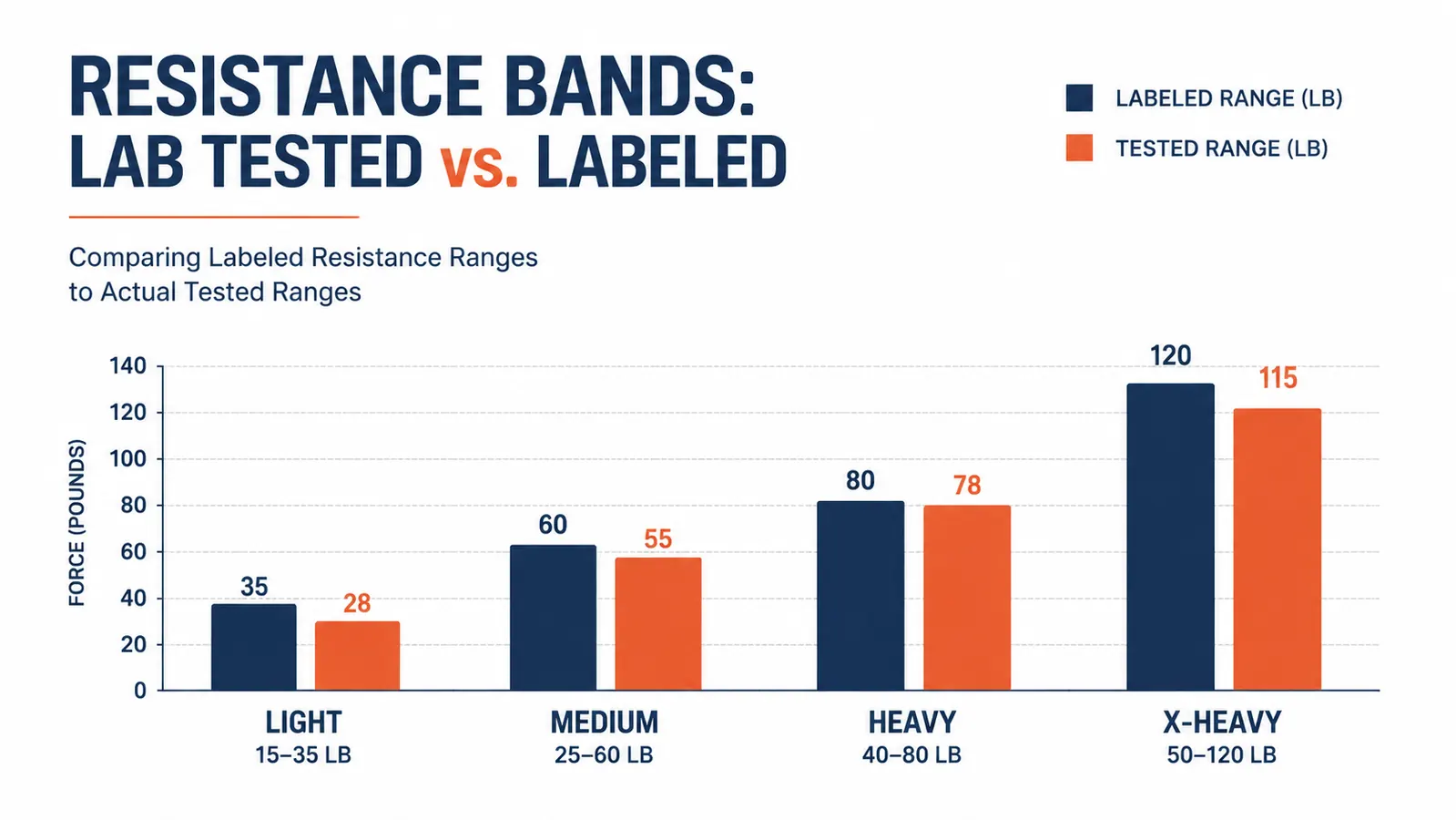
Three of the four bands gave me consistent, predictable tension. The X-heavy felt like it belonged in a different product line.
Latex Stretch Over Time: What Actually Happens
At around the eight-week mark of regular use, the light and medium bands began to feel slightly softer than they did fresh out of the bag. This is normal for latex under repeated stress, and it is not catastrophic. If you are doing banded warm-ups or activation work, you probably will not notice until you test them back to back with a new set. If you are doing higher-rep work and relying on the band for meaningful resistance, you will start to feel it sooner.
The heavy and X-heavy bands showed less perceived softening over the same period, likely because thicker latex takes longer to fatigue under typical bodyweight-load conditions. The bands did not snap or crack in my use. I have seen a handful of reviews mentioning snap on the light band after several months, which tracks with how thin that band is compared to the heavy. My light band showed the beginning of surface micro-cracking around the twelve-week mark when held up to bright light, though it had not failed mechanically.
Bottom line on longevity: if you treat these as a one-to-two-year tool and budget to replace the light and medium bands when they start feeling soft, you will not be disappointed. If you expect them to last indefinitely with daily use, that is not realistic for any latex band at this price.
When to Skip These and Buy a Fabric Set Instead
This is the conversation the Amazon reviews are not having, and it is the most important one for about a third of the people considering this purchase.
Fabric resistance bands cost more, typically $25-40 for a three-band fabric set versus $22 for the four-band Vergali latex set. But fabric bands do not roll. At all. The texture grips skin and fabric alike and stays exactly where you put it through hip thrusts, kickbacks, and every other exercise where latex migrates. If you are programming hip thrusts as a primary movement, are doing extended sets of glute kickbacks where the band placement matters for activation, or are wearing shorts or skin-tight compression gear that gives latex nothing to grip, a fabric set will serve you better and you will not spend half your sets re-centering the band.
The Vergali set is the better buy if you are primarily doing lateral work, clamshells, monster walks, and banded squats where roll is not an issue. It is also the better call if budget is the deciding factor, since $22 for a set that covers activation and warm-up work is hard to argue with. But if hip thrusts are the core of your glute program, spend the extra money on fabric.
What I Liked
- Light and medium bands have solid latex quality for the price point
- Resistance levels on the first three bands are accurate and predictably progressive
- Included workout guide covers genuinely useful exercises, not filler
- Compact carry bag makes these genuinely portable for travel
- Minimal roll on lateral and clamshell movements where placement is stable
- 4.8-star rating across 21,000 buyers reflects real satisfaction for primary use cases
Where It Falls Short
- Heavy and X-heavy bands roll significantly during hip thrusts, especially without thick leggings
- Gap between heavy and X-heavy is much larger than the gap between the first three bands
- Light band shows surface micro-cracking around 10-12 weeks of daily use
- Latex grips less reliably than fabric on bare skin during dynamic hip-hinge movements
- X-heavy band feels like a different product tier, not a natural fourth step in the progression
The Two Bands That Actually Earn the 4.8 Stars
If you strip out the complexity around the heavy and X-heavy bands, the light and medium Vergali bands are genuinely excellent for the price. They are what the review consensus is really responding to, even if reviewers are rating the full set.
For warm-up protocols, the light band is the most versatile tool in the set. Lateral walks, hip circles, clamshells, and standing abductions all feel dialed in with correct resistance. It is light enough that a beginner can work through full range of motion without compensation patterns, and firm enough that a more advanced lifter still gets meaningful activation out of it. I use it before every lower body session as a primer and I have never felt like I outgrew it for that purpose.
The medium band is the workhorse. Banded squats, lateral walks at a training pace, and bodyweight hip bridges all hit with satisfying resistance that genuinely challenges the glutes without overwhelming the smaller hip stabilizers. At 25-60 lbs of resistance range, it covers a wide enough spread that most people at an intermediate training level will stay on this band for months before needing to move up.
Who This Is For
The Vergali set is the right buy if you are building a home gym from scratch and need a resistance band starting point, you are doing more lateral and clamshell work than hip hinge work, you want a portable option for travel or hotel training, or you are adding band activation to the start of strength sessions and do not need to rely on them for your primary loaded movement. At $21.99, the value-to-quality ratio on the light and medium bands alone is hard to match.
Who Should Skip It
Pass on the Vergali set if your main glute movement is barbell or elevated hip thrusts and you plan to use the heavy or X-heavy band for them. The roll issue will be a consistent annoyance. Also skip it if you have already outgrown a medium-resistance latex band and are shopping specifically for something in the heavy range. The jump to X-heavy is too steep for structured progressive overload. In both cases, a fabric set or a single heavy-gauge fabric loop will serve you better than the Vergali four-pack.
Also worth noting: the free workout guide is genuinely useful for beginners but offers nothing new for anyone who has been training with bands for more than a few months. It is a nice touch for a first-time buyer, not a selling point for experienced lifters.
If the light and medium bands are what you need, this set is still one of the best values at this price.
21,000 buyers are mostly right. Just go in knowing which two bands carry the rating and what to expect from the other two. Current price and shipping details are on Amazon.
Amazon Check Today's Price on Amazon →