
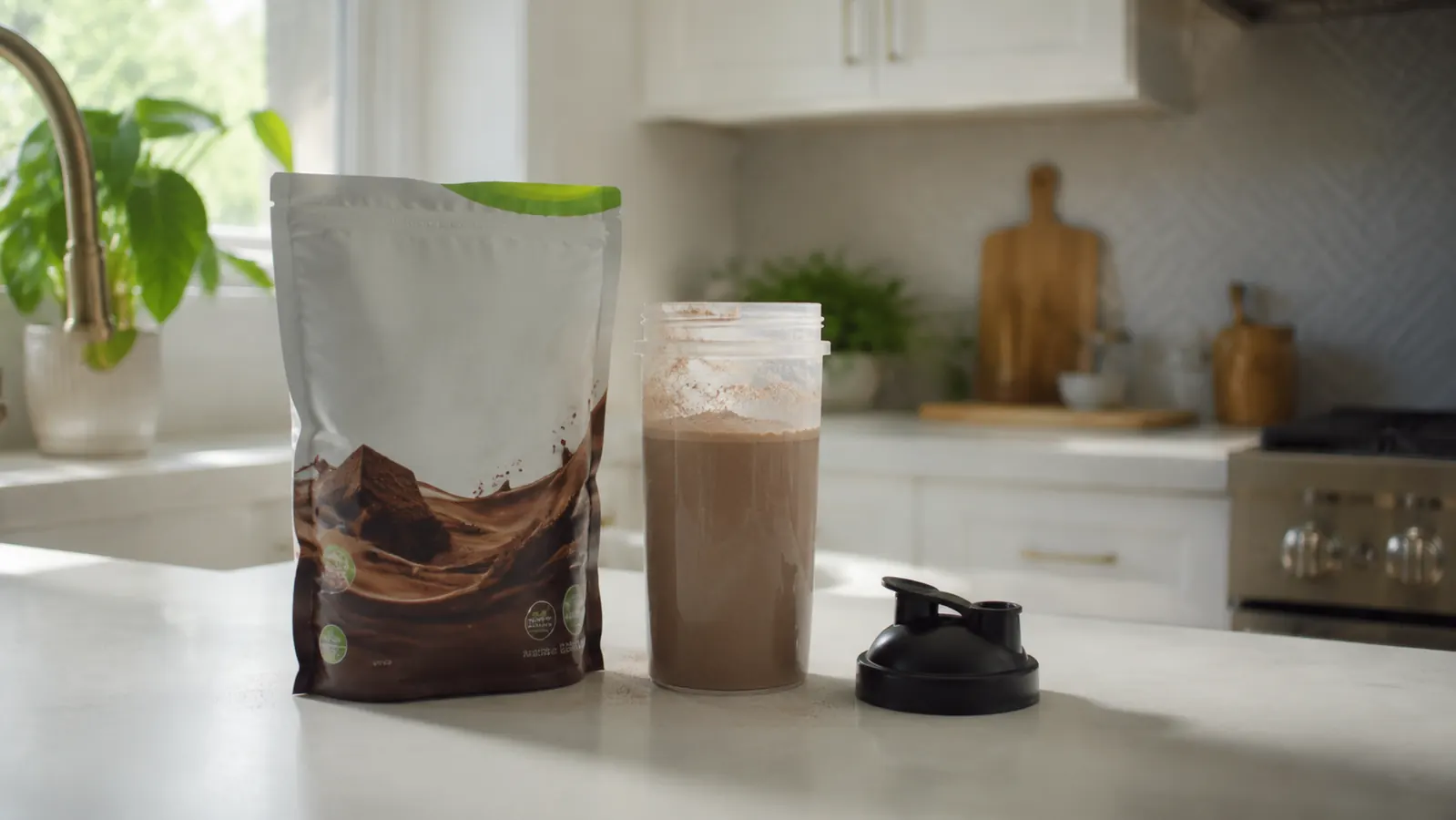
My girlfriend started buying Orgain about eight months ago and I watched her go through four bags before I finally tried it myself. She loved it. Creamy Chocolate Fudge, easy to find at Costco, cheap enough to not think too hard about. I tried a scoop in a glass of water one Thursday morning, and my first thought was: this tastes like dirt that went to finishing school. Better than dirt, but related to it. That is where this review starts, not at five stars and not at one. Somewhere in the complicated middle where most honest reviews live.
Orgain Organic Vegan Protein Powder has 64,554 reviews on Amazon at a 4.5-star average. That is a number that deserves some skepticism. Products with that review volume develop their own gravitational pull, a kind of social-proof flywheel where new buyers trust the score without reading the one-star and two-star tabs. I read them. Here is what I found, and what I tested myself for the six weeks I ran Orgain as my primary post-workout shake.
The Quick Verdict
Orgain is a decent entry-level plant protein at a fair price, but the lower leucine content, inconsistent texture, and chalky flavor in plain water make it a harder sell for serious lifters who want to optimize recovery.
Amazon Check Today's Price →Still the most accessible plant protein for most beginners, even with its flaws.
If you are switching off whey for the first time, or shopping at Costco and want a clean-label option without $60 sticker shock, Orgain is a reasonable starting point. Check the current price before deciding whether the per-gram math works for you.
Amazon Check Today's Price on Amazon →How I Used It and What I Was Measuring
I am 34, 181 lbs, and I train four days a week: two upper-body days and two lower-body days. I was not going plant-based for ideological reasons. I wanted to see if a plant protein could match what I was getting from a whey isolate in terms of how I felt 24 hours after a hard session. That is the honest test. Not whether it blends smooth, not whether it tastes like a Wendy's Frosty. Whether my muscles felt recovered enough to come back and do it again.
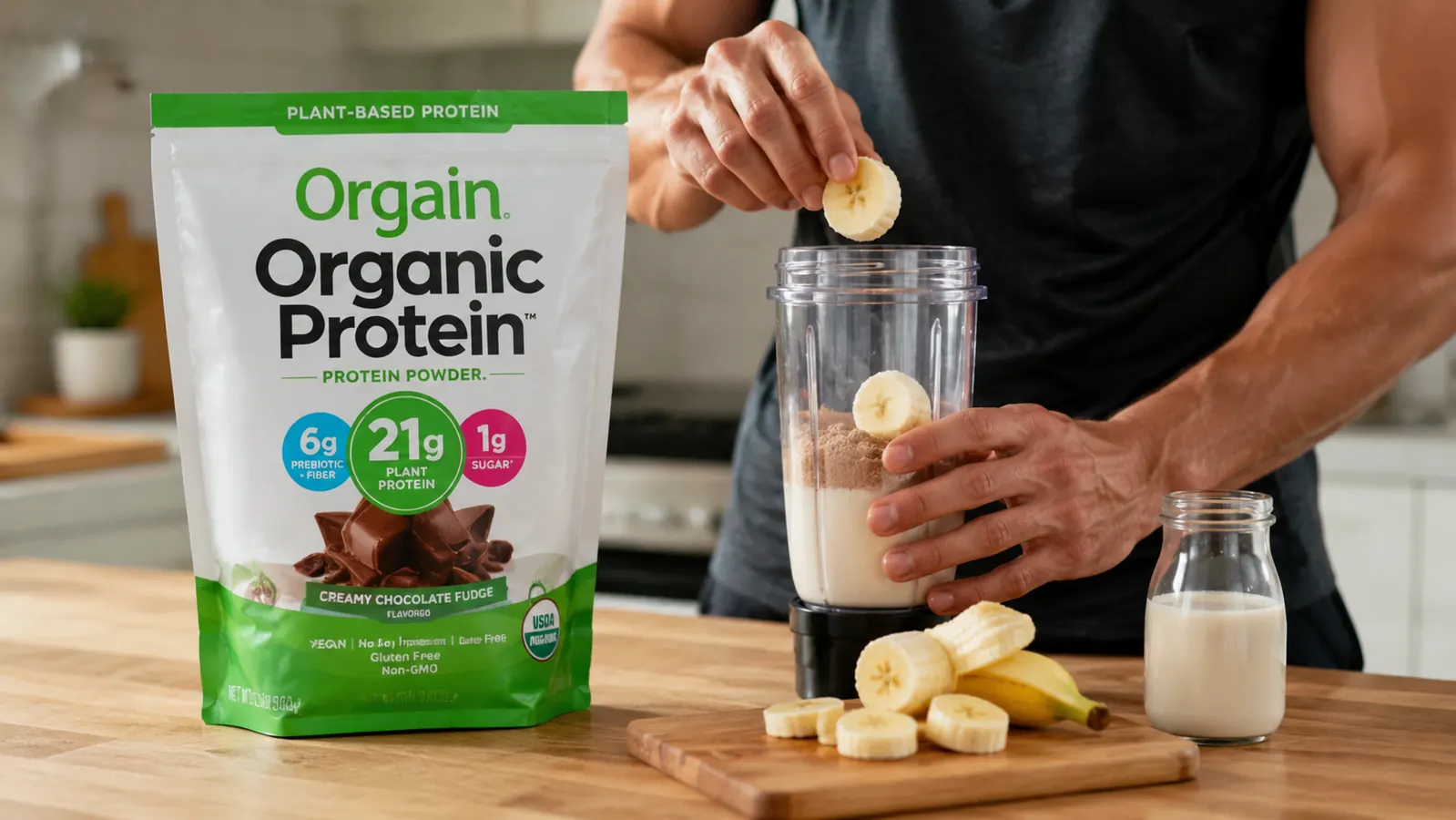
I ran Orgain for six weeks: one scoop in a shaker with 10 ounces of water post-workout on lifting days, blended with almond milk and a banana on the other days. I tracked soreness on a 1-10 scale, morning weight, and how I felt hitting compound lifts the day after a hard session. I was not looking for a miracle. I was looking for an honest read.
The Leucine Problem Nobody Puts in the Title
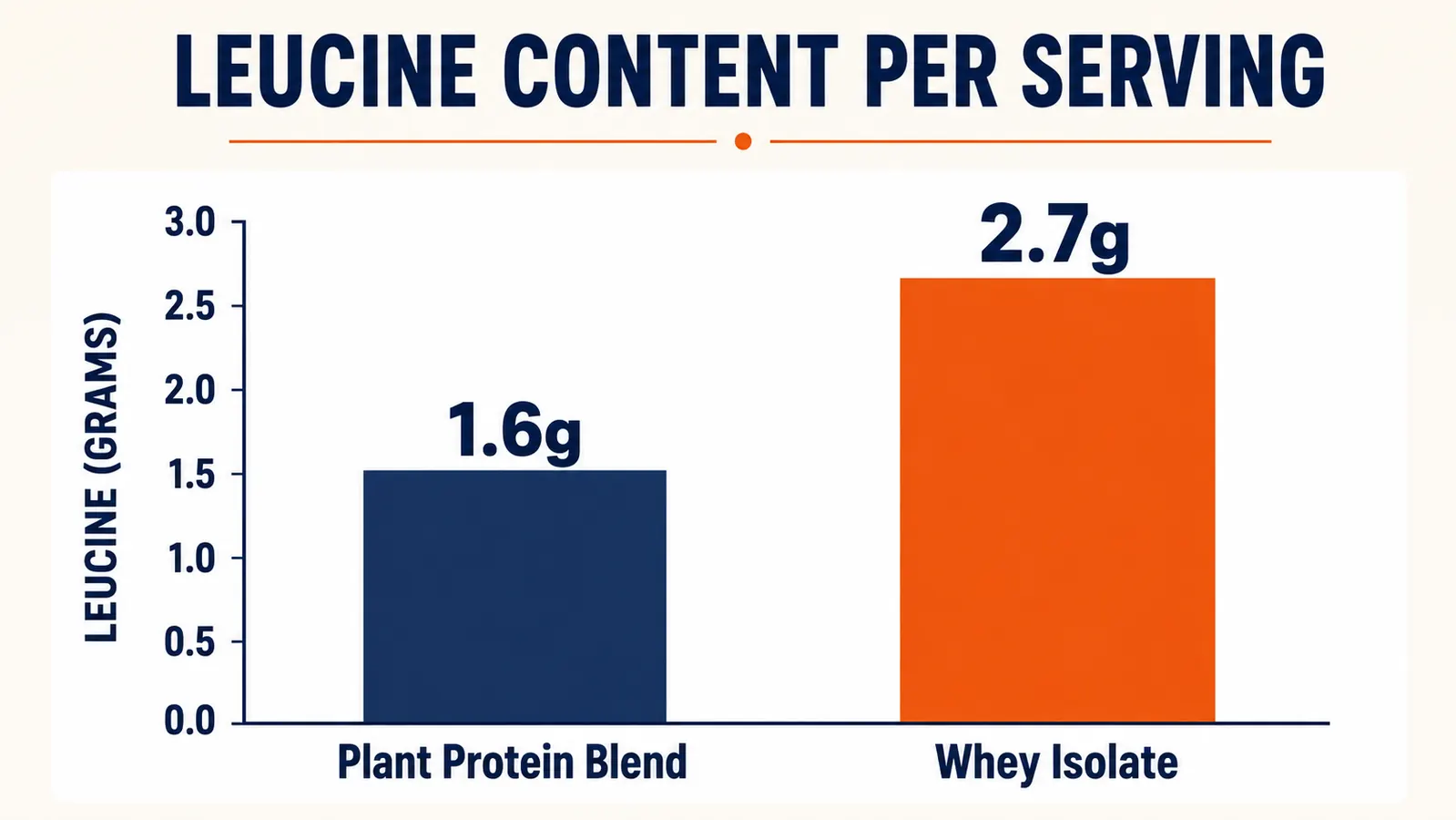
Here is the thing that the 64,000-review average glosses over: leucine is the amino acid that actually triggers muscle protein synthesis, and plant proteins have a structural disadvantage here. Orgain's blend of pea, brown rice, and chia protein delivers roughly 1.5 to 1.7 grams of leucine per serving, depending on which flavor you pull the amino acid profile on. That is a meaningful gap from the 2.5 to 2.7 grams you get from a quality whey isolate per equivalent serving.
The leucine threshold for triggering muscle protein synthesis sits around 2 to 3 grams per meal, depending on which researcher you follow. Orgain gets you close-ish on the low end, but close-ish is a different thing from clearing the threshold cleanly. For a 130-pound woman doing barre classes twice a week, it probably does not matter. For a 180-pound man trying to build or preserve muscle mass across four lifting sessions a week, the math is less forgiving. You can compensate by eating more leucine-rich food alongside the shake, or by doubling the scoop, but now you are spending twice as much per serving.
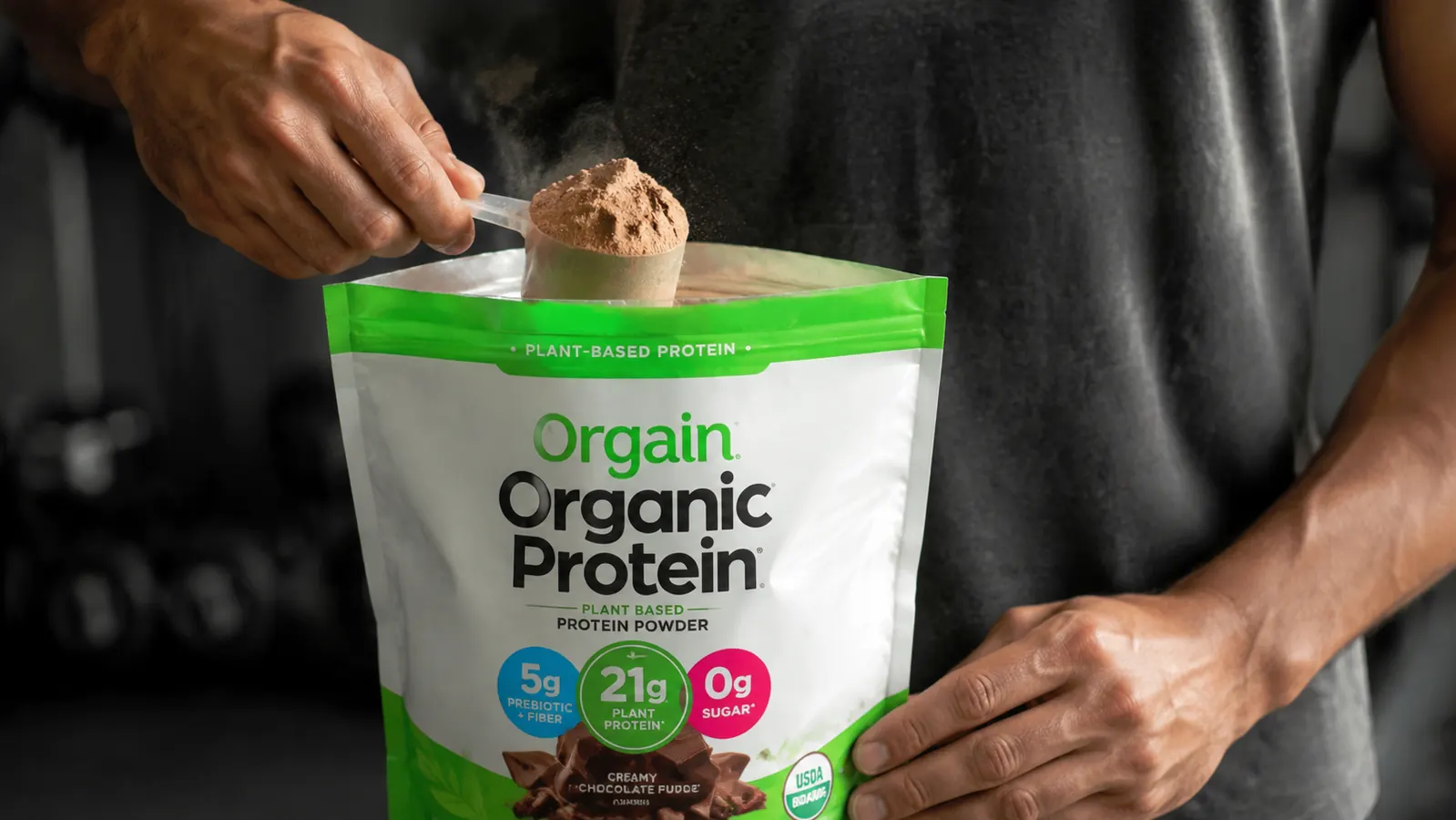
Orgain does not hide this, exactly. The amino acid profile is available if you look for it. But the marketing leads with 21 grams of protein per serving, which sounds the same as a whey isolate's 25 grams when you are scanning a shelf. It is not the same. The amino acid composition matters as much as the raw number, especially for muscle-building goals.
The Texture and Taste: What the Reviews Soft-Pedal
Mixed in plain water, the Creamy Chocolate Fudge flavor is fine in the same way that airport coffee is fine. It works. You will finish it. But there is a chalky aftertaste that lingers for about five minutes after the last sip, and depending on how you mix it, the texture goes between thin and slightly gritty. I noticed the grittiness most when I mixed it at low speed in a basic shaker without the metal ball. With a proper blender bottle and a hard 20-second shake, it smooths out considerably. Without that, it settles and the bottom inch of the cup is a different experience than the first sip.
In almond milk, it is substantially better. The fat content in the milk smooths the texture and the flavor reads more like a thin chocolate milk than a protein drink trying to be chocolate milk. If you are going to use Orgain, use it in milk or a smoothie. Using it in plain water is a harder sell and I think a lot of the middling reviews come from people who tried the water method and gave up.
Mixed in plain water, Orgain Creamy Chocolate Fudge is fine the way airport coffee is fine. It works. You will finish it. But there is a chalky aftertaste that lingers, and depending on how you shake it, the texture goes gritty at the bottom of the cup.
There is also a batch-consistency issue that shows up in the low-star reviews more than anywhere else. Multiple buyers report getting bags where the powder clumps unusually, or where the chocolate taste is noticeably weaker or more bitter than usual. I did not hit this personally across my six weeks, but I bought from Amazon's main seller listing. Third-party marketplace sellers have a longer shelf time sometimes, and organic powders with fewer synthetic stabilizers can drift in flavor. It is worth checking the expiry date when your bag arrives.
The Price-Per-Gram Reality Check
At roughly $29.59 for a 2.03-pound bag, Orgain delivers about 20 servings. That is $1.48 per serving for 21 grams of protein, or about 7 cents per gram of protein. For context, a quality whey isolate like Dymatize ISO100 runs closer to 5 to 5.5 cents per gram of protein in its typical size, with a higher leucine content to boot. You are paying a premium for the organic certification and the plant-based sourcing, which is a legitimate trade-off for some buyers. But if your goal is purely protein-per-dollar, Orgain is not the value play the price tag implies when you compare it to whey.
Against other plant proteins, the story gets more competitive. Garden of Life Raw Organic Protein runs meaningfully more per serving with similar amino acid limitations. Naked Pea is cheaper per gram but single-source and flavorless, so you are trading convenience for cost. Orgain sits in a reasonable middle position in the plant-protein category specifically. The issue is the comparison most buyers are making is not plant-protein-versus-plant-protein. It is protein-powder-versus-all-protein-powders, and on that scorecard Orgain needs the organic-and-clean-label story to justify the math.
What It Does Well: Digestibility and Clean Label
Here is where I have to be fair. My girlfriend is mildly lactose intolerant, which is why she switched off whey in the first place, and Orgain has never given her any issues. No bloating, no afternoon regret, no cramping on training days. For her, that is the entire value proposition and it is a real one. Whey protein, even isolates with most of the lactose removed, still cause digestive friction for a meaningful percentage of users. If you are one of them, the plant protein category is not a downgrade, it is a fix. And within that category, Orgain's digestibility is one of its strongest points.
The ingredients are also genuinely clean. Organic pea protein, organic brown rice protein, organic chia seeds, organic cocoa, and a short list of sweeteners and flavors that do not read like a chemistry textbook. It is USDA certified organic. It is non-GMO. If those things matter to you, they are real attributes, not marketing theater. A lot of the people buying Orgain are buying it because they care about what goes in their body, not just about the protein number on the label. That is a coherent choice and Orgain earns its place in that conversation.

The Alternatives Worth Knowing About
Before settling on Orgain as your plant protein, it is worth knowing what else is on the table. Garden of Life's Raw Organic Protein has a longer amino acid profile and adds probiotics and enzymes, but costs noticeably more and mixes even less smoothly. Vega Sport Premium Protein hits 30 grams per serving with a better leucine profile by including added BCAAs, but it runs almost twice the price per serving. Naked Pea is pea protein only, no flavor, no mixing agents, which makes it cheaper but a harder daily habit to sustain.
For most people who are new to plant protein and do not want to spend a lot of mental energy on the decision, Orgain is a reasonable starting point, especially if they can get it at Costco where the per-pound price drops. But if you have been using it for six months and you are not seeing the recovery results you want, it is worth asking whether the leucine gap is a factor before buying another bag. You can close that gap with diet or by adding a BCAA supplement, but those are real costs that do not show up in the original purchase price.
If you want a deeper head-to-head comparison of Orgain against Garden of Life, the full comparison article runs through cost-per-gram, amino acid profiles, and real-world mixability in more detail. And if you are using Orgain as part of a broader plant-based muscle-building strategy, the long-term use review covers what happens to energy and recovery over a 60-day window.
What I Liked
- Clean, short ingredient list with USDA organic certification
- Genuinely easy on digestion, including for people with mild lactose sensitivity
- Widely available at Costco and grocery stores, not just online
- Tastes noticeably better in almond milk or a smoothie blend
- Non-GMO, no artificial sweeteners or colors
- Reasonable entry price for the plant-protein category
Where It Falls Short
- Lower leucine content than whey: roughly 1.6g versus 2.5g+ per serving
- Chalky aftertaste in plain water; grittiness if not shaken properly
- Cost-per-gram is higher than most whey options and only mid-range versus other plant proteins
- Batch consistency complaints in 1-2 star reviews suggest some variability
- 21g of protein per serving is workable but not generous for taller or heavier lifters
- No digestive enzymes or added BCAAs to compensate for lower amino acid bioavailability
Who This Is For
Orgain makes the most sense for people who have a reason to avoid dairy-based protein. That is the straightforward case: lactose intolerance, a vegan diet, a personal preference for plant-sourced food, or a sensitivity to whey that shows up as bloating or skin issues. If any of those describe you, Orgain delivers a clean, reasonably priced, genuinely digestible option that is easy to find and does not require research to understand. It also works for lighter trainees who are not trying to maximize muscle protein synthesis per session but want a clean protein supplement to fill gaps in their diet.
Who Should Skip It
If you are 175 pounds or heavier and lifting with the goal of building muscle, you should know going in that Orgain is fighting with one hand behind its back on the amino acid front. You can make it work, but you will need to be intentional about getting leucine elsewhere in your diet, eating enough total protein from other sources, or doubling the serving size. If you have no reason to avoid whey and you are primarily chasing protein quality and value, a clean whey isolate gets you more muscle-building signal per gram at a lower cost per serving. Use Orgain when the dairy-free attribute is the priority. If it is not, be honest with yourself about whether you are paying for the clean-label story more than the performance.
Worth trying if you are dairy-free. Know the limitations before you commit to a six-month habit.
Orgain is a practical, accessible plant protein with a genuinely clean label and good digestibility. The leucine ceiling and texture in water are real trade-offs. Check the current price, read the flavor reviews for the specific flavor you want, and decide whether the organic certification is worth the cost-per-gram gap for your goals.
Amazon Check Today's Price on Amazon →