
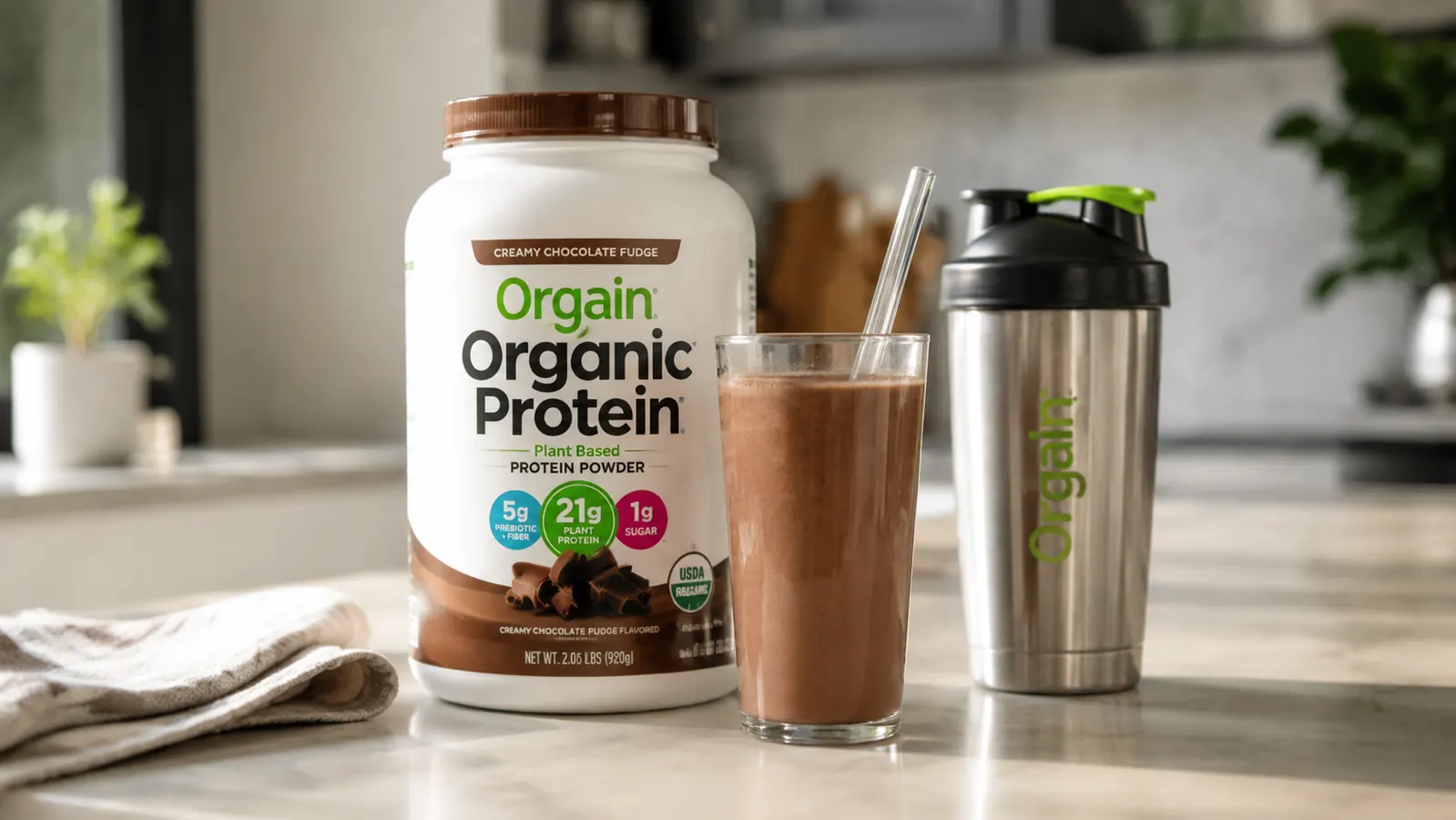
I have been using whey protein almost every day since 2019. Hydrolyzed isolates, concentrates, blends, grass-fed versions, you name it. Then my wife started having some digestive issues with dairy and our household slowly shifted toward fewer animal products. In January 2026, I decided to run a real test: sixty days on Orgain Organic Vegan Protein, Creamy Chocolate Fudge, nothing else in the shake slot. No whey backup. No cheat scoops on hard training days. Just the plant stuff, straight through.
I train five days a week, mostly strength work, some conditioning. At the time I started, I was 183 pounds at about 14 percent body fat, running a four-day upper-lower split with a Saturday cardio session. My daily protein target was 185 grams. I used Orgain for one shake a day, typically post-workout, accounting for 21 grams of that total. The rest came from whole food. Here is what sixty days actually looked like.
The Quick Verdict
A genuinely clean plant protein that holds up well for casual lifters and anyone cutting dairy, though serious strength athletes will need to account for the lower leucine ceiling and the texture shift from whey.
Amazon Check Today's Price →Still nursing whey-related bloat after every shake? Orgain's plant blend might fix that permanently.
Over 64,000 Amazon buyers have made it one of the top-rated vegan proteins on the platform. Check if today's price still makes it the easy call.
Amazon Check Today's Price on Amazon →How I've Used It
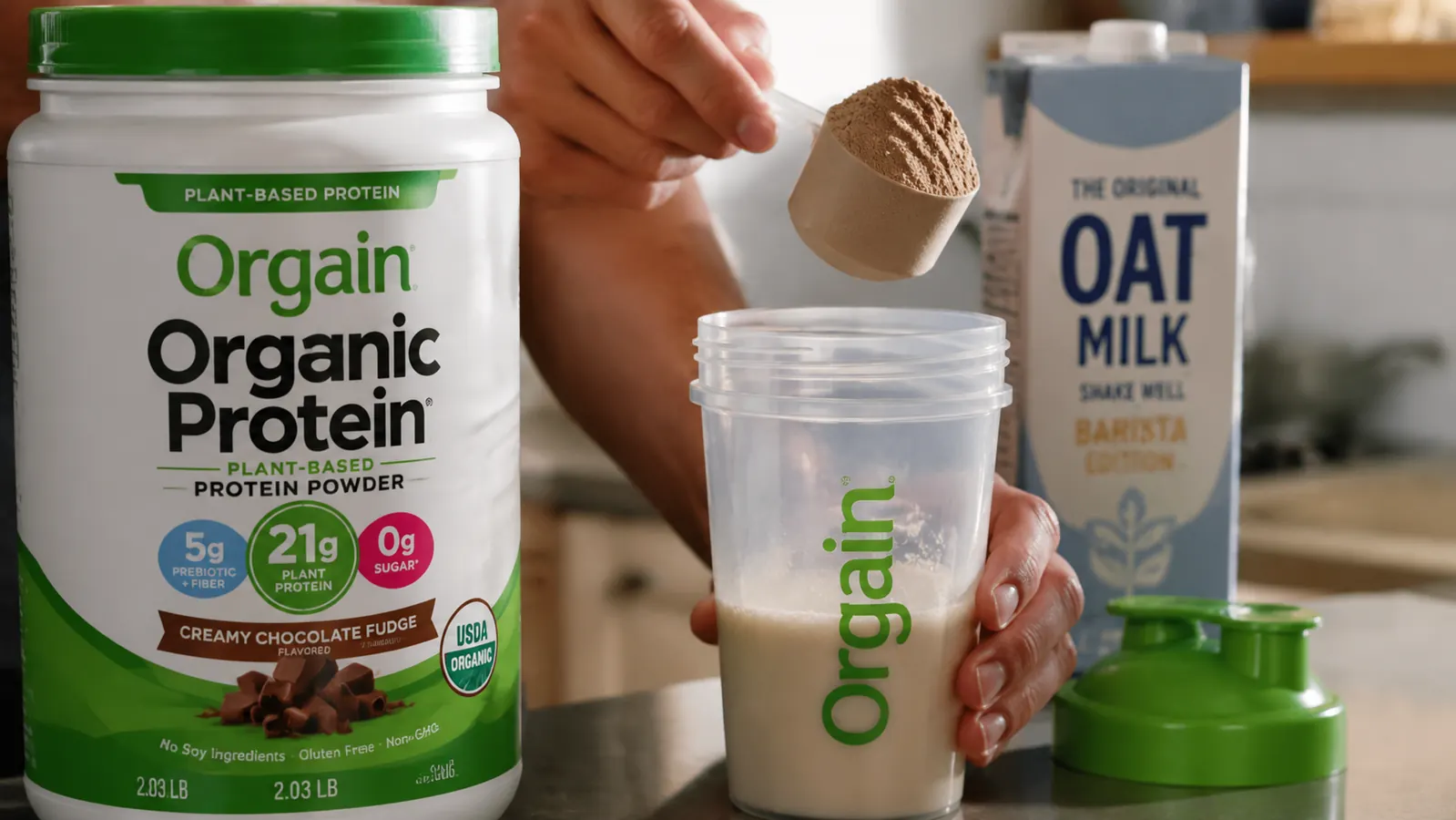
My protocol was straightforward. One scoop (about 46 grams of powder) mixed with twelve ounces of unsweetened oat milk in a shaker cup, consumed within thirty minutes of finishing my workout. On rest days, I moved the shake to mid-morning around 10 a.m. I tracked everything in Cronometer so I have actual numbers to reference rather than just vibes.
The formula is a blend of organic pea protein, organic brown rice protein, and organic chia seeds. That combination is specifically designed to get closer to a complete amino acid profile than any single plant source alone. Pea protein runs low on methionine, rice protein fills that gap, and together they land in a range that research suggests supports muscle protein synthesis reasonably well, though not with the same leucine spike you get from whey isolate.
Mixing was fine in a shaker cup with a standard whisk ball. No clumping, no gritty layer at the bottom. I tried it once in water out of curiosity and would not recommend it. The oat milk version was genuinely good enough that I finished both the 2.03-pound container I started with and ordered a second one.
Ingredient and Nutrition Deep-Dive
Per serving you get 21 grams of protein, 150 calories, 4 grams of fat, 15 grams of carbohydrates including 5 grams of fiber, and 1 gram of sugar. The carb count is higher than a whey isolate at the same protein level, which matters if you are tracking macros tightly. For context, my whey isolate was giving me 25 grams of protein for 110 calories and 2 grams of carbs. That is a real trade-off.
The organic certification carries weight here. Orgain carries USDA Organic and is non-GMO verified. The ingredient label is short and readable. No sucralose, no acesulfame-K, no artificial colors. It is sweetened with stevia and organic cane sugar, which is how it clears 1 gram of sugar total. If you are sensitive to stevia's aftertaste, that is worth knowing in advance. I personally do not pick it up, especially with oat milk, but some people absolutely do.
The cholesterol is zero, sodium sits at 150 milligrams per serving, and there are trace digestive enzymes added to help with the pea protein's reputation for causing gas. Whether those enzymes fully solve that issue is a question I will get to shortly.
Performance Over 60 Days: The Honest Timeline
Weeks one and two were the adjustment period nobody talks about. My digestion changed. Not in a bad way, exactly, but noticeably. More fiber from the chia and brown rice, plus the pea protein, added some bloat in the afternoons during week one. By week two it had calmed down significantly. I was drinking more water partly as a habit and partly because I read that the higher fiber load in plant proteins warrants it.
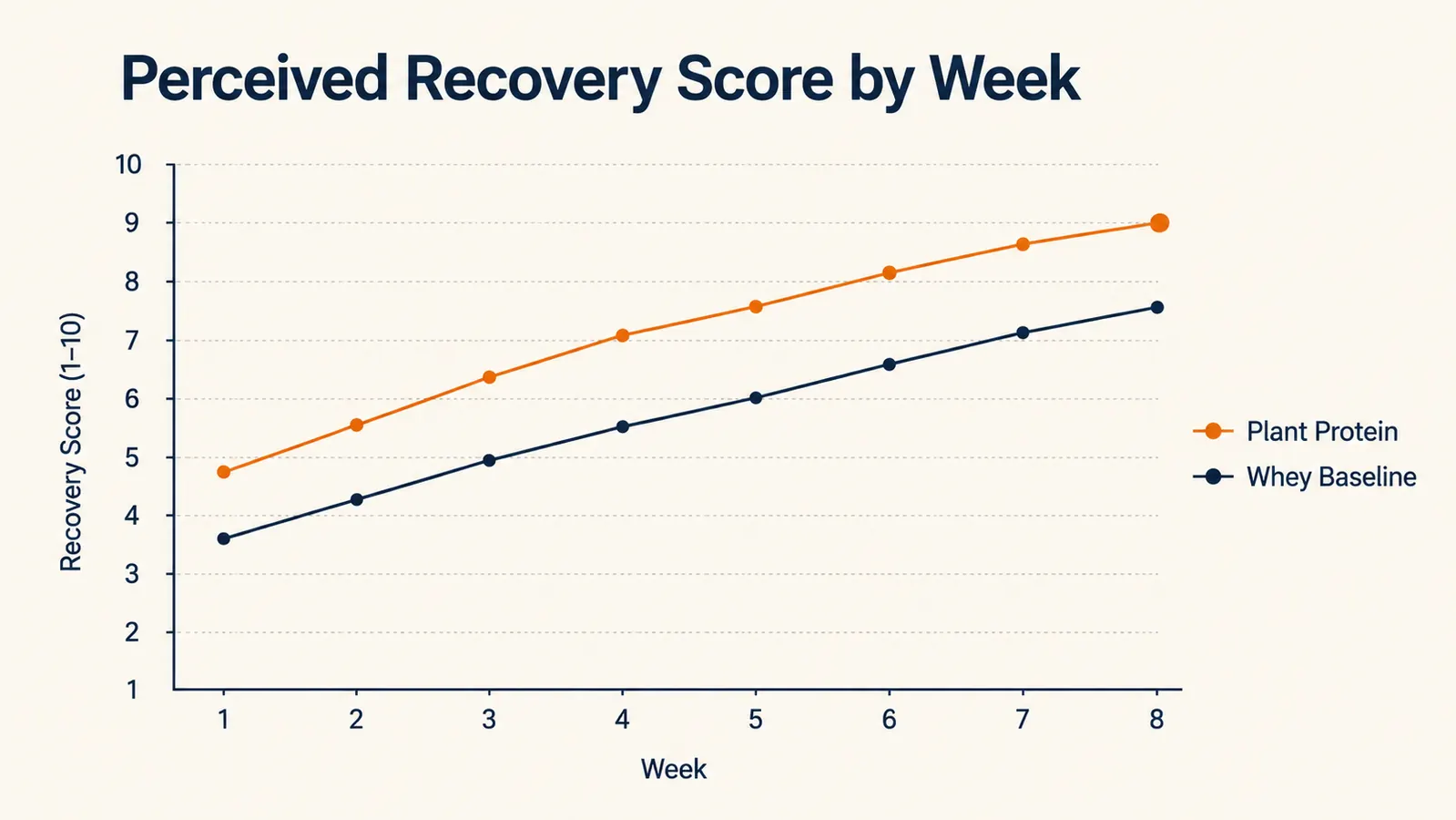
By week four, I had settled in and started paying closer attention to performance. My lifts held steady. I did not lose any weight I did not want to lose. Body composition tracked within normal variation, which for me is plus or minus a pound depending on sleep and sodium. Recovery between sessions felt about 5 to 10 percent longer than I was used to on whey, at least subjectively. My hamstrings in particular took an extra day to fully clear after heavy Romanian deadlifts during weeks three and four. Whether that was the protein switch or the intensity block I was running at the time, I genuinely cannot say with certainty.
By week five, the delayed soreness I noticed in weeks three and four had mostly resolved. Whether my body adjusted to the plant amino profile or I just adapted my training load, the end-of-experiment results were better than I expected going in.
Weeks five through eight were when things stabilized in a satisfying way. Energy levels were consistent. I was not dropping off on late training sessions. I hit a small personal record on paused squats during week seven, which I attribute more to the training block than the protein, but at minimum the Orgain was not holding me back. By the end of the sixty days, I had maintained my strength across all major lifts and lost about 1.4 pounds, which was consistent with a slight calorie adjustment I made in week six.
Taste and Mixability: What to Actually Expect
The Creamy Chocolate Fudge flavor is one of the better-tasting plant proteins I have tried, and I have tried at least a dozen at this point. It is not as rich as a good whey chocolate, but it avoids the chalky, muddy taste that kills a lot of plant powders. The stevia sweetness is mild. When mixed with twelve ounces of oat milk the texture is smooth, almost creamy. In almond milk it is thinner and slightly more pronounced on the stevia note.
The one thing that caught me by surprise was what happens if you let the mixed shake sit for more than about ten minutes. It thickens noticeably as the chia seeds absorb liquid. If you are someone who mixes your shake and then drives to work while it sits in your cup holder for twenty minutes, you will end up with something considerably thicker than what you mixed. Not undrinkable, just different. Drink it fresh and it is good. Let it sit and it is more of a pudding-shake.
Digestive Comfort: The Reason Most People Switch to Plant Protein
One of the most common reasons people move from whey to plant protein is gut comfort. Lactose issues, bloat after shakes, that heavy feeling in the chest after a scoop of concentrate. I did not personally have those problems with whey, so this was not a factor I was trying to fix. But about three weeks in, a friend who has been lactose-intolerant for years tried Orgain after watching me use it, and his feedback after two weeks was unambiguous: no bloat, no cramping, easier digestion than any protein he had tried. That tracks with what the 64,000-plus Amazon reviewers consistently say.
For me, the pea protein gas issue I mentioned during week one was real but temporary. The digestive enzyme blend in the formula seemed to do its job once my gut flora adjusted. By week three I had no issues at all.
What I Liked
- Clean, short ingredient list with USDA Organic and non-GMO verification
- 21 grams of complete protein per serving from a pea plus rice plus chia blend
- Excellent taste for a plant protein, especially with oat milk
- Zero cholesterol, low sugar, no artificial sweeteners or colors
- Very gentle on the gut once the first week of adjustment passes
- Over 64,000 Amazon reviews with a 4.5-star average backing it up
- One of the more affordable per-serving costs in the organic plant protein category
Where It Falls Short
- Higher carb count (15g per serving) compared to whey isolate at the same protein level
- Thickens significantly if you let the shake sit before drinking
- Lower leucine ceiling than whey may mean slower protein synthesis for heavy strength athletes
- Stevia aftertaste is noticeable in water, less so in plant milk
- The 2.03-pound bag goes fast if you are using a full scoop daily

Who This Is For
Orgain Organic Vegan Protein is the right call if you are dairy-free, vegan, or simply trying to reduce your animal product intake without sacrificing your protein numbers. It is also a strong choice for anyone who has experienced post-shake bloat on whey and suspects lactose is the culprit. Recreational and intermediate lifters will find it perfectly adequate for muscle support and recovery. People in the 25 to 45 demographic who prioritize clean labels and organic sourcing will appreciate what is not in the formula as much as what is.
If you are training for general fitness, running, cycling, or doing functional fitness classes three to five times a week, this protein covers your needs cleanly and at a reasonable price point. It is also a good option as a second protein source alongside whey if you want to diversify your amino acid profile and reduce your reliance on dairy.
Who Should Skip It
If you are a competitive strength athlete or bodybuilder whose results hinge on maximizing muscle protein synthesis per shake, you will get a higher leucine response from a quality whey isolate. The science on leucine thresholds for muscle protein synthesis is pretty clear, and pea-rice blends sit below whey on that curve. That does not make Orgain bad. It makes it a different tool. If total anabolic signaling per gram of protein matters to you, whey isolate is still the more efficient option. Also, if you are strictly tracking net carbs for a ketogenic approach, the 15 grams of carbs per serving will eat into your daily budget faster than alternatives.
And if you have a known sensitivity to stevia, try a sample before committing to a bag. The sweetness is subtle, but it is there, and it divides people pretty sharply.
The Verdict After 60 Days
I went into this expecting to miss whey badly and count the days until I could go back. That is not what happened. By week five I had stopped thinking about it as a substitution and started thinking about it as just the thing I use. The taste is good enough, the ingredient list is clean enough, and the results were consistent enough that I kept a tub around even after the official sixty days ended. I now use it on lighter training days and keep a whey isolate for heavier sessions when I want maximum leucine. For a lot of people reading this, particularly those making the switch for digestive or ethical reasons, that rotation is not even necessary. Orgain does the job.
If you want a deeper look at how Orgain stacks up directly against Garden of Life's plant protein, head over to our Orgain vs Garden of Life Plant Protein comparison. And if you are still on the fence about whether plant protein is even worth the switch, the 10 reasons plant-based protein is worth it article walks through the case for adding it to your stack even if you still eat meat.
If cleaner ingredients and zero dairy bloat matter to you, Orgain is worth checking out at today's price.
The 2.03-pound bag covers roughly 25 full servings. At current pricing it is one of the better per-serving values in the organic plant protein category, and with 64,000-plus reviews it is not a gamble.
Amazon Check Today's Price on Amazon →