
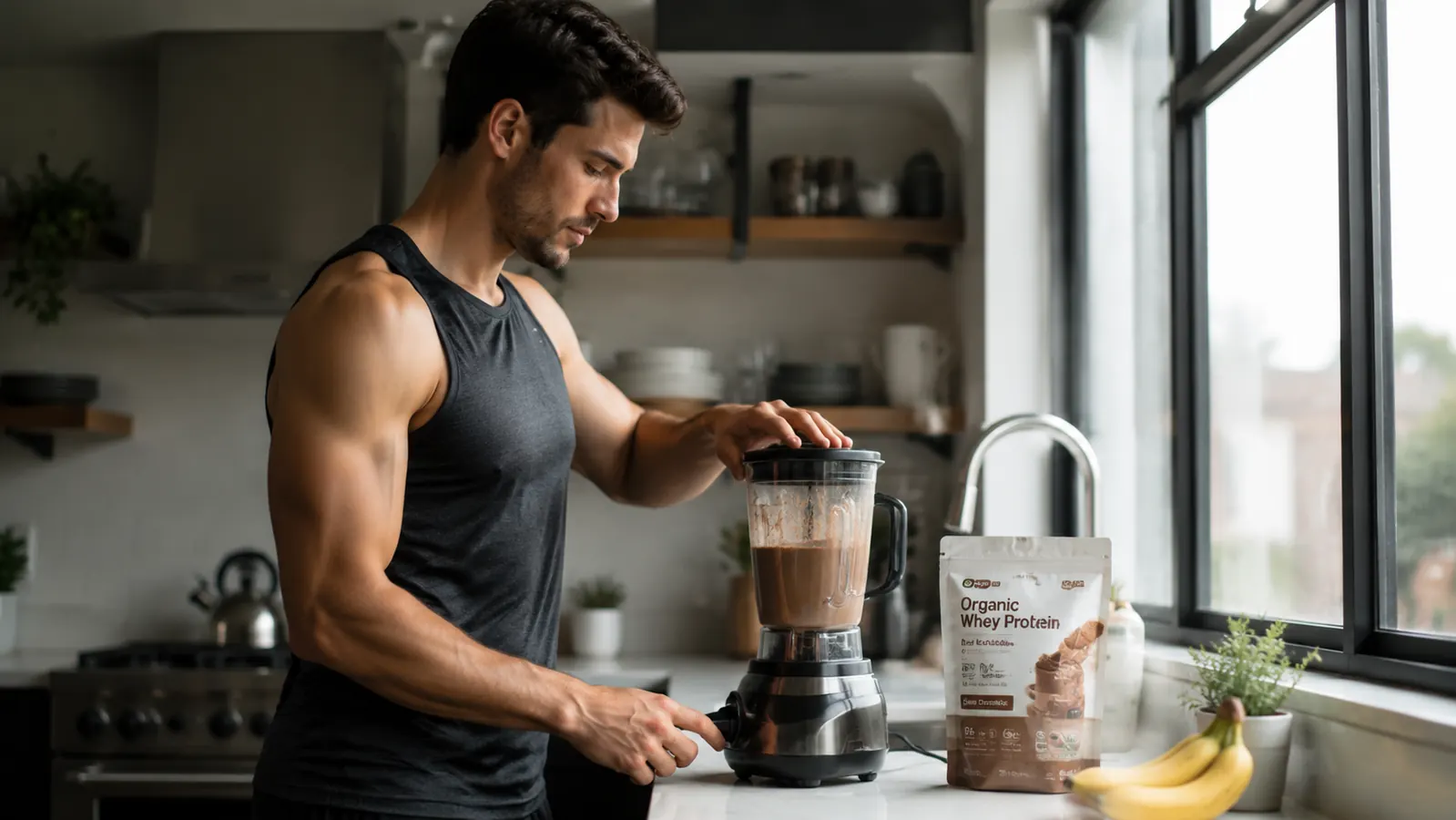
Here is the thing nobody told me when I switched to a mostly plant-based diet three years ago: hitting your protein target is not the hard part. The hard part is hitting it consistently, across multiple meals, with sources that actually absorb well enough to drive muscle protein synthesis. I went six weeks thinking I was doing everything right and barely moved the needle on the scale or in the mirror. It was not a calorie problem. It was a protein quality and timing problem, and it took some real trial-and-error to sort out. For the record, the plant-based protein I'm using throughout this guide is Orgain Organic Vegan Protein. It's the one I land on after testing four others over the past two years.
The steps below are what I actually use now. Some of it is conventional wisdom backed by sport science. Some of it came from adjusting things week by week and paying attention to what my body was doing. I weigh 178 lbs and train four days a week, mostly compound lifts. The system here targets around 160-180g of protein daily, which is roughly 0.9-1g per pound of bodyweight. Adjust the numbers for your size, but keep the structure the same. And yes, Orgain Organic Vegan Protein plays a specific role in this setup, which I will explain at the right step.
Struggling to hit 150g of protein without meat? This organic plant powder fills the gap.
Orgain Organic Vegan Protein delivers 21g of clean plant protein per serving from peas, brown rice, and chia. No artificial flavors, easy on digestion, and rated 4.5 stars by over 64,000 buyers. It is the supplement anchor I recommend building this system around.
Amazon Check Today's Price on Amazon →Step 1: Calculate Your Real Daily Target and Stop Rounding Down
Most plant-based guides tell you 0.7-0.8g of protein per pound of bodyweight is enough. That might be adequate for general health, but if you are actively trying to build muscle, research consistently points to 0.9-1g per pound as the sweet spot for maximizing muscle protein synthesis. On a plant-based diet, there is a case for going slightly higher, closer to 1g, because plant proteins have lower digestibility scores than whey in head-to-head studies. The protein you eat is not the same as the protein you absorb.
Take your bodyweight in pounds and multiply by 0.9 for the floor and 1.0 for the ceiling. For a 160 lb person, that is 144-160g daily. Write the number down. Put it in your phone notes. This number is not a loose guideline, it is the variable you are managing every single day. Most people who struggle to build muscle on plants never actually audit what they are getting. They assume edamame and lentils are covering it when in reality a typical dinner bowl lands around 25-30g and they are trying to get to 150g across three meals.
Use Cronometer or a simple notes table for the first two weeks. Not forever, just long enough to calibrate your eye. After two weeks you will know instinctively whether a meal is a 15g or a 40g meal, and you can stop logging. But the calibration step is non-negotiable.
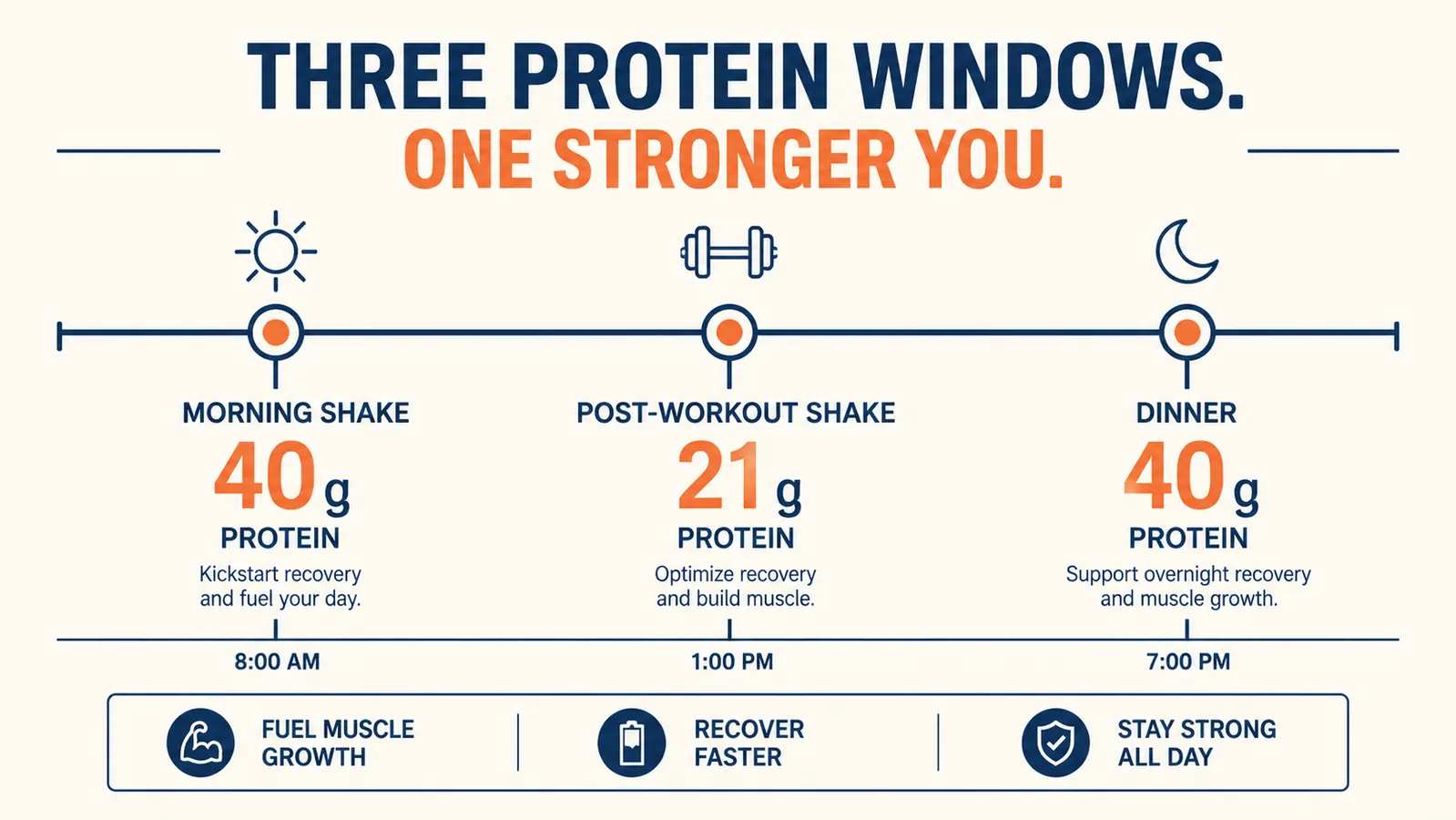
Step 2: Build Your Three High-Protein Anchor Meals Around Whole Food Sources
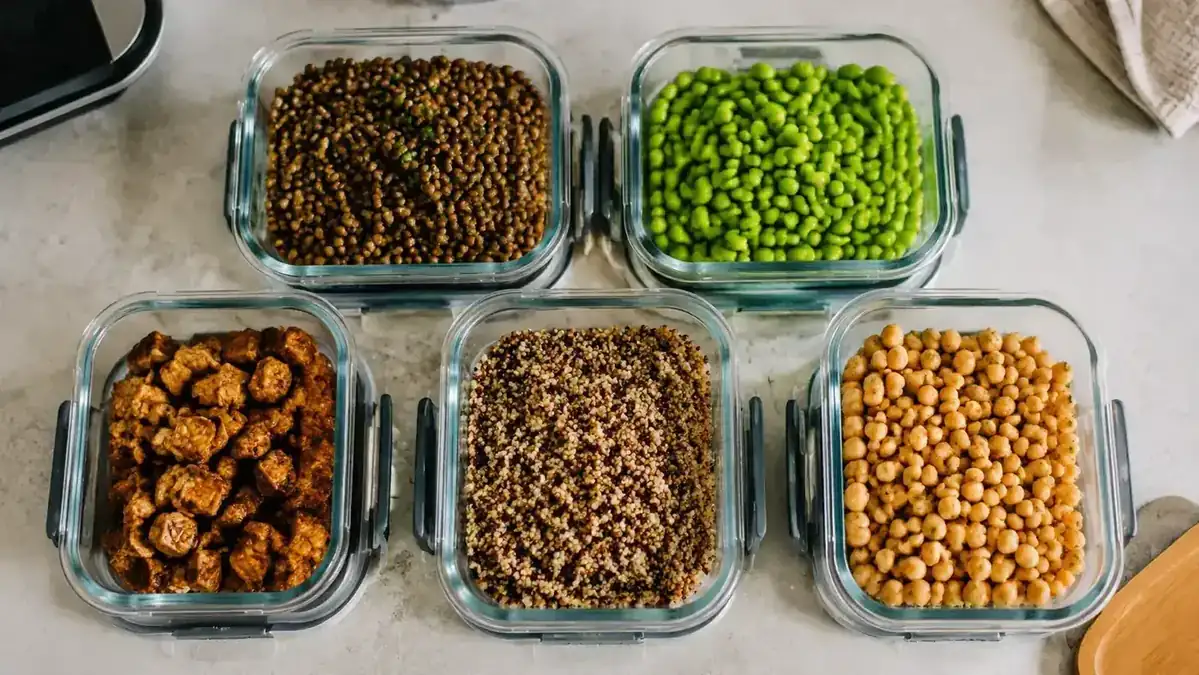
Supplements should fill gaps, not carry the load. Your three main meals should each hit 35-45g of protein from food before a single scoop of powder touches your day. The plant sources that make this actually achievable are: tempeh (31g per cup, also has all essential amino acids), edamame (18g per cup, high leucine), lentils (18g per cup cooked), chickpeas (15g per cup), tofu firm variety (20g per cup), and hemp seeds (10g per 3 tablespoons, useful on top of bowls). Quinoa is good at 8g per cup but should not be a primary source.
The issue with plant proteins individually is incomplete amino acid profiles. Tempeh and edamame are exceptions. For everything else, pair them deliberately. Lentils plus brown rice is the classic complete combination. Chickpeas plus whole grain bread. Black beans plus corn tortillas. You do not need to eat these in the same bite, just across the same meal window. The old myth that you need to eat complementary proteins simultaneously was debunked decades ago. Your body maintains an amino acid pool throughout the day.
Plan your three anchor meals on Sunday before the week starts. Each one should have a primary protein source (from the list above) landing between 35g and 45g. If any meal is consistently landing under 30g, something needs to swap out. Tofu scramble in the morning with hemp seeds on top, a lentil-rice bowl at lunch, and a tempeh stir fry at dinner gets you to 120g from food alone. The remaining 40-50g comes from Step 3.

Step 3: Use Plant Protein Powder Strategically at Two Specific Windows
Protein powder on a plant-based diet is not a crutch, it is a precision tool. I use it at two windows: within 30-45 minutes post-workout and as a second breakfast shake when my morning meal is going to be light. I do not use it as a meal replacement. I use it as a topper that gets me to my daily target without adding a fourth full meal.
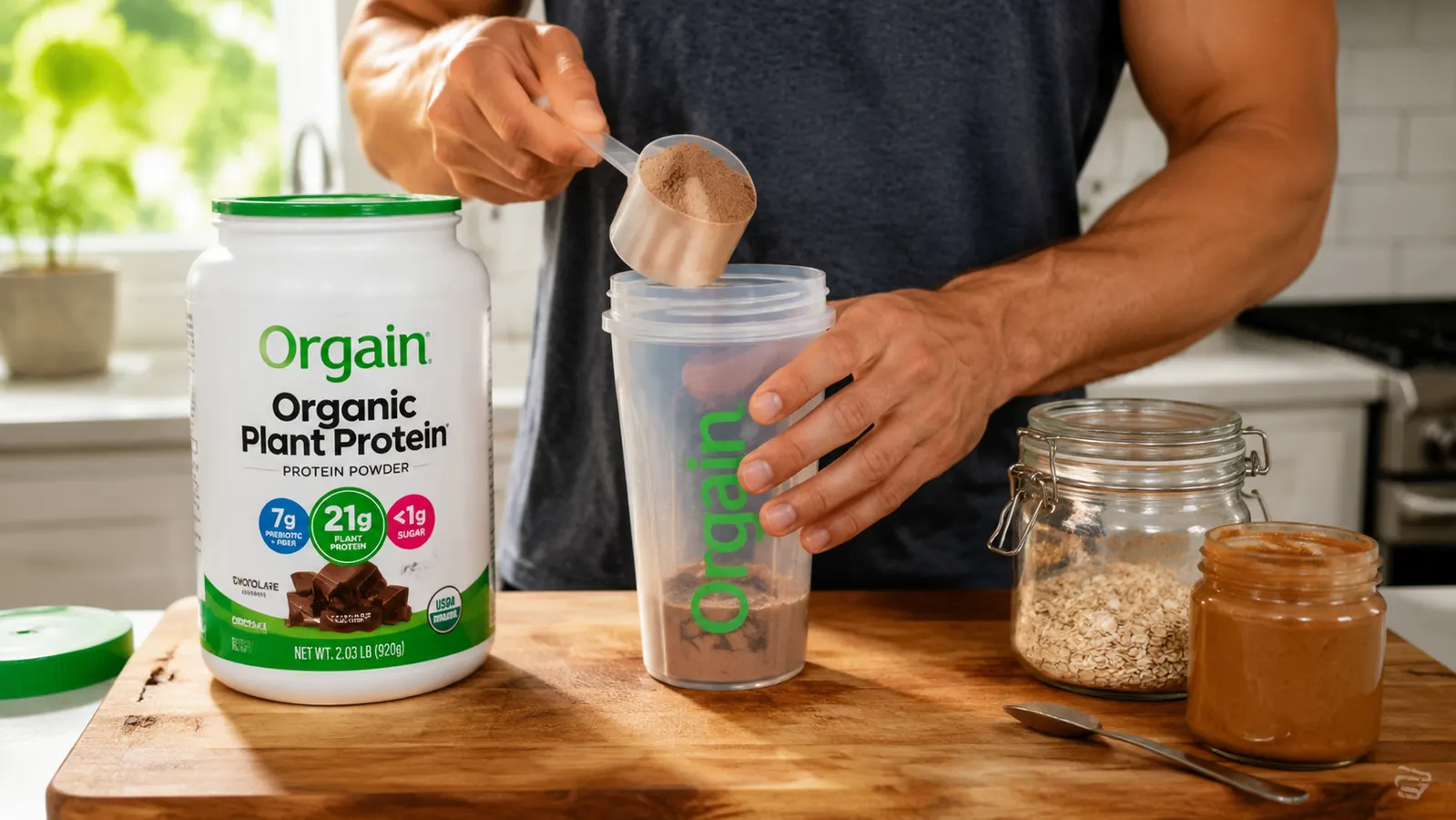
The powder I have used consistently for the past 14 months is Orgain Organic Vegan Protein in the Creamy Chocolate Fudge flavor. One scoop delivers 21g of protein from a blend of pea protein, brown rice protein, and chia seeds. The combination matters because pea protein is high in BCAA content, especially leucine, which is the amino acid that directly triggers muscle protein synthesis. Brown rice protein fills in the amino acid gaps that pea protein leaves. Chia adds a small fat and fiber buffer that slows the spike slightly compared to a pure isolate, which for a post-workout shake that is not immediately followed by a carb source is actually useful.
Orgain mixes clean in water with just a shaker bottle. No clumping, no gritty residue at the bottom. The taste is real chocolate, not chemical sweetness. It does not have the chalky aftertaste that some rice-heavy plant proteins carry. At just under 30 bucks for 2 lbs on Amazon, the cost per gram of protein is competitive with mid-tier whey blends. The 64,000-plus Amazon reviews back up what I have experienced personally: this is a powder people actually reorder.
Step 4: Front-Load Protein Earlier in the Day
Most people eating plant-based end up back-loading their protein. A light breakfast, a medium lunch, and then a massive protein push at dinner trying to catch up. The problem is your body can only use roughly 30-40g of protein per meal for muscle protein synthesis. Eating 70g at dinner does not double the muscle-building signal, it just means more protein gets oxidized for energy or excreted.
The fix is simple but requires intentionality. Get at least 40g of protein by 10am. If you train in the morning, that means your post-workout shake plus a tofu scramble or a high-protein oatmeal bowl with hemp seeds. If you train in the afternoon, it means a solid first meal before you even think about your workout. I started tracking my 10am number specifically, not just my daily total. When my 10am number is 40g or above, my daily total almost always hits the target. When it is under 25g, I am playing catch-up all day.
Front-loading protein changed my results faster than any other single adjustment. When I hit 40g by 10am, the rest of the day almost sorts itself out.
Step 5: Pair Protein With Adequate Carbohydrates Around Training
This step gets skipped constantly because people conflate low-carb with clean eating. Plant-based muscle building requires carbohydrates, particularly around your training window. Carbohydrates are not the enemy of body composition, insulin resistance from chronically high carb intake is. But acute insulin response post-training is actually beneficial, it helps shuttle amino acids into muscle tissue and suppresses muscle protein breakdown.
For your post-workout meal or shake, pair your Orgain scoop with a fast-digesting carb source. A banana, a small serving of oats blended in, half a cup of frozen mango. Something that gives you 30-50g of carbohydrates alongside the 21g of protein from the shake. This combination outperforms protein alone in muscle glycogen replenishment studies, especially for people training four or more days per week. I blend Orgain with a banana, a cup of oat milk, and a tablespoon of almond butter. The macros come out to approximately 38g protein (Orgain plus oat milk), 52g carbohydrates, and 12g fat. That is a solid post-workout window.
Pre-workout nutrition matters too. One to two hours before training, eat a meal with at least 25-30g of plant protein and 50-70g of slow-digesting carbohydrates. Lentils with brown rice, a tempeh bowl, black bean tacos on whole grain tortillas. This maintains the amino acid pool during your session and reduces muscle protein breakdown while you are under load.
What Else Helps
Three supporting factors that most plant-based muscle building guides completely skip over. First, creatine monohydrate. It is not an animal product. Vegetarians and vegans tend to have lower baseline muscle creatine stores because creatine is found naturally in meat. Supplementing 3-5g daily gives plant-based athletes a disproportionately large performance benefit compared to omnivores who are already partially saturated. If you are plant-based and not taking creatine, you are leaving a measurable performance advantage on the table.
Second, sleep and recovery quality. Muscle is built during recovery, not during training. Getting less than seven hours of sleep tangibly reduces muscle protein synthesis regardless of how dialed in your protein intake is. If you are training hard and eating right but not recovering, the results will lag. Third, progressive overload. Your body only builds additional muscle if it is regularly challenged with more load or volume than the previous session. Track your weights and reps the same way you track protein. If those numbers are not trending up over a month, the problem is probably training stimulus, not your protein powder.
For a deeper look at how plant-based protein stacks up against whey and which powder formats suit different training goals, the Orgain 60-day review covers the specifics in detail. And if you are weighing whether to add a plant protein to an existing whey stack, 10 reasons plant protein is worth it even for meat eaters breaks down the rationale.
Ready to lock in your plant-based protein system? Start with the powder that actually tastes good.
Orgain Organic Vegan Protein is the supplement anchor in this system. Twenty-one grams per serving from peas, brown rice, and chia. No artificial sweeteners, mixes clean in a shaker, and the chocolate flavor is one of the few plant powders you will actually look forward to drinking. Over 64,000 Amazon reviews and a consistent reorder rate.
Amazon Check Today's Price on Amazon →