
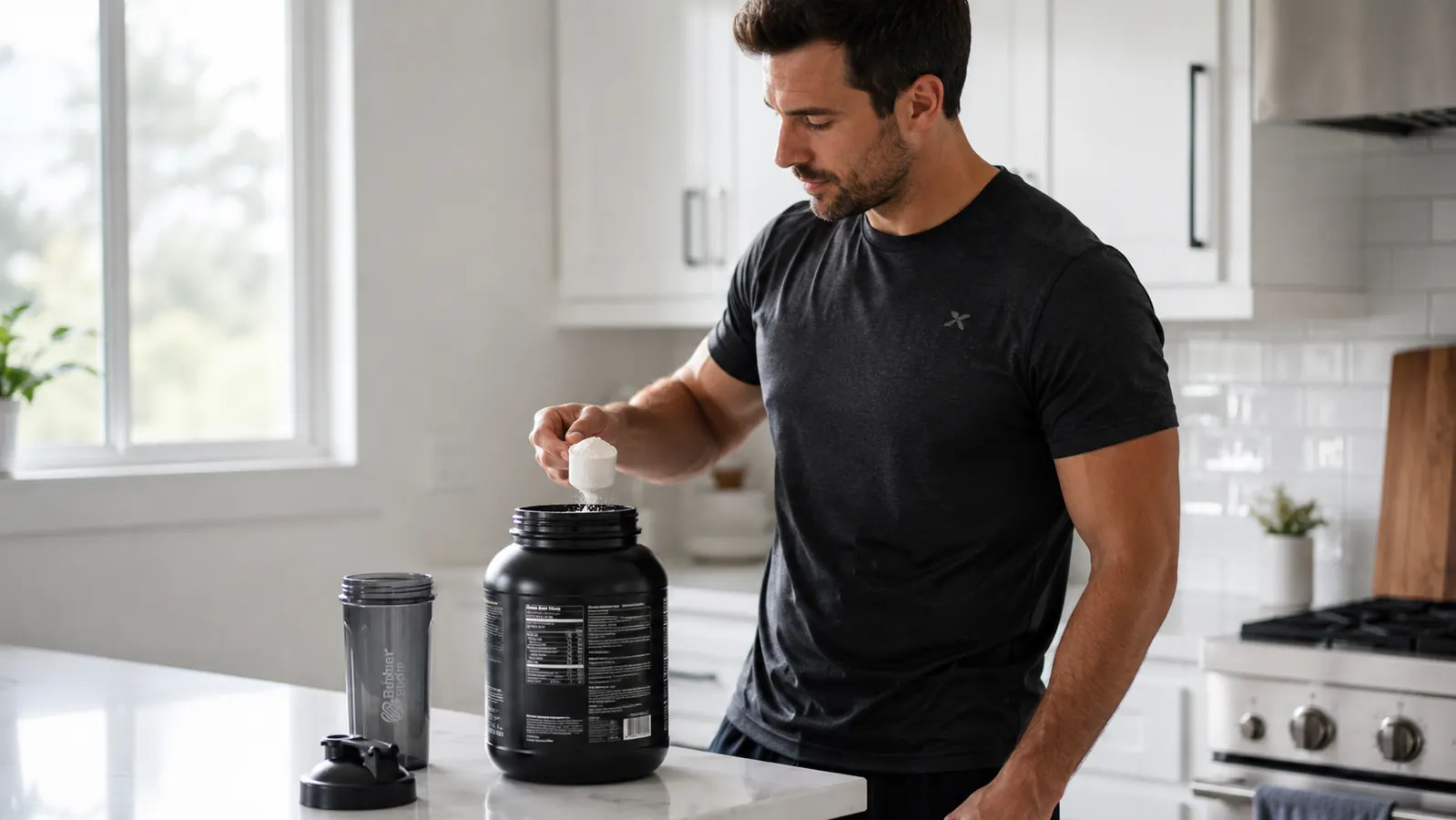
Most people who struggle to hit their protein number don't have a food problem. They have a system problem. They eat pretty well, they know chicken and eggs matter, but they get to 7pm with 80 grams still to go and no appetite left to chase them. I spent about a year doing exactly that before I figured out a routine that actually worked. The fix wasn't eating more food. It was using whey isolate at the right two windows in my day so that food could carry the rest.
I weigh 181 pounds, I lift four days a week, and my target is 175 grams of protein per day. Not a crazy number, but higher than most people hit by accident. Once I started treating Dymatize ISO100 as a structured tool rather than a random add-on, I stopped missing my target. This guide walks through exactly how I set it up, including the cost math that made a $110 tub feel reasonable.
Still guessing on protein? ISO100 is the isolate I use daily to close the gap.
Dymatize ISO100 delivers 25 grams of hydrolyzed whey isolate per scoop with under 1 gram of fat and lactose. 12,000+ Amazon buyers rate it 4.6 stars. If you're ready to build your stack around something that actually works, check today's price before the most popular flavors sell out.
Amazon Check Today's Price on Amazon →Step 1: Find Your Actual Daily Protein Target
Before you pour a single scoop, you need a number. Most sports nutrition research lands in the range of 0.7 to 1 gram of protein per pound of bodyweight per day for people doing regular resistance training. If you're 160 pounds and lifting three or four times a week, that puts you somewhere between 112 and 160 grams. I use 1 gram per pound as my personal ceiling because it's clean math and leaves no room for underestimating.
Write your target down and keep it visible, on a sticky note on your fridge, in your phone notes, wherever you'll actually see it. The single biggest reason people miss their protein is not tracking at all. You don't have to log every meal in an app forever, but for the first two weeks, at least count the grams in your two biggest food sources each day so you know your baseline gap. That gap is what your shakes will fill.
One more thing on the target: it doesn't have to be exact every single day. Getting within 10 percent is fine. If your goal is 160 grams and you hit 145 on a day you're traveling, that's not a failure. Consistency over weeks matters more than perfection on any single day.
Step 2: Map Your Two Protein Windows
Most people think of protein shakes as post-workout drinks. That's one use, but it's not always the most important one. I look at my day and find two windows where food protein is naturally low or rushed, and I plug shakes into those spots. For me that's mid-morning around 10am (two hours after a light breakfast) and immediately post-workout, which is usually 5pm. Each shake is one scoop of ISO100, which gives me 25 grams both times, so 50 grams total from shakes before dinner even starts.
Your two windows will be different. Some people do one shake first thing in the morning and one before bed. Others do a double scoop right after their workout and nothing else supplemental. The point is to pick two fixed times, not 'whenever I remember.' Fixed windows become habits. Habits don't require willpower.
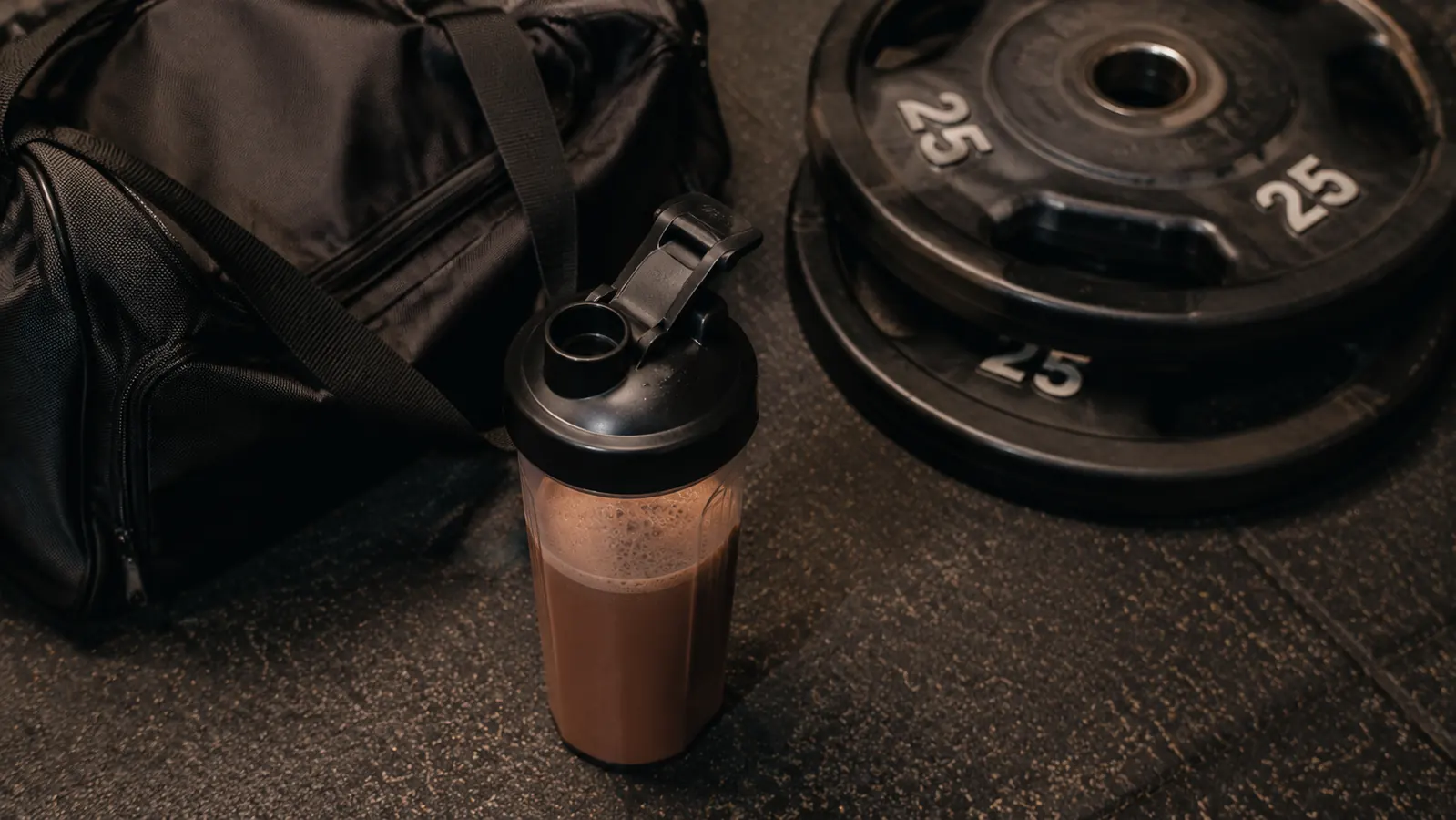
If you only have one clear low-protein window in your day, use one scoop there and let food carry the rest. Don't force a second shake just because two sounds like more. The goal is hitting the target, not drinking protein for its own sake. ISO100 mixes cleanly in just water so there's no prep friction on busy days. I use a standard 20-ounce shaker, 8 ounces of cold water, one scoop, 20 shakes. Done in under two minutes.
Step 3: Build the Rest of Your Target From Food
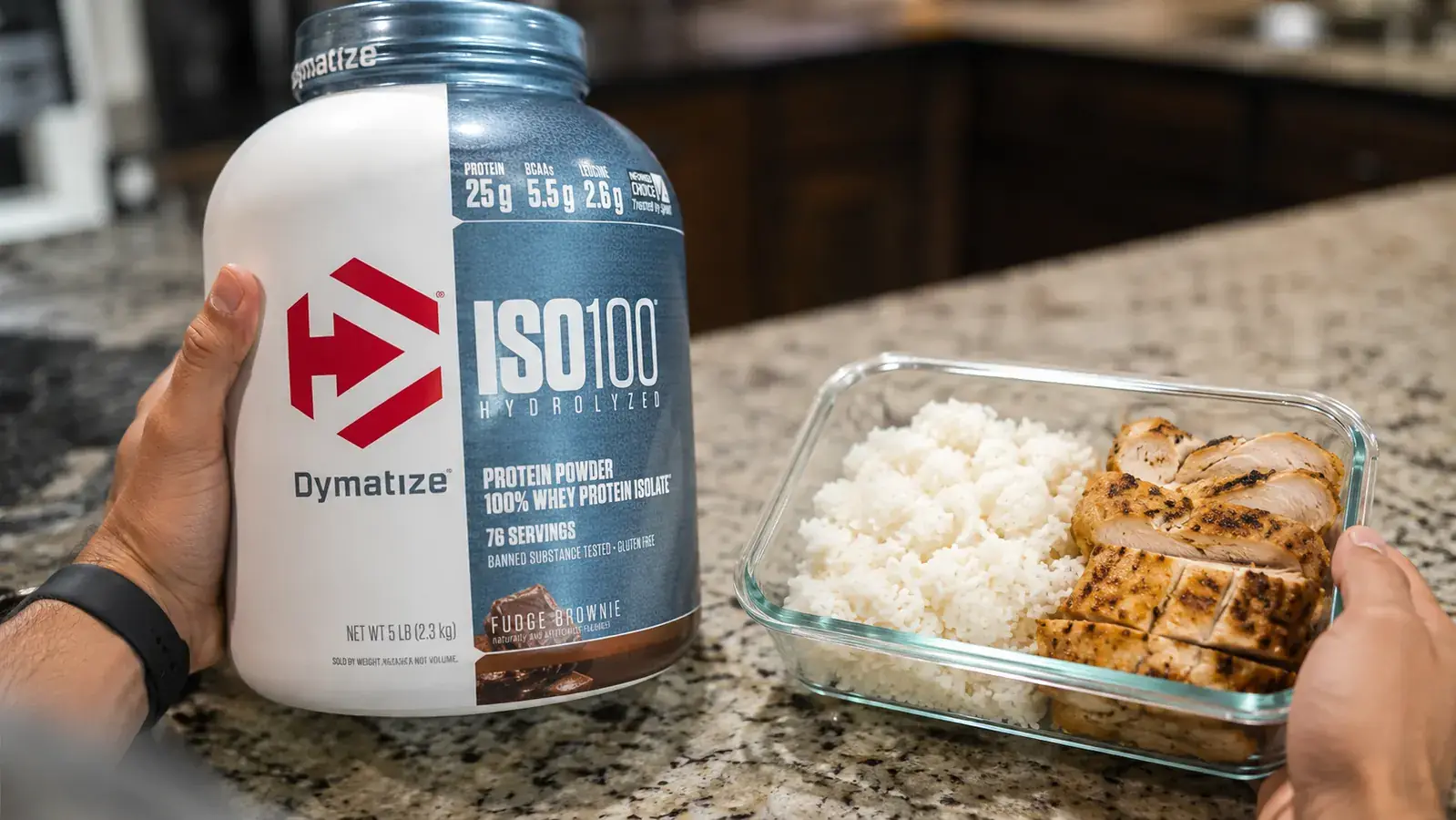
With 50 grams coming from shakes, a 175-gram day needs 125 grams from food. That sounds like a lot until you break it out. A 6-ounce chicken breast is roughly 50 grams. Two eggs with two extra whites at breakfast is about 20 grams. A cup of Greek yogurt as an afternoon snack is 17 grams. A 6-ounce piece of salmon at dinner is another 34 grams. Add those up: 121 grams from food, 50 from shakes. You're at 171, close enough.
The lesson is that shakes are not supposed to carry the whole load. They're the bridge across the gaps. If you're relying on four shakes a day to hit your number, you're probably under-eating protein-dense food, which gets expensive fast and gets old fast. Two quality shakes plus real food is sustainable for years. Four shakes a day typically lasts about three weeks before you start skipping them.
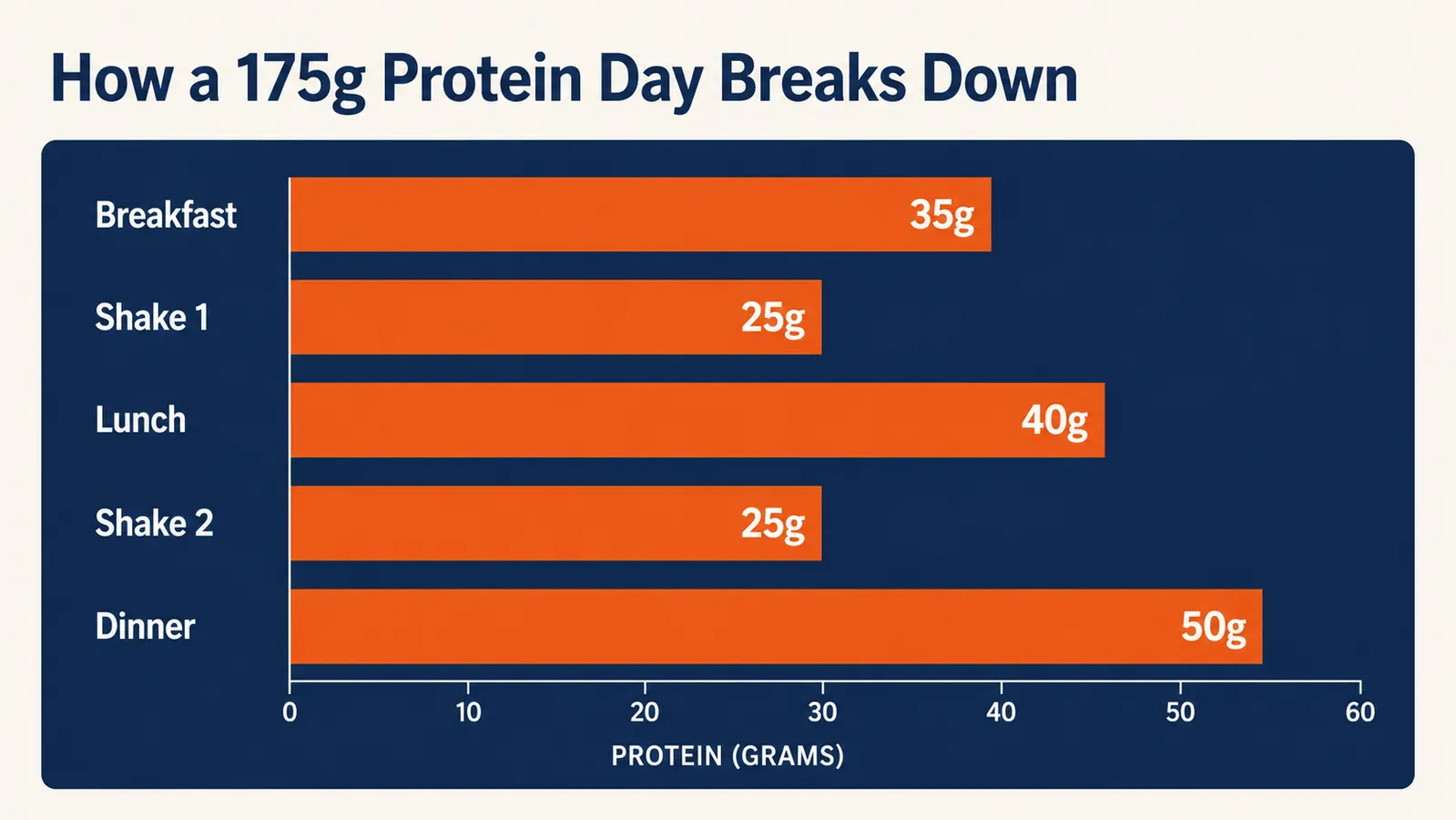
Shakes are the bridge across the gaps, not the whole road. Two quality scoops plus real food is a system you can run for years. Four shakes a day usually lasts about three weeks.
Step 4: Do the Cost-Per-Gram Math (It Probably Surprises You)
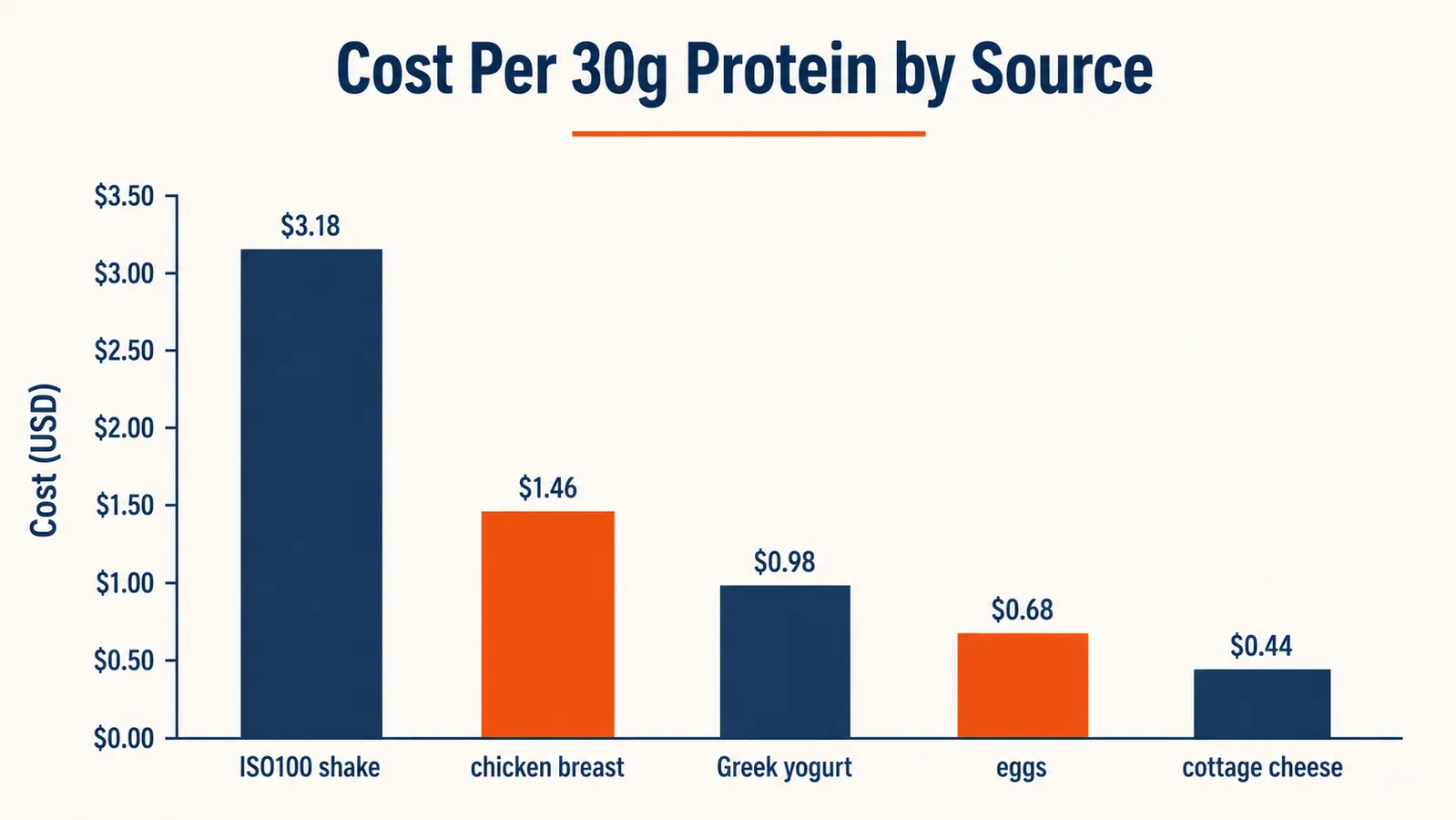
At today's price, a 5-pound tub of Dymatize ISO100 Gourmet Chocolate has roughly 73 servings. Each scoop is 25 grams of protein. That's 1,825 grams of total protein per tub. Divide the current price by that number and you get your cost per gram. For most isolates in this range, that works out to somewhere between 5 and 7 cents per gram of protein, depending on the sale you catch.
For comparison, chicken breast from a grocery store is roughly 4 to 5 cents per gram of protein when you account for the cooking loss. Greek yogurt is closer to 7 to 9 cents per gram. Eggs land around 3 to 4 cents per gram at current prices. So the common assumption that protein powder is expensive is only partially true. ISO100 is cost-competitive with most whole food sources, and it has virtually zero prep time. That's not nothing when you're trying to hit a number consistently across a busy week.
The tub lasts me about 36 days using two scoops per day. That's consistent, predictable, and easy to plan around. I order a new one when the current tub has about 10 servings left so I never run out. If you have a Prime subscription, subscribe-and-save drops the price a little more.
Step 5: Handle the Weekends (Where Most People Fall Apart)
Monday through Friday is usually manageable because your schedule is predictable. Weekends are where people miss protein because the routine breaks down. Brunch replaces breakfast. You skip a workout. You eat out for two meals and have no idea what the protein content actually was. By Sunday night you've had maybe 80 grams across two days and your weekly average takes a hit.
My weekend fix is simple: I keep the morning shake window on both days no matter what else is happening. Even if I sleep in, even if brunch is on the agenda, I have one scoop of ISO100 within an hour of waking up. That locks in 25 grams before the chaos starts. Then I'm only 150 grams away from my target instead of 175. Brunch, dinner, and one afternoon snack can usually cover 150 grams without any stress.
On travel weekends I pack individual serving packets if I have them, or I just fill a small container with a pre-measured scoop and throw it in my bag with an empty shaker. The ISO100 hydrolyzed formula mixes without clumping in room temperature water, which matters when you're not near a blender or ice.
What Else Helps
A few things that made this system work better once I had the basics in place. First, picking one flavor and sticking with it for at least 60 days. I know that sounds boring, but changing flavors constantly means you're always evaluating whether you like it instead of just drinking it automatically. ISO100 Gourmet Chocolate was my pick and it became invisible to me by week three. I don't love it, I don't hate it, I just drink it. That's the goal.
Second, if you're lactose sensitive at all, a hydrolyzed isolate like ISO100 is worth the extra few cents per gram over a concentrate. The hydrolysis process breaks down the whey to near-zero lactose, which means you won't spend the hour after your shake feeling off. I had that problem with concentrates for two years before switching and it was a straightforward fix. If you want more detail on the isolate vs concentrate decision, the breakdown in the 10 reasons whey isolate beats whey concentrate article covers the full comparison.
Third, don't obsess over the post-workout window the way old gym culture taught you to. Research on the 30-minute 'anabolic window' has softened a lot. Getting protein within two hours is plenty. The more important variable is total daily protein, not exact timing around your workout. That said, post-workout is a natural low-hunger, high-convenience moment for a shake, so it's a good window to use. Just don't stress if you miss the exact 20-minute mark.
If you're curious whether ISO100 is the right specific product for your goals, the full 90-day Dymatize ISO100 review covers the taste, solubility, packaging, and what I noticed after three months of daily use. The how-to here assumes you've already decided isolate is your tool. That review will help you decide if this particular one is the right fit.
Two scoops a day. One tub every five weeks. ISO100 is the isolate that holds up.
Dymatize ISO100 has 25 grams of hydrolyzed whey isolate per scoop, mixes clean in water, and comes in enough flavors to find one you'll actually drink long-term. Over 12,000 Amazon reviews back it up with a 4.6-star average. Check today's price and see if the Gourmet Chocolate or Fudge Brownie is currently in stock.
Amazon Check Today's Price on Amazon →