Here is the short version: a single pair of FEIERDUN DS2 adjustable dumbbells, a sturdy bench, and a pull-up bar will cover ninety percent of what most home lifters actually need. Most people never build a home gym because they think they need everything at once. A power rack, a barbell, bumper plates, a cable machine, a bench, a pull-up station. The list gets overwhelming fast and the budget disappears before a single rep gets pulled. I went through that same analysis paralysis for almost a year before I stopped planning and started with one thing: a pair of adjustable dumbbells. That was the only piece of equipment I put in my spare bedroom, and I ran a full push-pull-legs split out of it for six weeks before I added anything else. What I learned in those six weeks is that a good pair of adjustable dumbbells covers far more ground than most people expect, and that building around them, rather than viewing them as a starter piece, is actually the smartest way to set up a long-term home gym on a real budget.
This guide walks you through exactly how to do that. You will get the floor plan logic, the equipment add-on order, and a full weekly program structure you can run from day one. The centerpiece is the FEIERDUN DS2, a set that goes from 20 to 90 lbs in a single unit and costs less than two months of a mid-tier gym membership. If you want the full breakdown on build quality and long-term durability, check the FEIERDUN DS2 review. But for now, let us focus on the build.
The dumbbells that let me cancel my gym membership are under $60 right now.
The FEIERDUN DS2 adjustable dumbbell set goes from 20 to 90 lbs, replaces 9 separate pairs, and takes up about two square feet of floor space. It is the recommended starting point for every home gym setup in this guide.
Amazon Check Today's Price on Amazon →Step 1: Pick Your Space and Set Realistic Expectations for It
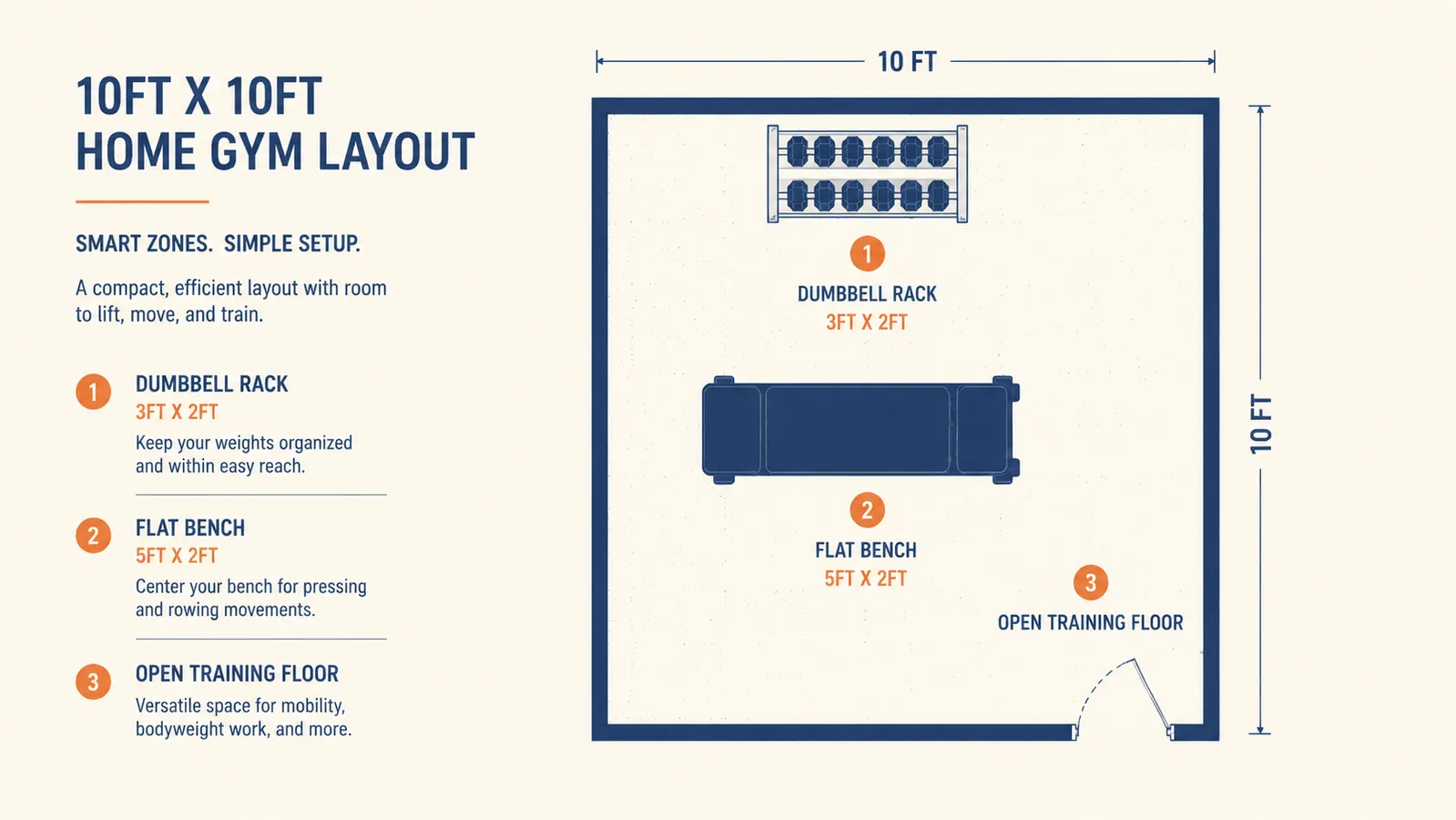
Before anything else, go measure the space you actually have. Do not assume. A 10 by 10 foot area is genuinely enough to run a complete strength training program. That fits a flat bench, a set of adjustable dumbbells on a low shelf or the floor, and enough open space to hinge, press, and lunge without hitting a wall. A 7 by 10 space still works if you skip the bench initially and focus on floor-based work. The one mistake people make at this stage is trying to plan for equipment they do not own yet. Measure for what you are starting with: the dumbbells, your body, and the floor.
If your floor is concrete or hardwood, order a set of rubber interlocking tiles before you lift a single rep. You will thank yourself after the first time you put a 45 lb dumbbell down with any speed. Two or three sets of 24x24 tiles runs about $40 and covers 32 to 48 square feet. That is your first add-on purchase, not the dumbbells. Protect the floor, protect the dumbbells, protect your joints.
Lighting matters more than people admit. A dim corner basement room feels like a punishment. If your space has a window, put the workout area near it. If it does not, a $25 LED shop light on the ceiling changes everything about how willing you are to walk in there at 6 AM.
Step 2: Get the Dumbbells Set Up and Learn the Weight Range Before Programming Anything
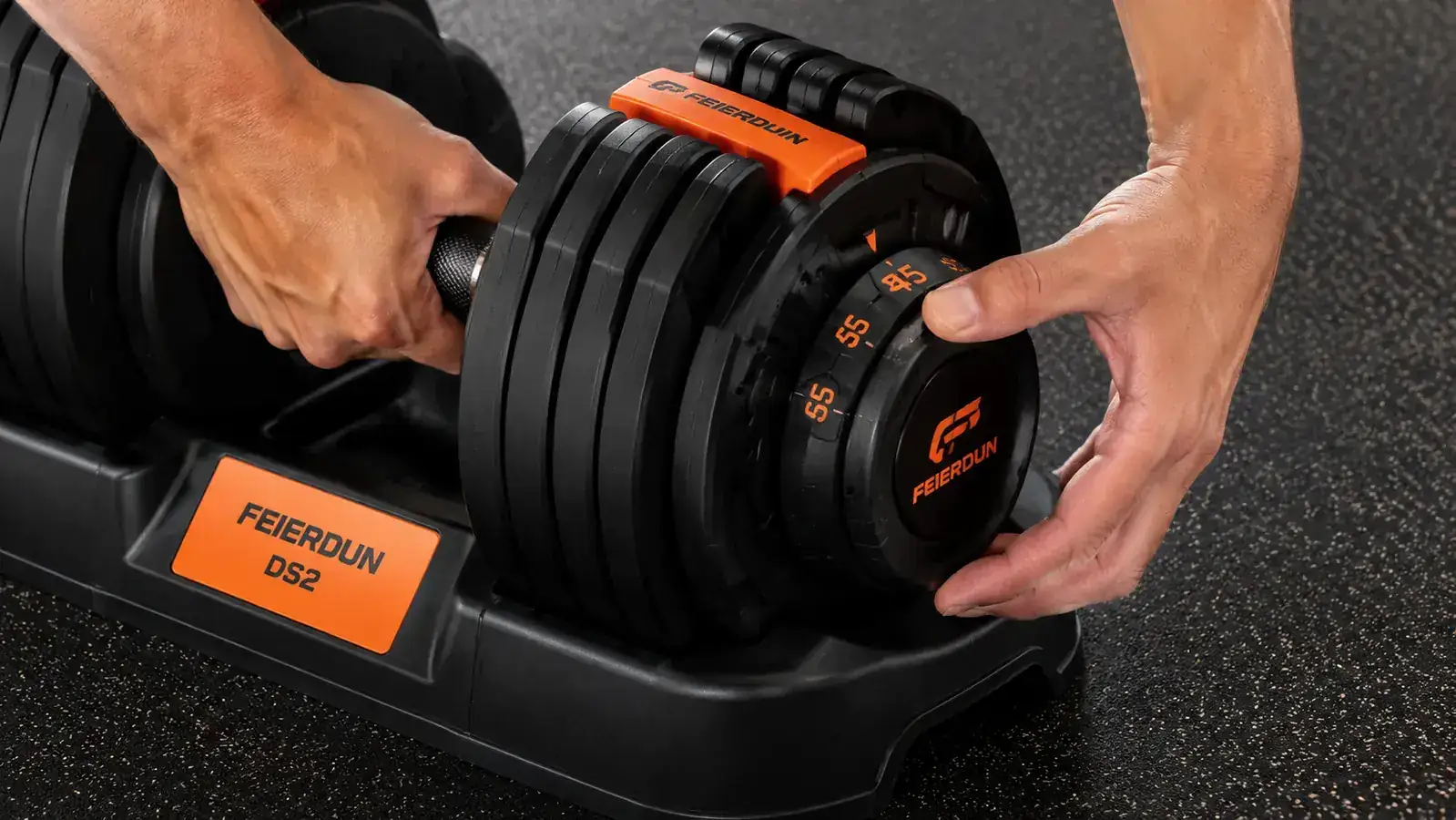
Once the floor is protected and the space is lit, the FEIERDUN DS2 goes down. Out of the box these take about five minutes to assemble. The connecting rod screws into place, the selector dials click through the increments, and you are ready to lift. Before you write out a single week of programming, spend one session just working through the weight range. Pick something light, like a curl at 20 lbs, then go heavier. Try a goblet squat at 40 lbs. A Romanian deadlift at 70. Get a feel for what feels easy, what is a genuine working weight, and what is a limit you are working toward.
This matters because adjustable dumbbells have a psychological quirk: people tend to default to the same weight they always lifted at the gym, even when they have access to heavier options. The DS2 goes to 90 lbs per hand when both handles are connected as a barbell unit, which means you can do Romanian deadlifts and goblet squats at real working weights from day one. Do not undertrain yourself by staying in the 25 to 35 lb range out of habit. Most men will land in the 40 to 60 lb range for compound lower body work within a few weeks of consistent training. Most women will find the 20 to 40 lb range covers 80 percent of their session.
Step 3: Build Your Weekly Program Around Four Movement Patterns, Not Muscle Groups
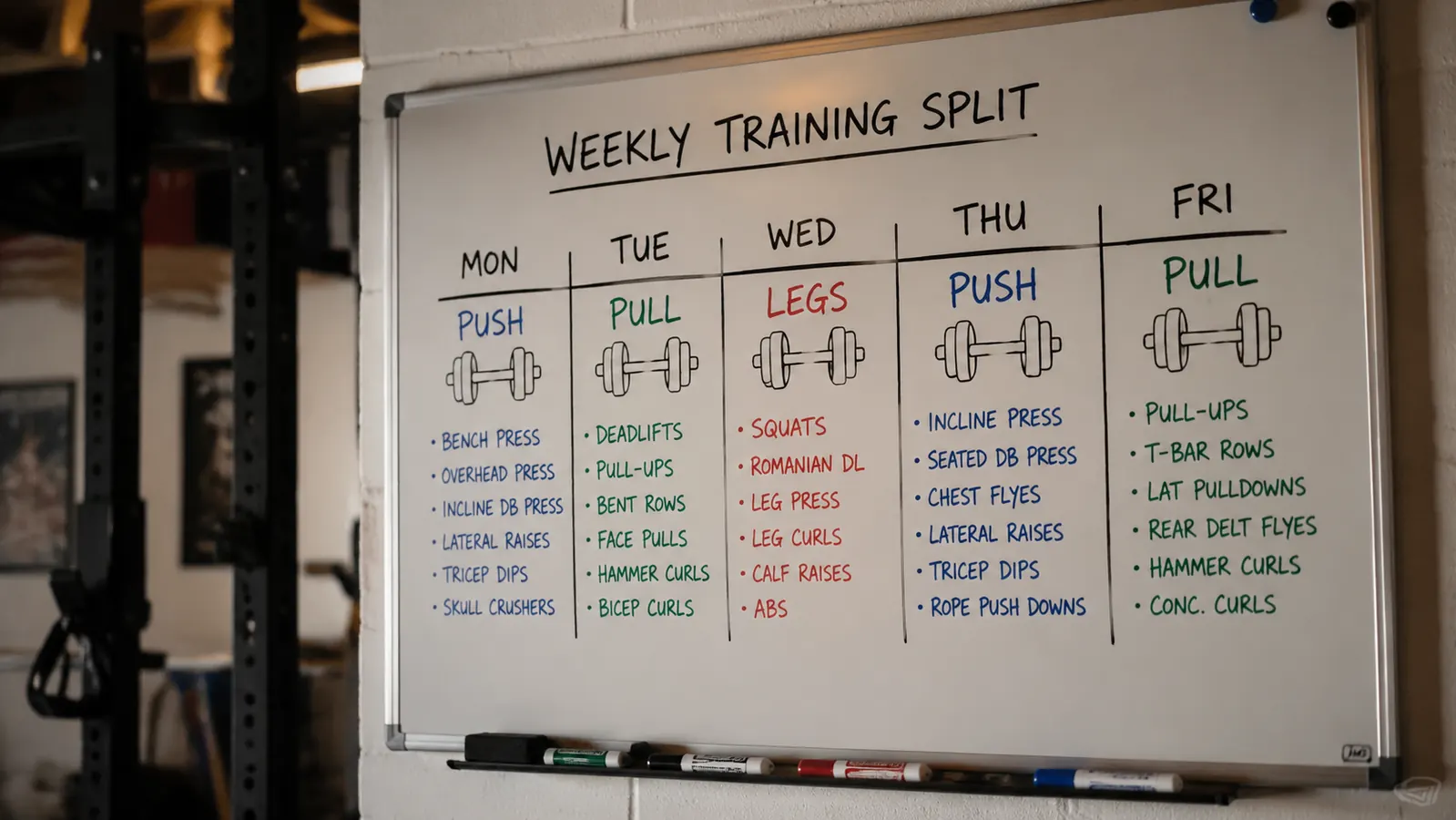
The most common programming mistake in a home gym is organizing sessions around muscle groups when you only have dumbbells. Chest day, arm day, shoulder day. That split is designed for a gym with cables, machines, and a barbell. With adjustable dumbbells, you are better off organizing by movement pattern: push, pull, hinge, and squat. Every session hits one or two patterns, and over the course of the week you have covered every muscle in the body. A simple four-day structure looks like this: Monday is push (floor press, overhead press, lateral raise, tricep extension), Wednesday is pull (bent-over row, single-arm row, face pull substitute with a band if you have one, curl), Friday is hinge and squat (Romanian deadlift, goblet squat, Bulgarian split squat, single-leg deadlift), and Saturday is a second pull-focused session or a full-body accessory day depending on how your recovery is sitting.
Three sets of 8 to 12 reps per exercise, 60 to 90 seconds rest between sets, is the standard hypertrophy framework. If you are new to structured training, drop to three days a week and start with two sets instead of three. The goal in the first four weeks is not maximal volume, it is building the habit and learning what you can actually recover from. Soreness after session one and two is expected. Soreness that is still bad on session three means you did too much. Walk it back.
Step 4: Add a Flat Bench in Week Three or Four, Not Week One
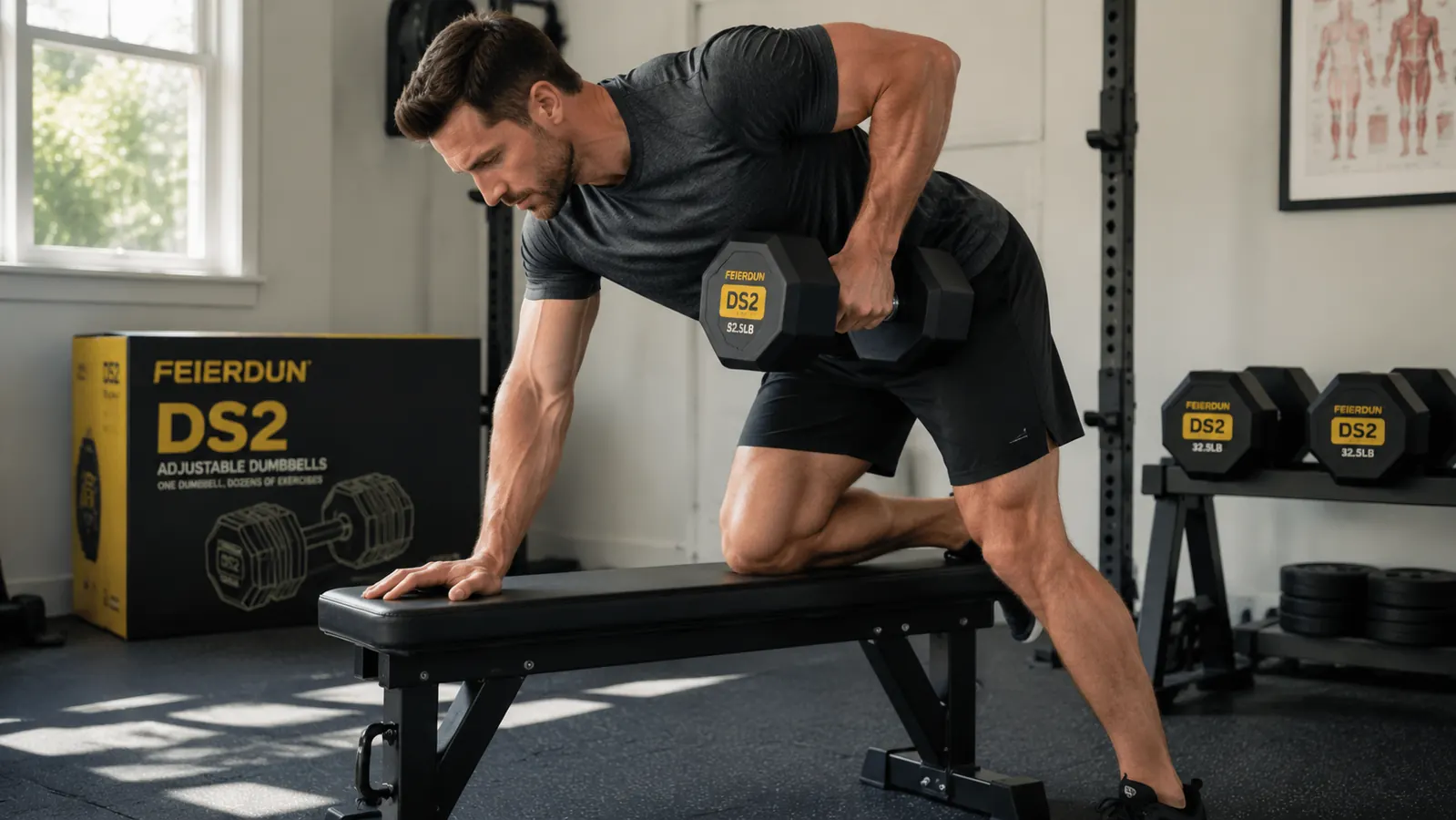
A flat bench is the single highest-leverage add-on for an adjustable dumbbell setup. Floor press is a perfectly valid substitute early on, but it limits your range of motion on the chest press and eliminates your ability to do incline movements. A basic foldable flat bench in the $80 to $140 range is all you need. Skip the adjustable incline bench at this stage unless you have the budget, because incline work can be approximated reasonably well with floor-based variations or by propping the backrest with a folded yoga mat.
Wait until week three or four to add the bench deliberately. It forces you to become a better programmer with limited equipment in the early weeks, and it gives you a clear milestone: the gym is getting better, not stagnant. Once the bench is in, you unlock chest press, incline row, single-arm row with proper support, step-up (if your bench is rated for it), and a range of tricep work. It is a significant programming jump.
A pair of adjustable dumbbells and a flat bench cover probably 70 percent of what most people actually need from a strength training program. Everything after that is either specialization or convenience.
Step 5: Layer in Accessories Over Months, Not Weeks, Based on What You Are Actually Missing
Once you have been training consistently for six to eight weeks with just the dumbbells and the bench, you will notice gaps. Not imagined ones from YouTube rabbit holes, but real gaps in your training. The most common ones: you want to do pull movements that require more back loading than a dumbbell row provides, you want a way to add overhead resistance for squats without holding the dumbbell at your chest, and you want a pull-up or rowing movement that does not require any equipment. These gaps, in order of how often people hit them, are best filled by: a pull-up bar for the doorframe, a set of resistance bands (the Vergali set covers four resistance levels for under $25), and then, much later, a cable attachment or a TRX-style suspension trainer.
Resist the temptation to buy everything in the first month. The real reason people's home gyms end up as expensive clothing racks is that they buy based on excitement rather than observed need. Give yourself eight weeks of consistent training, note what you are actually missing in the sessions, and then spend money on that specific thing. The FEIERDUN DS2 handles the heavy compound work. A $12 doorframe pull-up bar handles the vertical pull. A $22 resistance band set handles the light accessory and mobility work. That is a complete gym for under $100 beyond the dumbbells, and it covers every major movement pattern in the human body. For a deeper look at why adjustable dumbbells outperform a full rack for home training, the 10 reasons adjustable dumbbells beat a full rack breakdown lays it out clearly.
What Else Helps (But Is Not Required)
A few things make the day-to-day experience meaningfully better without being essential. A full-length mirror on one wall lets you self-coach your form, which matters especially on Romanian deadlifts and overhead press where bad positioning is both ineffective and hard on the lower back and shoulder joints. A whiteboard or cheap corkboard for writing your current week's program eliminates the phone-scrolling between sets that kills workout momentum. A small Bluetooth speaker running off your phone makes the space feel like a real gym instead of a room you are apologetically lifting in. None of these are gear purchases. Two of them are free if you already own the items. But the cumulative effect on how often you actually use the gym is not small.
Ventilation is the underrated one. If your space gets hot in summer or stuffy in winter, a $35 clip-on fan or a basic box fan pointed at your training area extends the number of months per year the gym feels usable. The difference between a gym you use eleven months a year and one you use six months a year is often just airflow.
You can run a complete push-pull-legs program with one piece of equipment. Here it is.
The FEIERDUN DS2 adjustable dumbbells adjust from 20 to 90 lbs, take up less space than a mini fridge, and have 4,770 Amazon reviews averaging 4.4 stars. They are the starting point every home gym in this guide is built around.
Amazon Check Today's Price on Amazon →