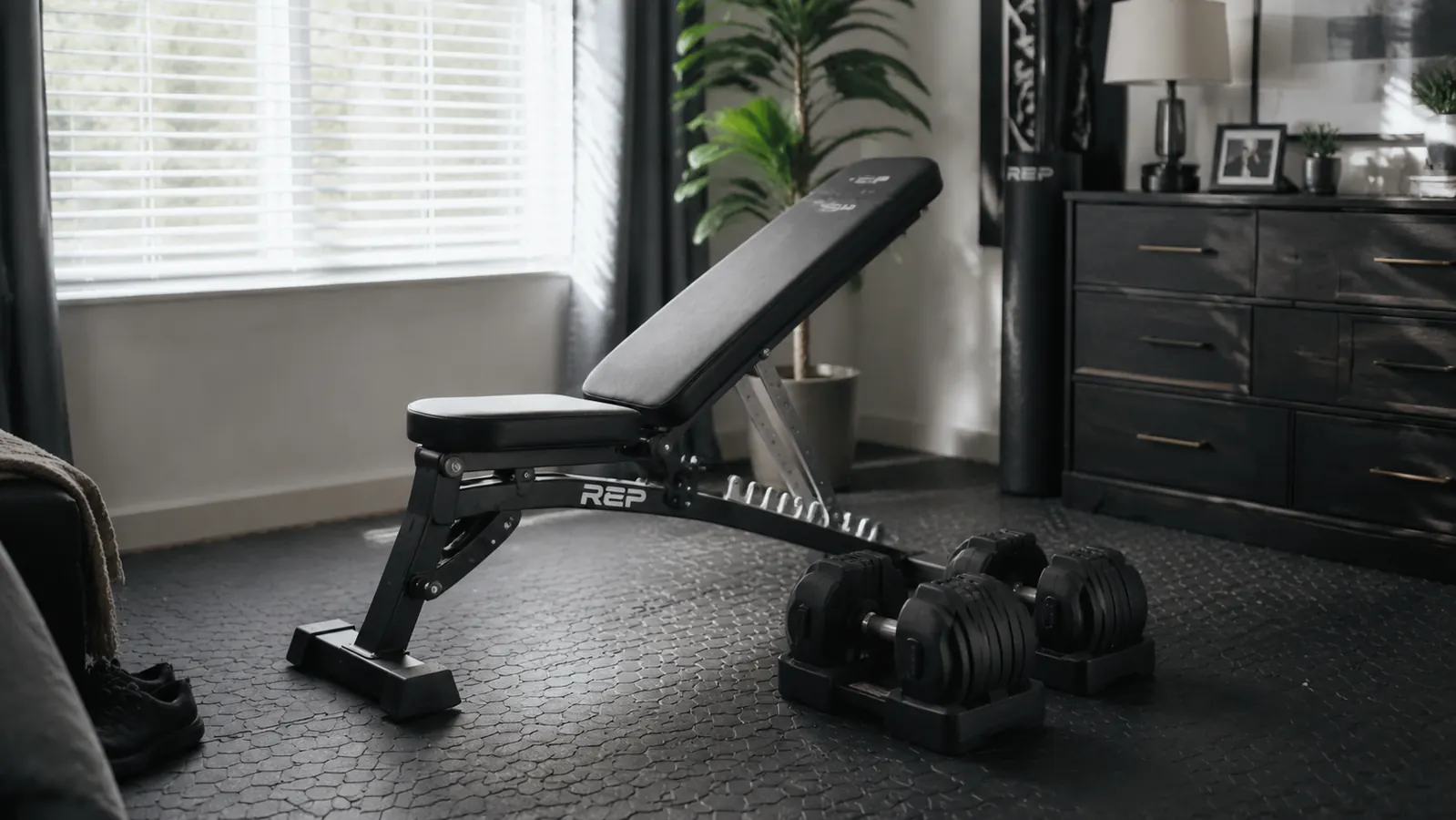
Six months ago I cleared out the spare bedroom, bought a folding bench, and ordered the FEIERDUN DS2 adjustable dumbbells instead of building out a full rack. I was 38, training six days a week, and tired of driving 25 minutes each way to a commercial gym. The set goes up to 90 lbs and the connecting rod feature means I can clip the two together and use them as a barbell for Romanian deadlifts and bent-over rows. That sold me. What I didn't know yet was how the selector mechanism would hold up to daily use by someone who isn't gentle with equipment.
This is the review I wanted to read before I bought them. Not a box opening. Not a two-week first impression. Six months of real training, five to six sessions a week, mostly push-pull-legs with some full-body days mixed in. I'll tell you exactly what wore out first, what still works perfectly, and who I'd recommend these to.
The Quick Verdict
Surprisingly durable for the price point, but the selector clicks become slightly looser after heavy daily use and the grip texture fades faster than I'd like. A legitimate value for home gym beginners and intermediate lifters who train at moderate to heavy intensity.
Amazon Check Today's Price →If you're building a home gym on a real budget, this is the adjustable dumbbell set I'd point you to first.
The FEIERDUN DS2 set handles weights from 20 lbs up to 90 lbs and includes the connecting rod for barbell-style lifts. Check today's price and availability before it moves.
Amazon Check Today's Price on Amazon →How I've Used These for Six Months
My setup: 10x12 spare bedroom, rubber flooring tiles, a Flybird adjustable bench, and the FEIERDUN DS2 set. I'm 195 lbs, and my working weights sit between 45 and 70 lbs for most compound movements. I don't do a lot of light isolation work. Most sessions involve heavy rows, overhead pressing, Romanian deadlifts with the connecting rod, and chest presses. That means the selector is getting turned 6 to 10 times per session at minimum.
For the first two months, everything worked exactly as advertised. The selector clicked into each weight setting with a satisfying snap, the plates seated cleanly, and I never had a weight shift mid-rep. By month three I started noticing the selector required a slightly firmer turn to lock in at the 55 and 70 lb settings specifically. Not unsafe. Just less crisp. By month five the click on those settings is definitively looser than it was on day one, while the lighter settings at 20 and 30 lbs still click like new. That pattern tells me the mechanism wears proportionally to how often each weight gets used.
The connecting rod feature deserves its own mention because it's actually well-engineered for the price. The rod threads in cleanly, the connection doesn't wobble under load, and I've done Romanian deadlifts at 90 lbs with it without any flex or noise that concerned me. That's a feature Bowflex SelectTech doesn't offer, and it's one of the main reasons I chose FEIERDUN over the alternatives.
Build Quality and Materials: What Holds, What Doesn't
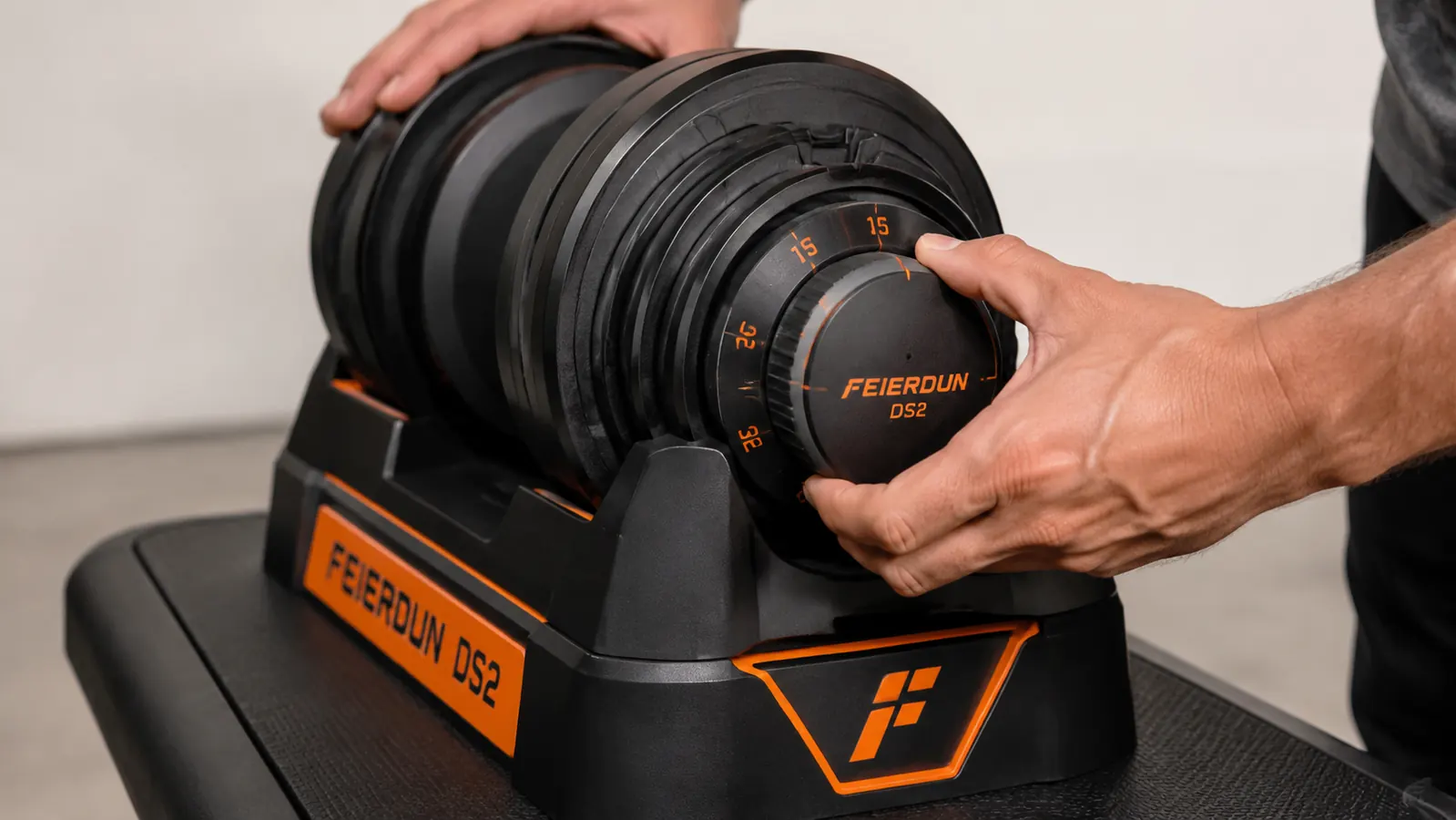
The handle is the best part of this set. It's a knurled steel core with a rubberized outer sleeve, and the knurling gives you real grip without tearing up your palms. After six months the knurling is still sharp and functional. What has faded is the rubberized sleeve texture on the non-knurled sections. It feels noticeably smoother now than when I unboxed it, which means sweaty palms during drop sets get a little more slippery at the grip transition points.
The plates themselves are coated in a matte rubber that has held up better than I expected. I've set these down hard on rubber mats more than I should have, and only the top plates on each dumbbell show any visible scuffing. The weight markings are still legible on all settings. The selector housing is plastic, and that's where you'll start to see wear first. At the contact points where the handle meets the tray, there's light surface wear on the tray plastic from daily in-and-out. Nothing structural. Just cosmetic.
One thing that surprised me: the dumbbells are quieter than I expected. Not silent, but the plates don't rattle or clink during reps if the selector is properly engaged. The only time I get noise is if I set them down too fast on the tray when re-racking, which is my fault not theirs.
The connecting rod threads in cleanly, doesn't wobble under 90 lbs, and lets you pull exercises that no other adjustable dumbbell at this price point allows. That feature alone makes the FEIERDUN worth considering.
Performance Over Time: Months 1, 3, and 6 Compared
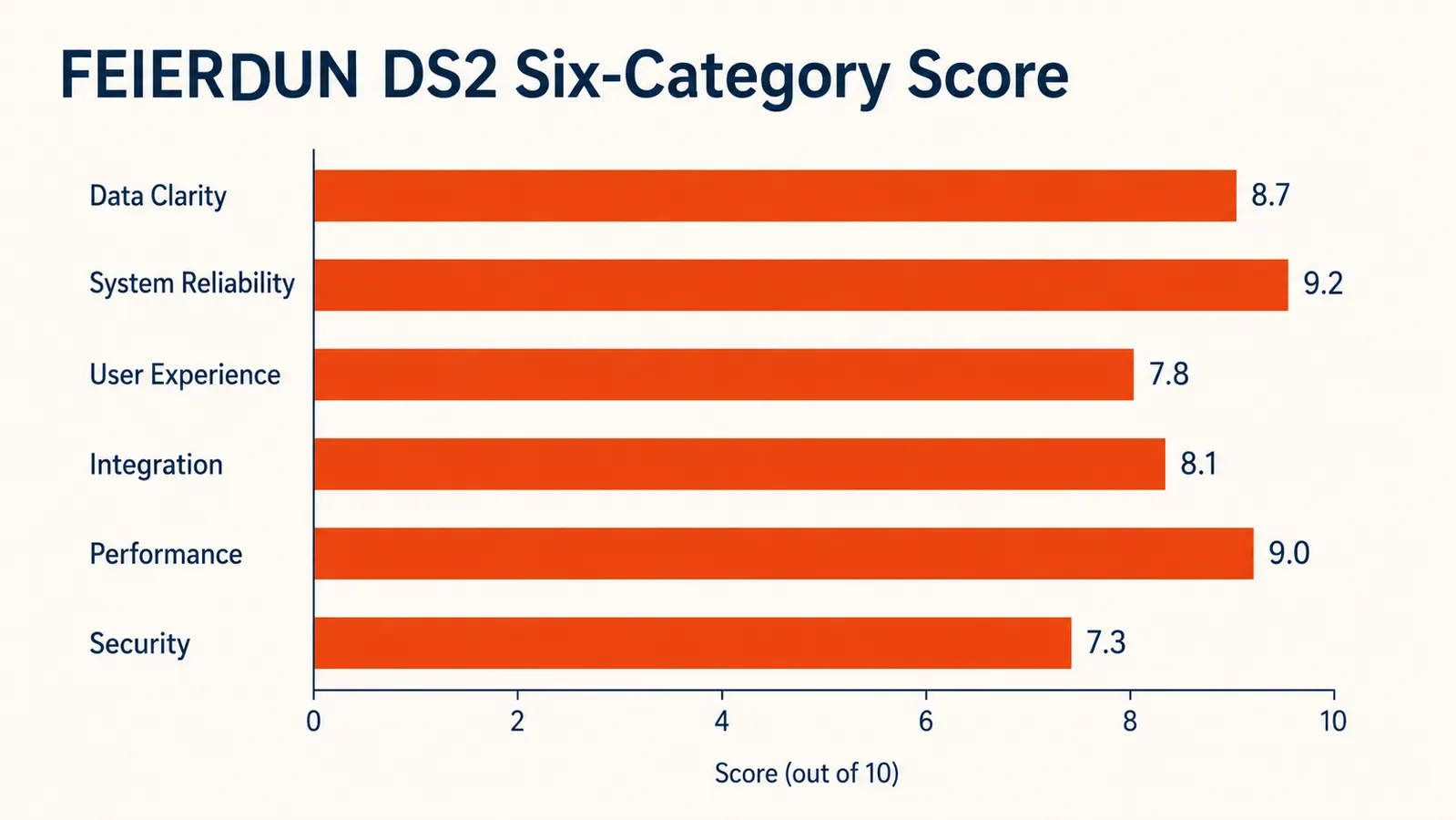
Month 1 was flawless. Every weight setting felt identical. The selector engaged at all six weight options with the same click resistance, and the handles felt new. I had zero issues and recommended these to two friends that first month.
By month 3, the 55 lb and 70 lb settings started requiring a slightly firmer turn to fully engage. I started double-checking by giving the handle a light shake before each heavy set. That two-second check became habit. Not a dealbreaker, but a change from how the product worked on day one. The lighter settings at 20, 25, and 30 lbs remained completely unchanged.
At month 6, the pattern has stabilized. The heavy settings click with slightly less resistance than new, but they have not gotten progressively worse over the last two months. It seems like the mechanism found its worn-in state around month 4 and has stayed there. I don't check anymore at the lighter weights. I always check at 55 and above. If you're primarily training in the 20 to 45 lb range, you may never notice any of this.
The Weight Range and Who It Actually Serves
The DS2 technically offers weights of 20, 30, 40, 45, 55, 70, and 90 lbs. The increments are not even across the full range, which matters when you're progressing. The jump from 45 to 55 lbs is 10 lbs, and the jump from 55 to 70 lbs is another 15. Those are big steps for shoulder pressing or lateral raises. If your overhead pressing hasn't built up to the 45 lb range yet, you may find yourself stuck between weights with nothing in between.
For compound movements, the weight jumps are manageable. For isolation work where you'd normally want 5 lb increments, they're frustrating. That's a real limitation to understand before buying. If you're early in your training and doing a lot of isolation exercises at moderate weights, you might find you're using only two or three of the six settings regularly.
For intermediate lifters doing rows, presses, deadlifts, and farmer carries, the range is actually well-suited. My Romanian deadlifts with the connecting rod at 90 lbs feel solid, and the 70 lb setting covers most of my heavy dumbbell pressing. The set does what it was designed for if you're in that intermediate strength range.
Alternatives I Considered Before Buying
The Bowflex SelectTech 552s were the obvious comparison. They offer 5 lb increments from 5 to 52.5 lbs, which is a real advantage for isolation-focused training. The tradeoff is the price, which is substantially higher, and the fact that you can't clip two together for barbell-style movements. For someone doing a lot of isolation work at moderate weights, the SelectTech's finer increments might be worth the premium. For someone who wants the barbell option or trains heavier, the FEIERDUN makes more sense.
I also looked at PowerBlock adjustables, which have a reputation for excellent durability. They're priced well above the FEIERDUN and have a different form factor that some people find awkward for pressing movements. If budget isn't a constraint and longevity is the priority, PowerBlock is worth a look. If you're outfitting a first home gym and want to put money toward other equipment too, the FEIERDUN lets you do that.
For more detail on how the FEIERDUN stacks up directly against the Bowflex SelectTech, I put together a full side-by-side breakdown in a separate article. And if you're still weighing whether adjustable dumbbells even make sense versus a fixed rack, I covered the ten strongest arguments for going adjustable in another piece.
What I Liked
- Connecting rod is well-engineered and stable at 90 lbs, enabling barbell-style lifts most competitors don't offer
- Knurled steel handle core holds up well and provides real grip security through six months of heavy use
- Plates are quiet when engaged properly and hold their position without shifting mid-rep
- Covers a wide enough weight range for intermediate home gym trainees doing compound movements
- At the current price point, no other adjustable set in this range offers the barbell conversion feature
Where It Falls Short
- Selector mechanism click resistance loosens noticeably at the heaviest settings after three to four months of daily use
- Weight increments are uneven and large in the mid-to-upper range, which limits usefulness for isolation exercises
- Rubber sleeve texture on the non-knurled handle sections fades faster than expected with regular use
- Selector housing is plastic and shows cosmetic wear at the tray contact points within a few months
Who This Is For
This set is genuinely well-matched for intermediate home gym lifters who do mostly compound movements and want a single pair of dumbbells that can also sub in for a barbell on pull days. If you're rowing, pressing, deadlifting, and carrying in the 40 to 90 lb range, these will serve you for at least a year of consistent daily use with the caveat that you'll want to double-check the heavy selector settings as the mechanism breaks in. The price makes it realistic to buy without committing your entire equipment budget to one product.
Who Should Skip It
If you're early in training and spending most of your time in the 5 to 30 lb range with a lot of isolation exercises, the FEIERDUN's uneven increments will frustrate you quickly. You'll keep wishing for a 35 lb option or a 25 to 30 lb step instead of the jump it actually gives you. For that use case, the Bowflex SelectTech's 2.5 to 5 lb increment system is the better fit even at the higher price. Similarly, if you're hard on equipment and want something rated for commercial-gym durability over many years of heavy use, the plastic selector housing will eventually show its limits.
Six months in, I'd still buy these again at the current price. The connecting rod alone sets them apart.
The FEIERDUN DS2 adjustable dumbbell set goes from 20 lbs to 90 lbs and includes the barbell-conversion connecting rod. Worth checking if it's still in stock at today's price before it moves.
Amazon Check Today's Price on Amazon →