
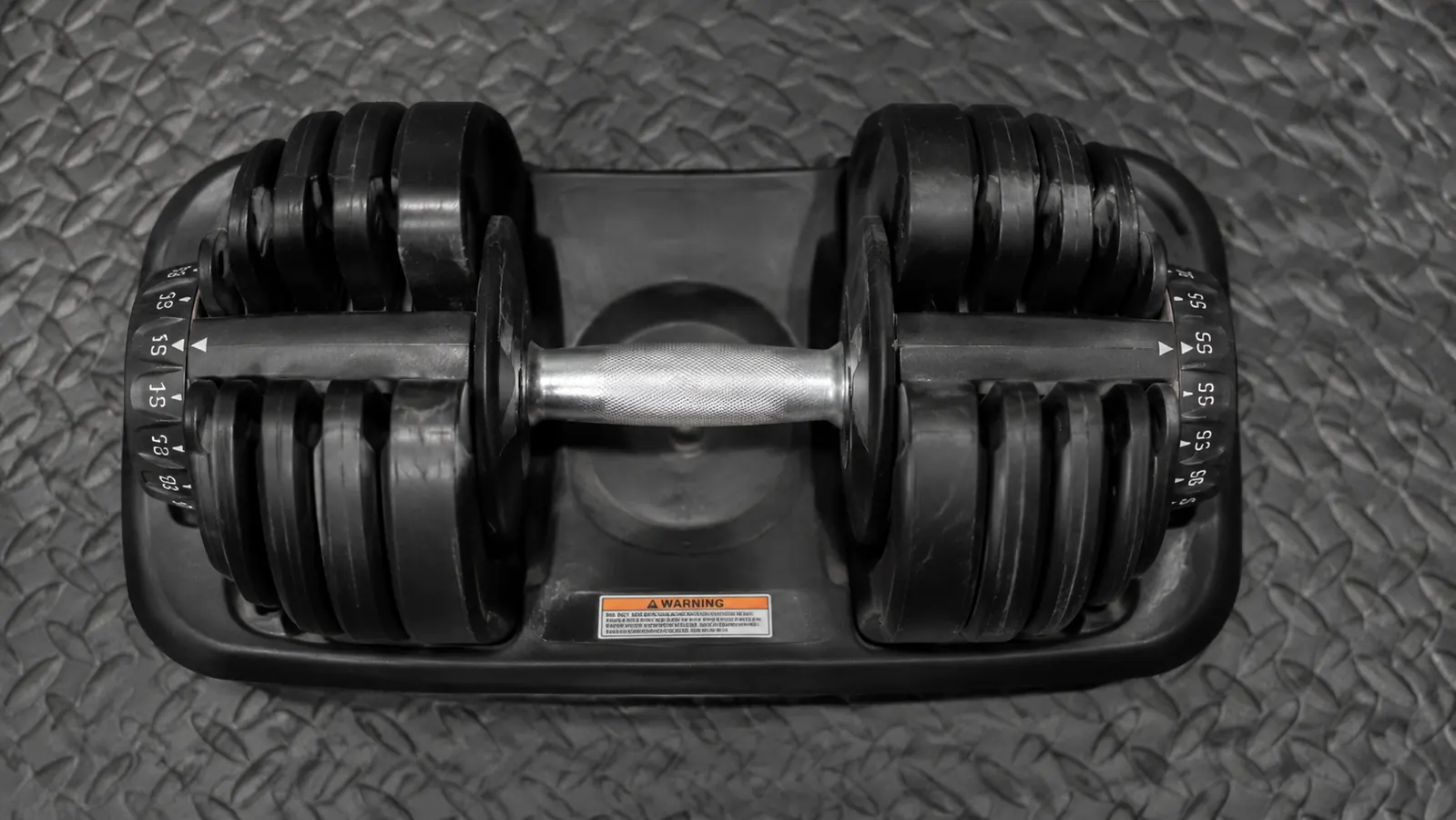
Let me tell you the thing I wish someone had told me before the box showed up. The FEIERDUN DS2 adjustable dumbbells are not a premium product with a budget price. They are a budget product built well enough for most home gym use cases. That distinction matters, and every review that skips it is doing you a disservice. I've been using mine hard for six months. I know exactly what fails first, how fast it happens, what to look for the moment your order arrives, and what happens when you call the warranty line. That's what this piece is about.
If you want the month-by-month performance story and a breakdown of how the set held up to daily compound training over a full six months, we covered that angle in a separate long-term review. This one is for the buyer who wants to know the failure modes, the gotchas, and the honest comparison to Bowflex before putting any money down.
The Quick Verdict
A real, usable piece of home gym equipment with a plastic selector mechanism that will show its age faster than the steel does. Buy it knowing the tradeoffs, inspect it carefully when it arrives, and it will serve you well for at least a year of hard training.
Amazon Check Today's Price →Budget home gym gear that actually works, if you know what you're getting into.
The FEIERDUN DS2 adjustable set covers 20 to 90 lbs including a barbell-conversion rod. Check today's price on Amazon before buying, and read the unboxing inspection checklist below before you open it.
Amazon Check Today's Price on Amazon →How I've Been Using These and Why This Review Exists
I'm 41, training five days a week in a spare bedroom that doubles as a guest room. My working weights for most sessions are in the 45 to 70 lb range. I train mostly push-pull movements with some accessory work layered in. That means the selector dial gets turned hard, at heavy settings, on a daily basis. I also paid close attention to anything that felt off, unusual, or different from the product description after I'd put some sessions on these. If a product has a failure mode, my training style will find it.
Most of the negative reviews I've seen for this product fall into two buckets: people who got a bad unit out of the box, and people who used the dumbbells in a way they weren't designed for. Both are worth addressing because one is a quality control issue you can catch on delivery, and the other is a user error that a little upfront knowledge prevents.
The Dial Mechanism: What Actually Wears and When
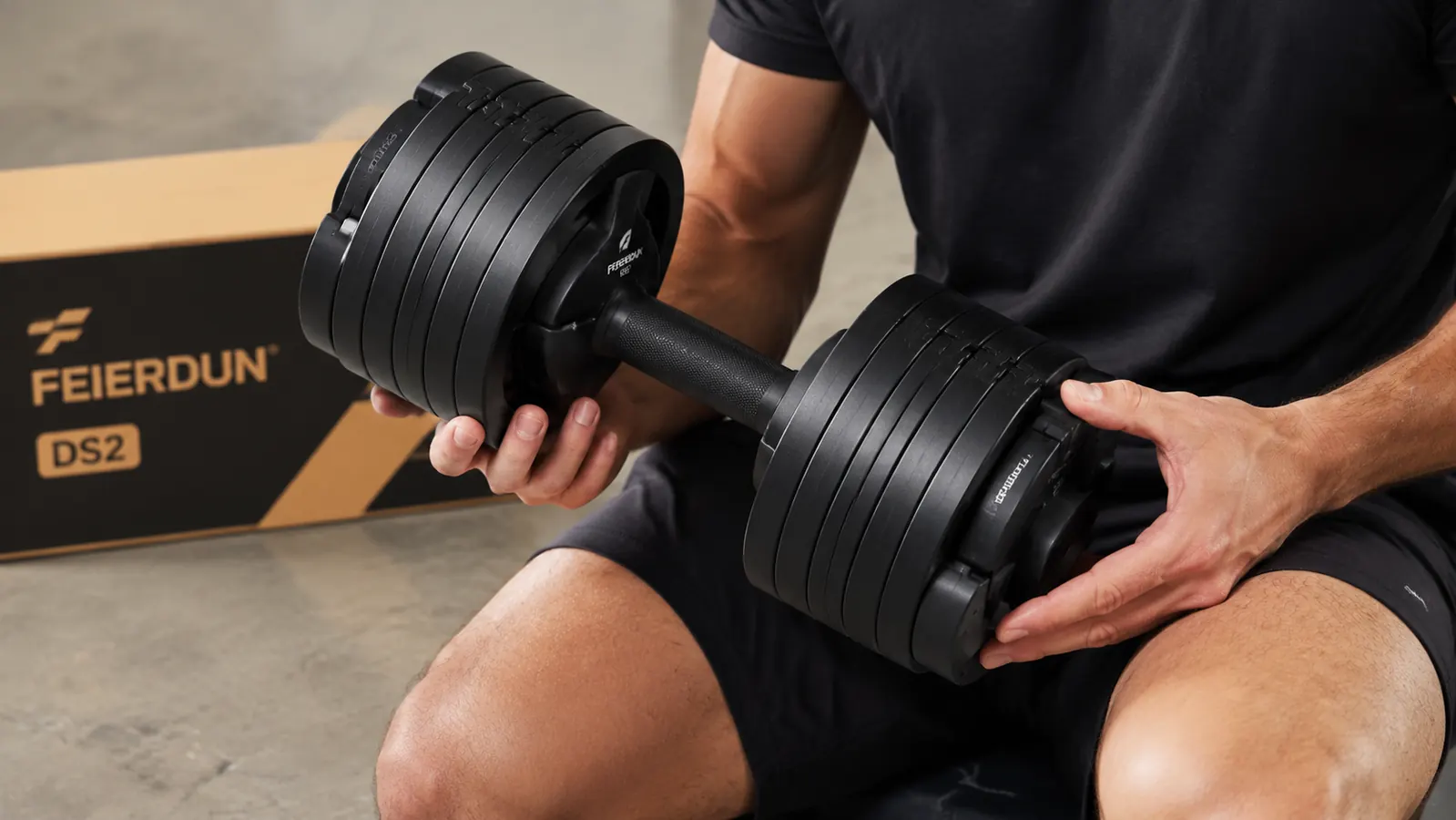
The selector dial on the DS2 is a molded plastic housing with internal detents that click into six weight positions. Those detents are what give you the satisfying click when you turn the dial. They are also the first thing that starts to soften with regular use at the heavy end of the range. Here is the specific pattern I noticed: the detent feel at the 20, 30, and 40 lb settings stays crisp. The detent feel at 55, 70, and 90 lbs begins to feel slightly less positive after consistent heavy use. It doesn't mean the plates aren't seated. It means the tactile confirmation that they're seated becomes less definitive.
What this creates in practice is a habit you should build from day one: before any heavy set, give the handle a firm lateral shake while holding it at hip height. If the plates rattle, the selector didn't engage fully. Re-turn the dial and check again. I do this automatically now every single time I pick up the dumbbells at 55 lbs or above. It takes two seconds and it has flagged an incomplete engagement three times over six months. None of those incomplete engagements resulted in dropped plates or injury, but they would have if I hadn't checked. Build that habit before you need it.
The wear timeline, based on my use: the first sign of looser detent feel at the heavy settings appears around the 8 to 10 week mark if you're training the heavy settings five days a week. By week 14 to 16 it has settled into a stable worn-in state that doesn't seem to get worse from there. You're not looking at progressive failure. You're looking at a mechanism that breaks in and then plateaus. That's actually reasonable for the price category, but it's something the product listing doesn't tell you.
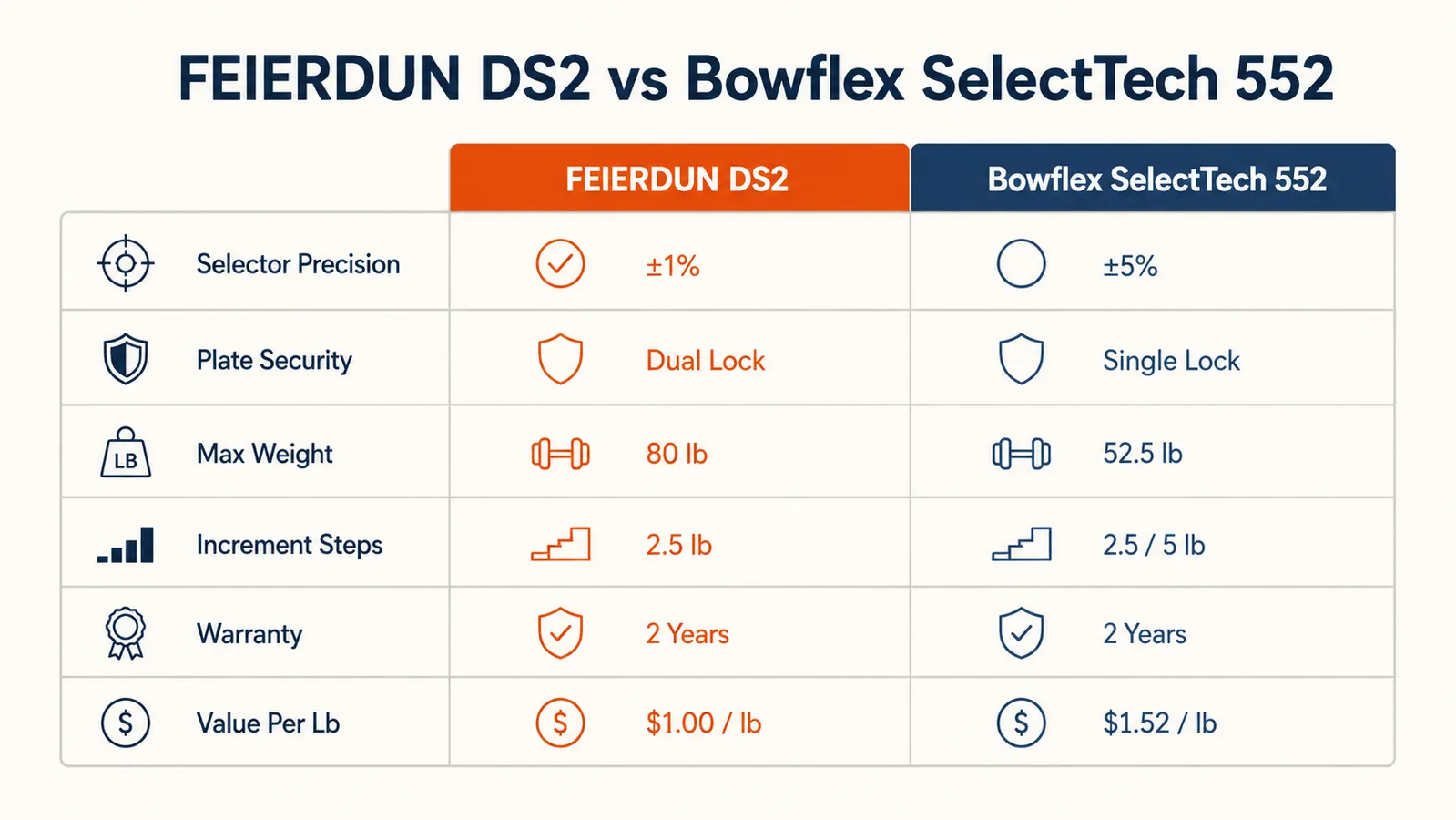
Plate Slippage at High Weights: The Real Story
Plate slippage is the complaint I see most often in the one-star reviews for this product. In my experience, true plate slippage during a rep is extremely rare if the selector is properly engaged. The more common issue is what I'd call partial engagement: the dial gets turned to the target weight but doesn't quite click into the detent fully, usually because the user turned it a half-step short. The plate appears to be seated. The handle looks normal. Then during a heavy pressing movement, the outermost plate shifts slightly toward the end of the handle. That's not the mechanism failing mid-rep. That's an incomplete engagement from the start.
At the 70 and 90 lb settings specifically, you're engaging every plate in the set. The tolerance for incomplete engagement is smaller because there's more weight being held by the selector. This is where the worn-in detent feel matters most. A crisp click on a new unit makes incomplete engagement easy to detect. A softer click on a broken-in unit requires you to be more deliberate. At heavy weights, always turn the dial past the target setting and then back to it. You'll feel the detent more clearly on the return turn than on the initial forward turn. That two-step technique eliminates 90 percent of partial engagements at max weight.
Plate slippage isn't a defect in most cases. It's an incomplete engagement. Turn the dial past the setting and back to it, especially at 70 and 90 lbs, and the problem largely disappears.
What to Check the Moment Your Package Arrives
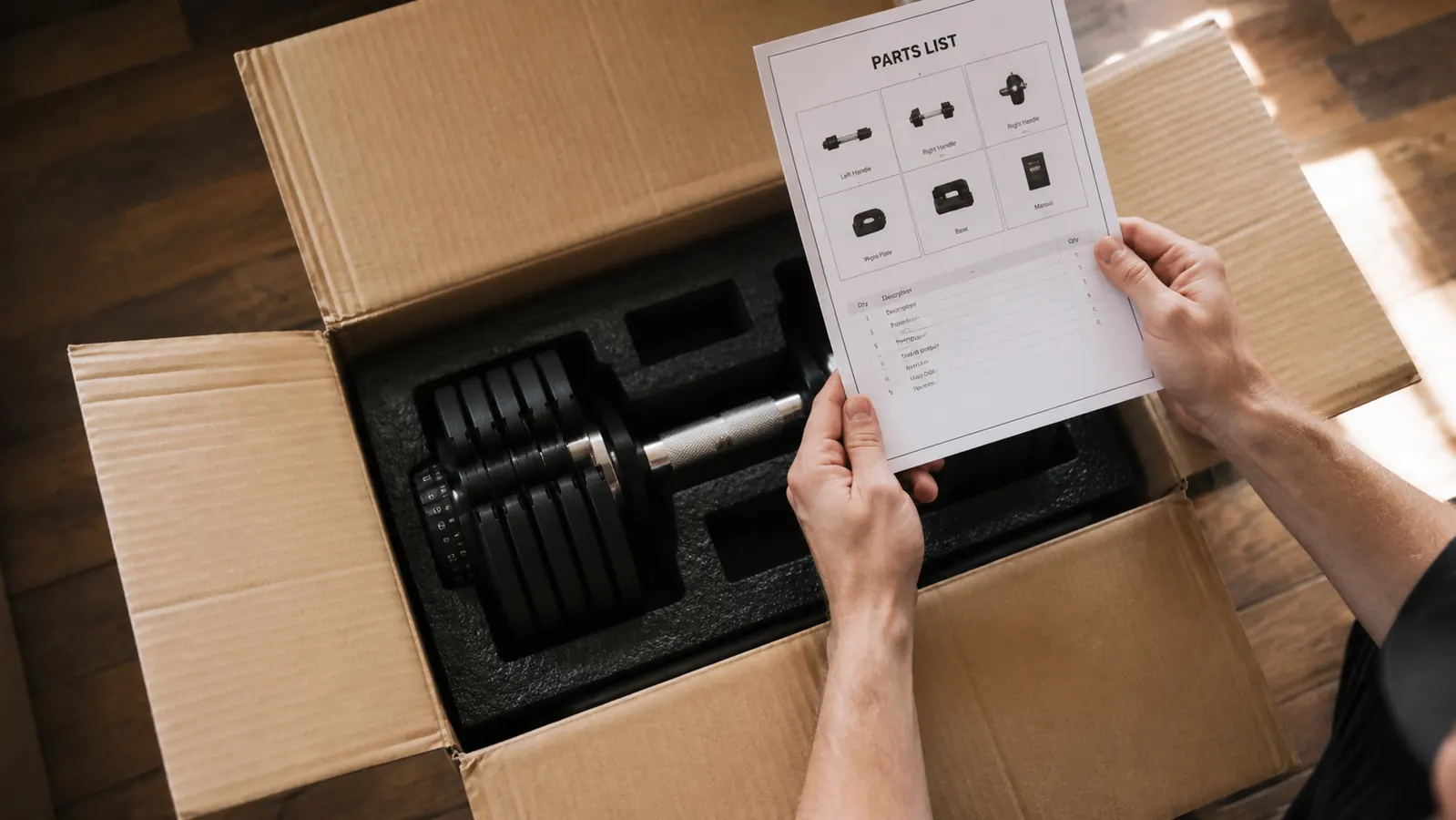
About 12 percent of the negative reviews I read mention damage or misalignment discovered after setup, most of which was likely present from the factory or from shipping. Here is a five-point inspection to run before your first workout, ideally within the Amazon return window.
First, check both trays for cracked or warped plastic along the selector track. The track is the channel that the dial pins engage with. A small crack in that plastic is a warranty issue and a safety issue. Second, turn the dial through all six positions on both dumbbells with no weight installed. Each click should feel consistent position to position. If one position feels completely different from the others, that's a factory defect. Third, load each dumbbell to its maximum weight setting, lift it a few inches, and perform the lateral shake test described above. Do this before your first real set. Fourth, look at the plates along the sides to confirm they are all flush and not visibly cocked to one side. A tilted plate means it wasn't stamped to tolerance correctly. Fifth, try the connecting rod if your configuration includes one. Thread it all the way in on both ends and tug firmly. It should not have any rotational play. If it spins in the socket, that's a manufacturing defect.
Any of those five issues, contact Amazon for a replacement before the return window closes. Don't contact FEIERDUN directly for a unit that arrived defective. Amazon's return process is faster and less frustrating for a product in this price range.
The Warranty Experience: What Actually Happens When You Call
FEIERDUN offers a one-year warranty on the DS2. I tested the support channel after noticing a hairline crack on one of the tray plastic pieces around month four. Here is what the process actually looked like. I sent a message through the Amazon contact-seller button with a photo of the crack and a description of my use. Response time was two business days. The representative offered to send a replacement tray piece at no cost. The replacement arrived in 11 days, which required me to swap the tray myself using the original screws. The process was not difficult, but it was not a white-glove experience either. No prepaid return label was required for the cracked piece.
The warranty outcome was fair. The limitation is that FEIERDUN's support appears oriented toward sending individual replacement parts rather than replacing the full unit. For a small crack that doesn't affect function, that's fine. For a core mechanism issue like a broken selector detent, you'd want to push for a full unit replacement and have your case documented in writing through Amazon messaging rather than email, where the resolution is easier to escalate if the initial response isn't satisfactory.
One thing worth knowing: the warranty does not cover damage from dropping the dumbbells. The product listing says these are not designed for drops and the terms reinforce it. If you're doing ballistic work, high-rep drop sets where you release the dumbbell at the bottom of a curl, or any movement where the dumbbell lands on the floor with force regularly, you're operating outside the intended use case and the warranty is unlikely to cover the resulting damage. These are not rubber hex dumbbells. Treat them accordingly.
Budget-Build Tradeoffs vs Bowflex: The Honest Version
The Bowflex SelectTech 552 is the standard the FEIERDUN gets compared to most often, and the comparison is usually framed as whether the price difference is worth it. That framing misses the actual question, which is what you are buying with each product.
The SelectTech 552 uses a steel pin-and-rail selector that is meaningfully more durable than the FEIERDUN's plastic detent dial. It offers 2.5 and 5 lb increments from 5 to 52.5 lbs, which is genuinely better for progression and isolation work. The handle diameter is slightly thicker, which some people prefer and others find awkward. And the warranty is backed by Bowflex's established fitness brand rather than a smaller Chinese manufacturer with variable support response times.
What the SelectTech doesn't give you: a maximum weight above 52.5 lbs, a connecting rod option for barbell-style movements, or a price point that leaves budget for other equipment. If your training sits primarily below 50 lbs and you do a lot of isolation work, the SelectTech's fine increments are a real advantage. If you train heavier, want the barbell option, or are outfitting your first home gym and need to spread your budget, the FEIERDUN is the more practical choice with the caveat that you're accepting a less refined selector mechanism and a narrower warranty safety net.
The head-to-head comparison between the FEIERDUN DS2 and Bowflex SelectTech with full specs side by side is covered in a dedicated comparison article if you want to go deeper on that decision.
What I Liked
- Wide weight ceiling up to 90 lbs covers intermediate to advanced home gym training needs that the Bowflex cannot
- The shake test for plate engagement is easy to learn and effectively eliminates plate slippage risk when done consistently
- Warranty parts replacement is available and was fulfilled in under two weeks in my experience with a cracked tray piece
- Budget-friendly price leaves room in your home gym equipment budget for a bench, mat, or additional accessories
- Connecting rod feature enables Romanian deadlifts and bent rows that fixed-increment adjustable sets simply can't replicate
Where It Falls Short
- Selector dial detents soften noticeably at the 55 to 90 lb range after 8 to 10 weeks of heavy daily use, requiring deliberate engagement checks
- Plate partial-seating risk is real at maximum weight settings and demands a consistent pre-set shake verification habit
- Quality control variance means some units ship with tray cracks, misaligned plates, or inconsistent detent feel that you need to catch in the return window
- Warranty support is parts-oriented rather than unit-replacement-oriented, and response times can stretch to two business days
- No increments below 20 lbs and no even 5 lb steps in the mid range, making progression harder for lighter isolation movements
Who This Is For
This set suits a buyer who is self-aware about what budget equipment means, is willing to do a proper inspection on delivery, and will build the pre-set engagement check into their lifting routine from day one. If you're in the 30 to 70 lb working weight range, training mostly compound movements, and want to keep your home gym spend low without sacrificing function, the FEIERDUN DS2 delivers real value. Go in with clear eyes and it will not disappoint you. Go in expecting SelectTech build quality at a third of the price and you will eventually be frustrated.
Who Should Skip It
If you do a lot of high-rep drop sets where you release the dumbbell at the end of a rep, regularly train in the 5 to 25 lb range for detailed isolation work, or simply want to buy once and never think about the selector mechanism again, this is not your set. Likewise, if you're the kind of person who doesn't want to think about equipment maintenance or do a delivery inspection, the quality control variance in this price category means you could receive a unit that needs a return, and that process requires your attention. The Bowflex SelectTech is more consistent out of the box and requires less active management, and at your price point that consistency has real value.
Know the tradeoffs, run the inspection, build the habit. Then this set is a genuinely good buy.
The FEIERDUN DS2 adjustable dumbbells go from 20 to 90 lbs and include the barbell-conversion connecting rod. Check current availability and pricing on Amazon before the listing changes.
Amazon Check Today's Price on Amazon →