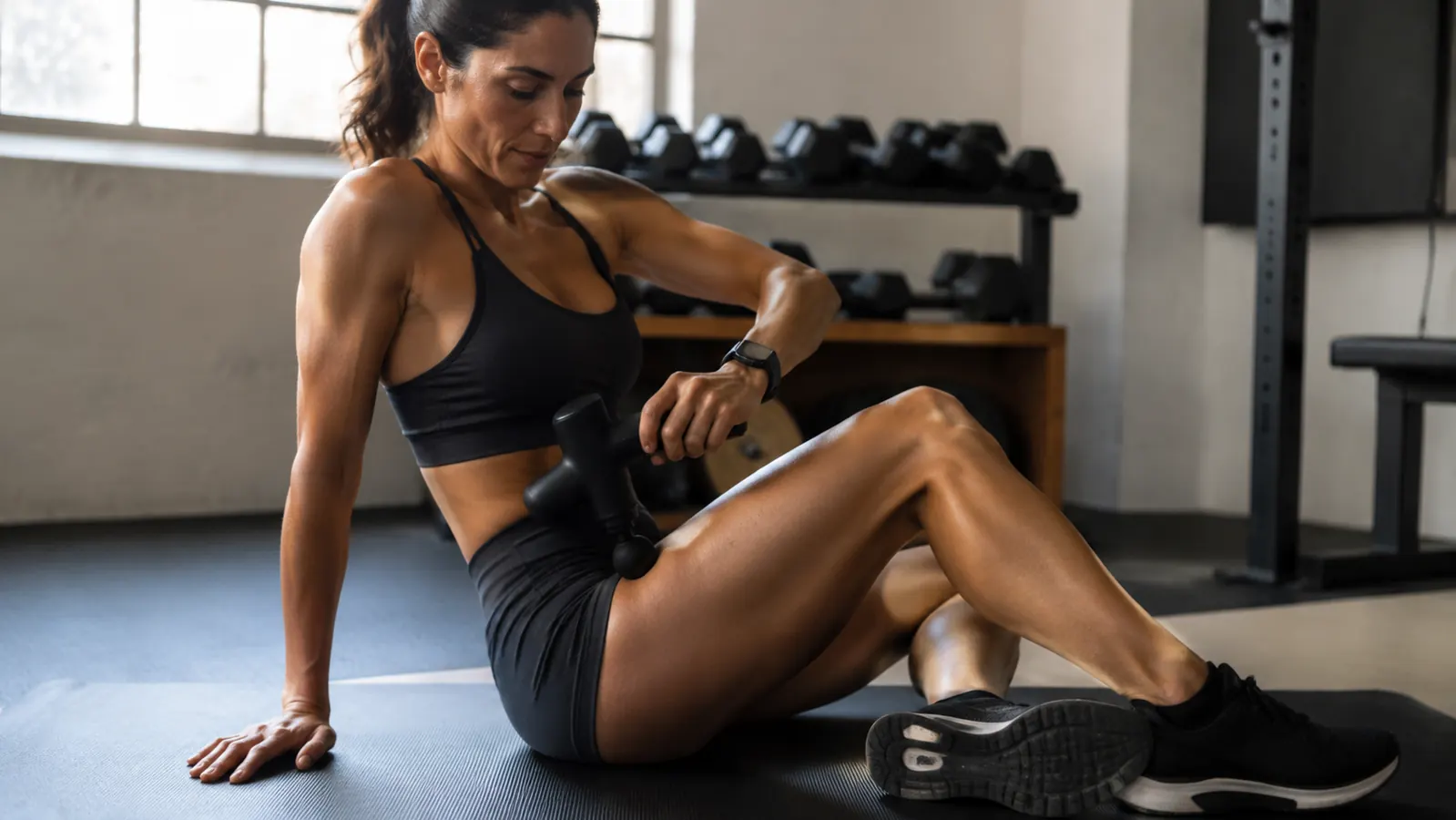
If your legs feel like concrete the day after squats and you've tried foam rolling without much relief, a percussion massage gun can genuinely help. But the way most people use them is wrong. They press the head directly onto a knot, hold it there at full power for two minutes, and then wonder why the area feels bruised the next morning. Done right, a massage gun speeds up how fast your muscles flush out soreness and regain their range of motion. Done wrong, you're adding inflammation to inflammation.
I've been using the TOLOCO Massage Gun after every workout session for several months now. It comes with 10 attachment heads, six speed levels, and runs long enough on a single charge to cover a full recovery session without hunting for a cord. What I've learned from consistent use is that technique matters more than the gun itself. This guide walks you through exactly how to use it on every major muscle group, which attachments to grab, how long to stay on each area, and what to avoid.
If your recovery routine consists of hoping the soreness goes away by itself, there is a better option.
The TOLOCO Massage Gun has 10 heads, 6 speed levels, and enough battery to cover a full recovery session. It is the one I use after every training day and recommend to anyone just getting into percussion therapy.
Amazon Check Today's Price on Amazon →Step 1: Wait 20-30 Minutes Before You Start
Do not pick up the massage gun the second you rack the bar. Your muscles need a short window to begin their natural inflammatory response, which is actually part of the repair process. If you immediately attack a freshly worked muscle at high speed, you're interrupting that process before it can start. The window I've landed on is 20 to 30 minutes post-workout. Stretch lightly, drink water, get your heart rate down, and then start your massage gun session.
The exception is pre-workout use, which is different entirely. A light 30-second pass over a stiff area before you lift can improve blood flow and range of motion. Keep the speed low and the pressure light, and move continuously. Pre-workout work is activation, not recovery. The timing and goal are opposite to what we're covering in this guide.
Step 2: Pick the Right Attachment for the Muscle Group
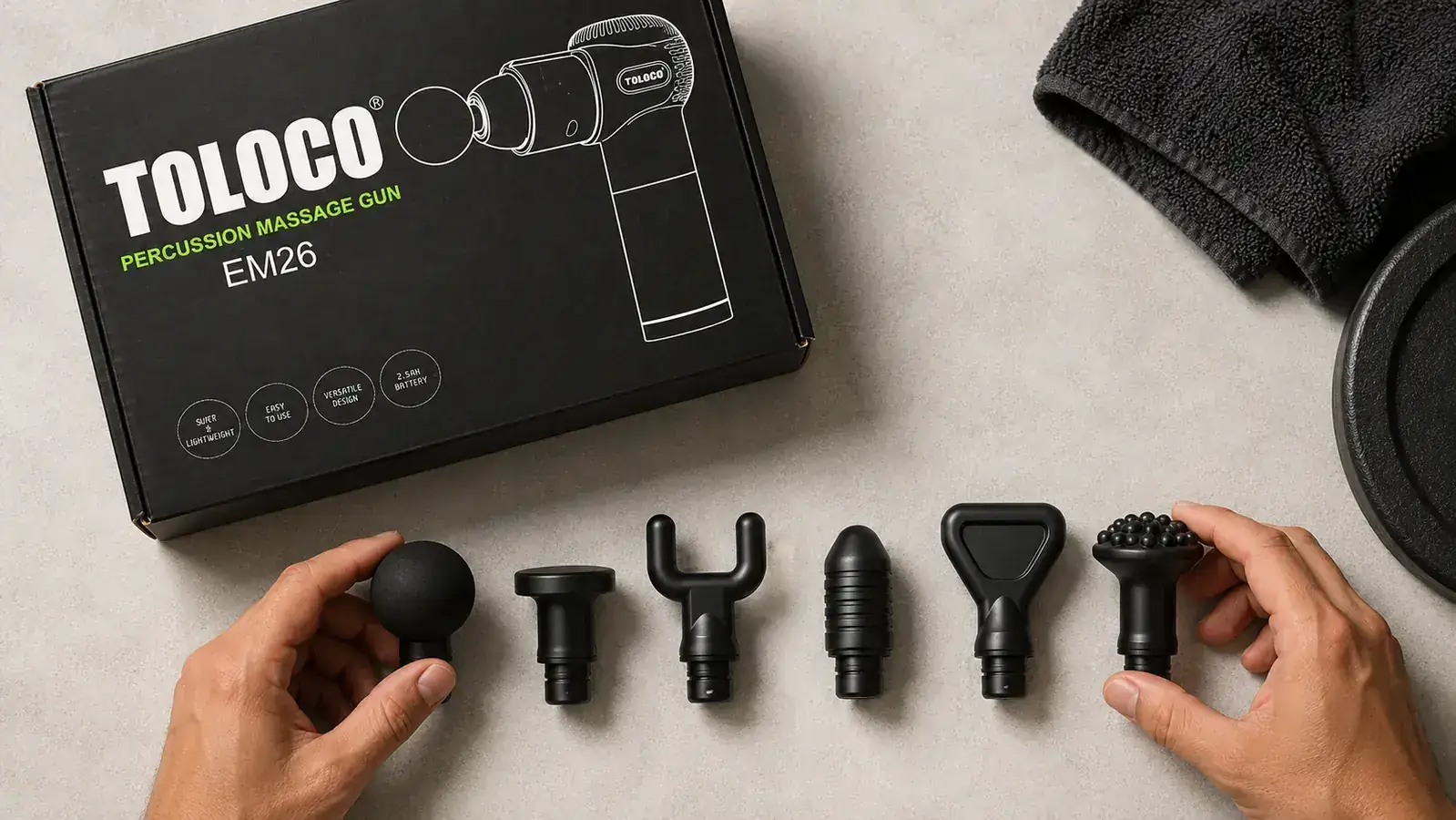
The TOLOCO comes with 10 heads, which sounds like a lot until you actually know what each one does. In practice, you'll reach for four of them regularly. The round ball head is your default for large muscles like quads, hamstrings, and glutes. It disperses force across a wider surface and feels like a deep tissue massage without the pinpoint pressure. The flat head is good for denser muscle groups like lats and upper back. The fork head, which looks like two prongs, is designed for the spine area and the Achilles tendon, where you want to straddle the bone rather than compress it. The bullet head is for pinpoint trigger points in smaller areas like the bottom of the foot or between the shoulder blades.
One attachment to approach carefully is the bullet head at high speed. It concentrates a lot of force into a small area and can cause bruising if you stay in one spot too long. For most post-workout sessions, the round ball head on a mid-level speed setting will cover 90% of what you need. Start there, get comfortable with the feel, and then experiment with other heads once you understand how your body responds.
Step 3: Set the Speed Before You Touch Skin
This is the mistake I made in the first week. I'd start the gun, crank it to level 4 or 5, and then press it against a muscle. The problem is that a high-speed gun making first contact jolts the muscle, causes an involuntary flinch response, and makes it harder for the tissue to relax. Instead, set your speed before you touch the muscle. For post-workout recovery, level 2 or 3 on the TOLOCO is usually right. Level 1 feels like it isn't doing anything but is actually effective for light fascia work. Levels 5 and 6 are for a very specific kind of deep tissue work on large, well-warmed muscles, not for general soreness relief.
A good rule of thumb: if you're tensing up or holding your breath while the gun runs, the speed is too high. You should be able to breathe normally and let the muscle go soft. Relaxation is the point. If the percussion is forcing your body to brace, you're fighting against the tool instead of working with it.
Step 4: Work Each Muscle Group for 60 to 90 Seconds
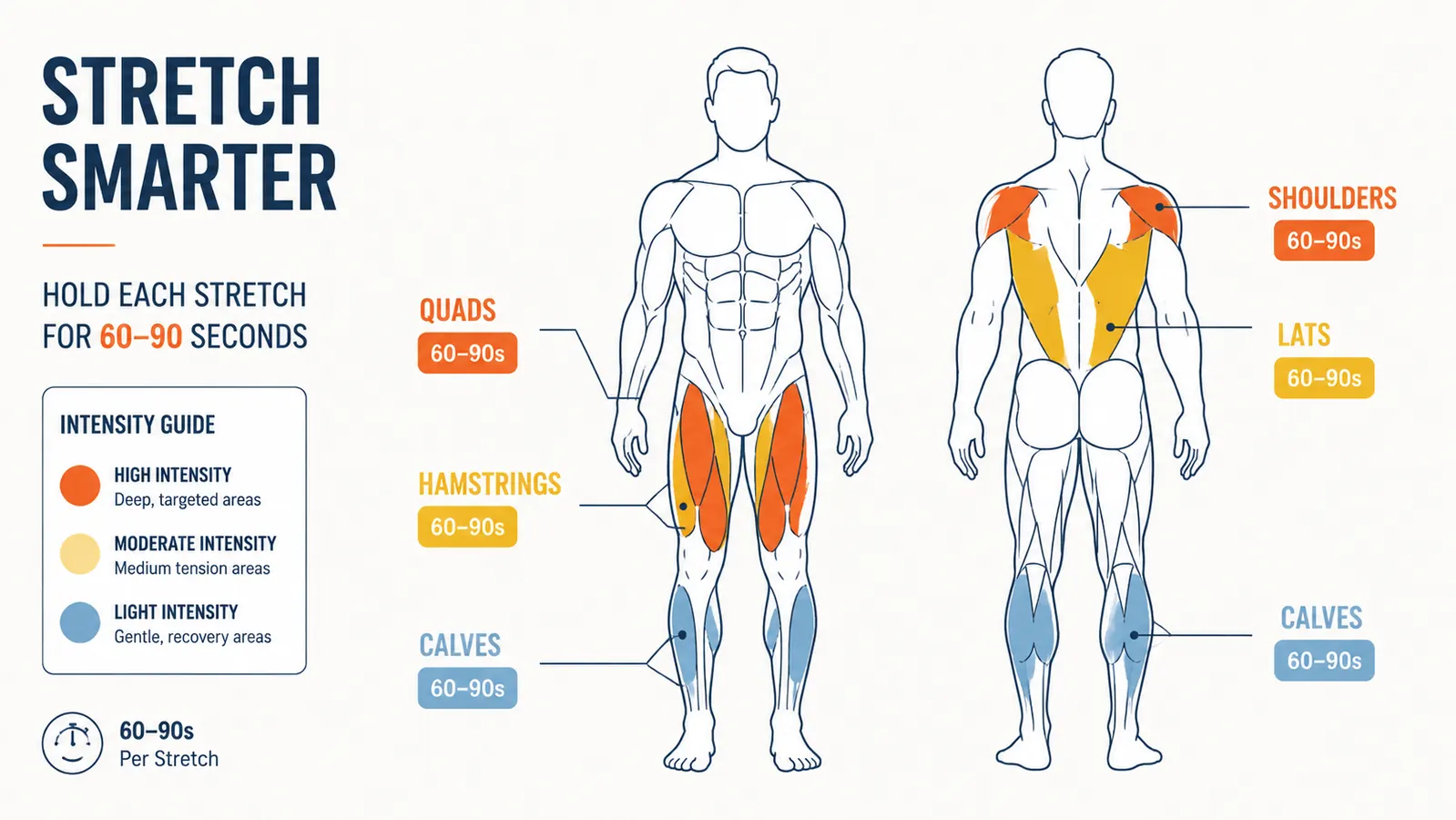
The most common error in massage gun use is staying in one spot too long. A single knot or tight area should not get more than 10 to 15 seconds of direct pressure before you move the head. Keep the gun moving in slow, sweeping passes along the length of the muscle. For quads, work from just above the knee upward toward the hip flexor in long slow strokes. For hamstrings, work the same way but from the back of the knee up toward the glute. For calves, run along the belly of the muscle from heel to knee.
The total time per muscle group is 60 to 90 seconds. After that, move on. There is a belief that more time means more relief, but percussion therapy works through cumulative stimulus across multiple passes, not by grinding a single area into submission. If you do a full lower body session (quads, hamstrings, calves, glutes), you're looking at roughly 8 to 10 minutes of total massage gun time. That's it. It doesn't need to take longer to be effective.
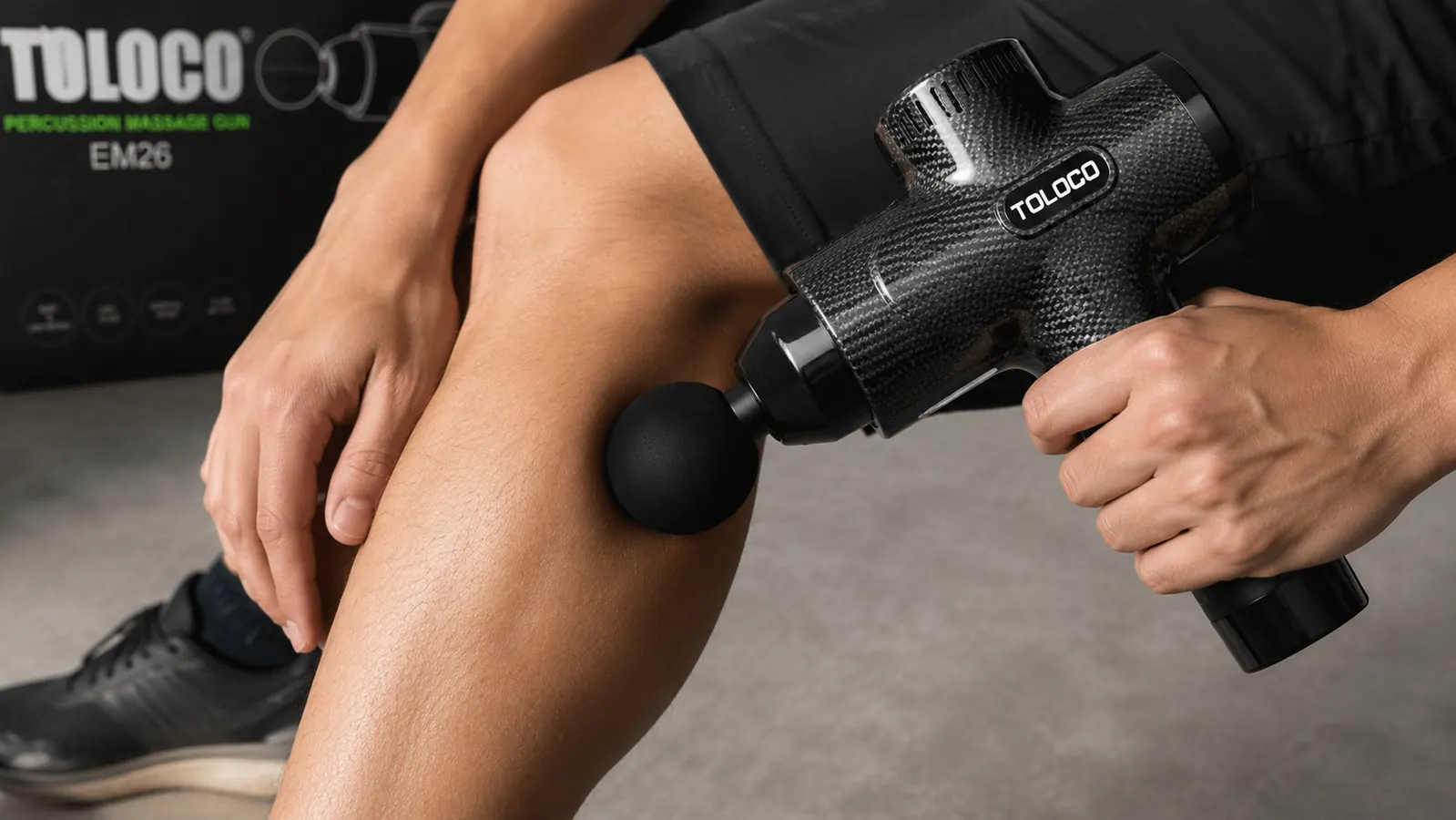
Keep the gun moving in slow, sweeping passes along the length of the muscle. If you're staying in one spot for more than 15 seconds, you've gone too long. Percussion works best as a continuous sweep, not a pressure hold.
Step 5: Hit the Hard-to-Reach Spots the Right Way
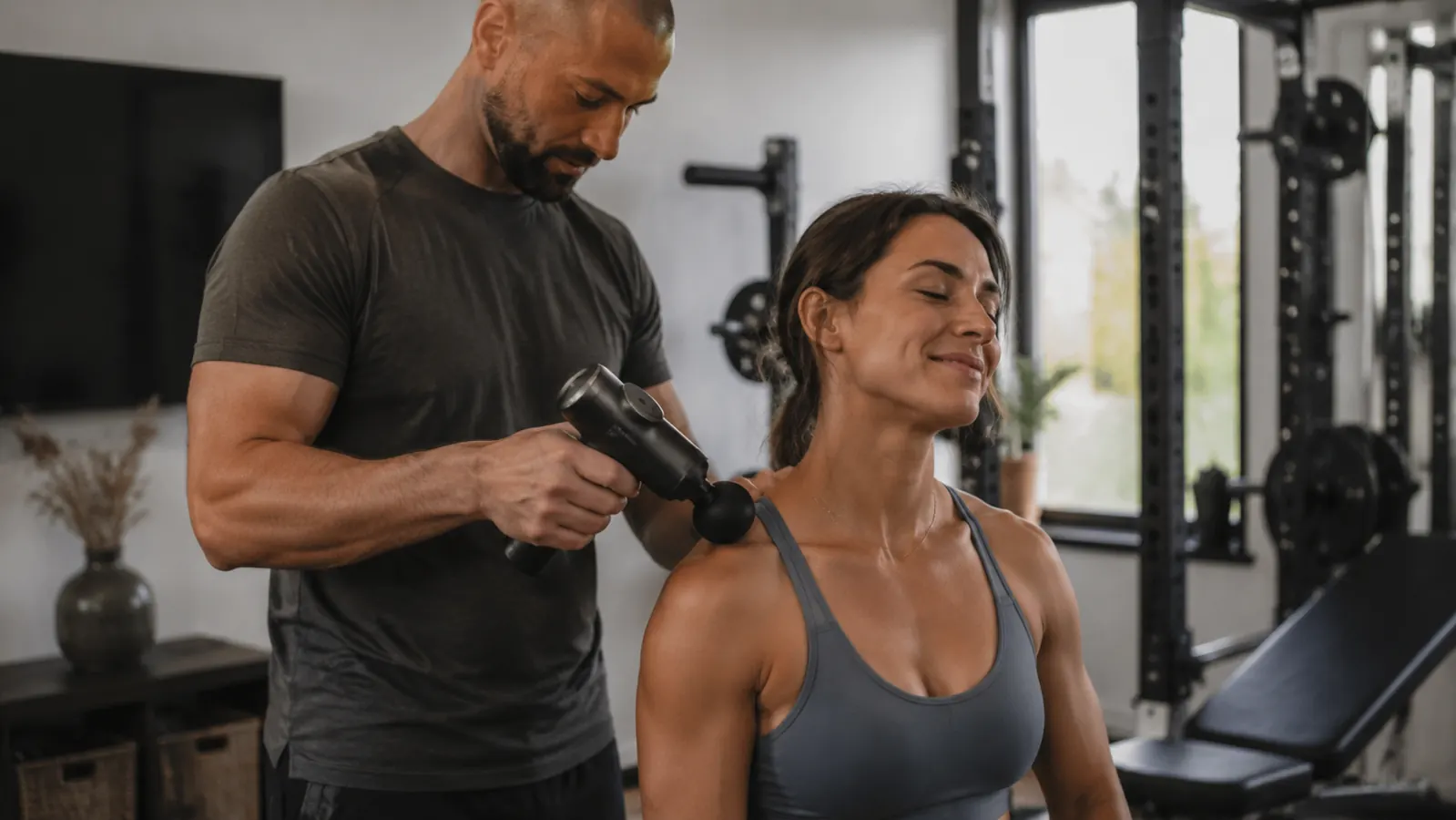
Shoulders and upper back are the most awkward spots because you can't see what you're doing, and the gun gets heavy when you hold your arm extended. For the front of the shoulder and the front deltoid, hold the gun in your opposite hand and run it across the front of the shoulder with your arm hanging relaxed at your side. Do not stretch the shoulder out while you're applying percussion. The muscle should be in a shortened, relaxed position. For the rear delt and upper trap, this is where having a training partner helps, but if you're solo, place the gun on a doorframe or chair back and lean into it at low speed.
Lats are tricky because they're a large muscle and they're partially under the arm. The best position I've found is to hold the gun in the opposite hand, put that arm over your head to reach your lat from above, and sweep down the side of the back in long strokes. Keep your opposite arm hanging straight down to open up the lat and give you access. The flat head attachment works better here than the ball head because it makes consistent contact across the wider, flatter muscle surface.
What Else Helps Your Recovery Besides the Massage Gun
The massage gun handles the muscular side of recovery, but it's one piece. Hydration is the part people chronically skip. Muscle soreness is partly caused by the accumulation of metabolic waste products that flush out through your circulatory system. If you're dehydrated, that process slows down significantly. Drink water consistently in the hours after a session, not just immediately post-workout. A rough target is half your bodyweight in ounces per day as a baseline, with more added for sweat loss during training.
Sleep is the other piece that no recovery tool replaces. Your muscles do the actual rebuilding work during slow-wave sleep, not during the waking hours between training sessions. If you're using a massage gun but sleeping five to six hours a night, you're fighting your own recovery. The TOLOCO is effective and I use it consistently, but the nights I feel genuinely recovered are always the nights I got eight hours on top of the post-workout routine. Stack both. One without the other underdelivers.
If you want to go deeper on why percussion therapy works and what the research actually supports, the full breakdown is in the article on why a massage gun belongs in your recovery kit. And if you want to know how the TOLOCO performs over several months of real daily use, the long-term review covers battery fade, attachment durability, and whether the motor stays consistent over time.
Five months of consistent post-workout use later, the TOLOCO is still the first thing I grab on recovery days.
10 attachments, 6 speeds, and a battery that runs long enough to cover a full body session without plugging in. If you've been using foam rolling and hitting a wall with soreness, this is a useful upgrade at a price that actually makes sense.
Amazon Check Today's Price on Amazon →